QUESTION IMAGE
Question
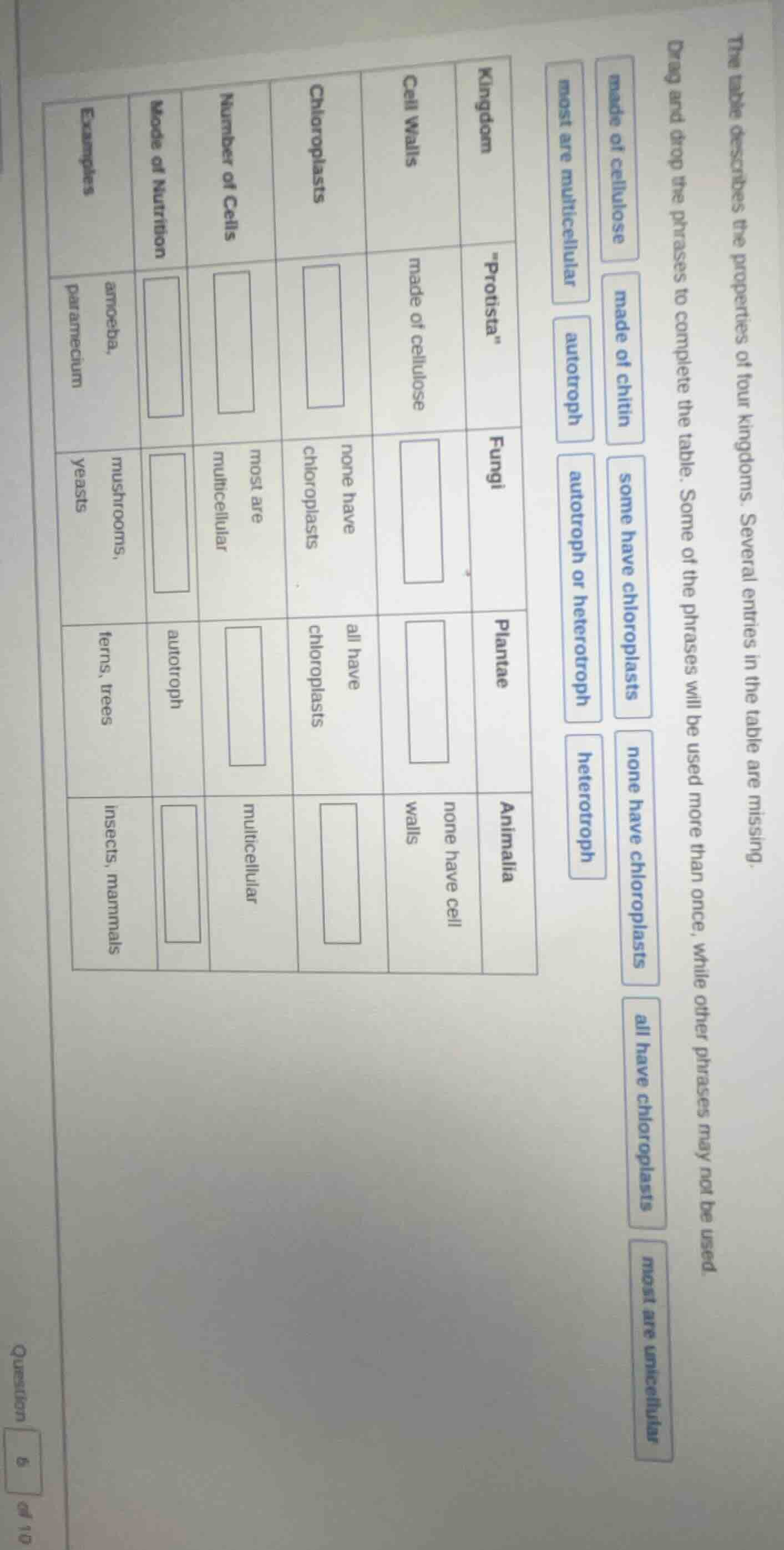
the table describes the properties of four kingdoms. several entries in the table are missing. drag and drop the phrases to complete the table. some of the phrases will be used more than once, while other phrases may not be used made of cellulose made of chitin some have chloroplasts none have chloroplasts all have chloroplasts most are multicellular most are unicellular autotroph autotroph or heterotroph heterotroph kingdom cell walls chloroplasts number of cells mode of nutrition examples \protista\ made of cellulose amoeba, paramecium fungi none have chloroplasts most are multicellular mushrooms, yeasts plantae all have chloroplasts autotroph ferns, trees animalia none have cell walls multicellular insects, mammals
Each entry is filled based on the defining biological characteristics of each kingdom:
- Protista: This kingdom includes mostly single-celled organisms; some (like algae) have chloroplasts while others don't, and nutrition can be autotrophic or heterotrophic.
- Fungi: Their cell walls are made of chitin, and they cannot make their own food, so they are heterotrophs.
- Plantae: All are multicellular, with cell walls composed of cellulose.
- Animalia: They lack chloroplasts and cannot produce their own food, so they are heterotrophs.

Snap & solve any problem in the app
Get step-by-step solutions on Sovi AI
Photo-based solutions with guided steps
Explore more problems and detailed explanations
| Kingdom | Cell Walls | Chloroplasts | Number of Cells | Mode of Nutrition | Examples |
|---|---|---|---|---|---|
| Fungi | made of chitin | none have chloroplasts | most are multicellular | heterotroph | mushrooms, yeasts |
| Plantae | made of cellulose | all have chloroplasts | most are multicellular | autotroph | ferns, trees |
| Animalia | none have cell walls | none have chloroplasts | multicellular | heterotroph | insects, mammals |