QUESTION IMAGE
Question
text answer
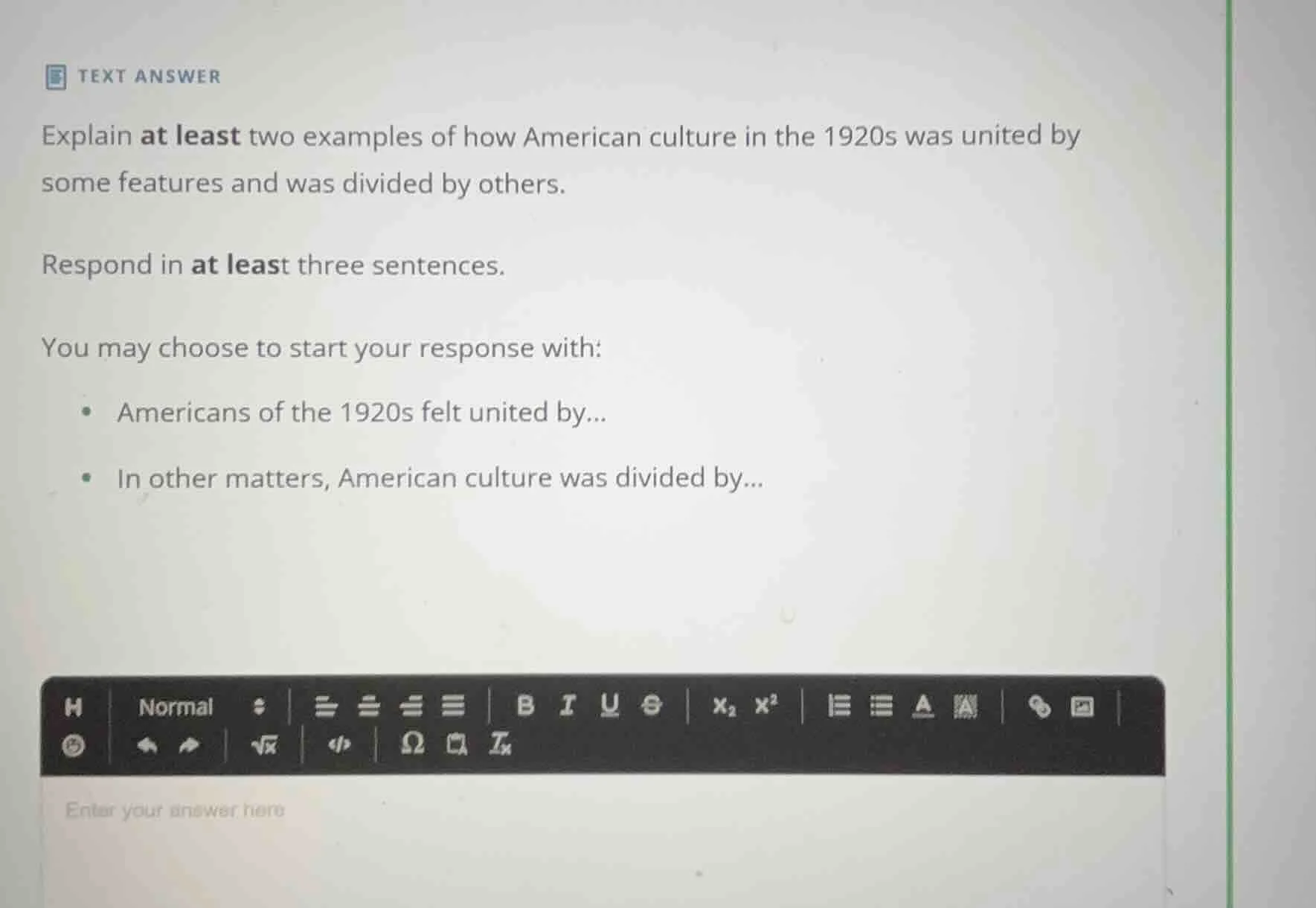
explain at least two examples of how american culture in the 1920s was united by
some features and was divided by others.
respond in at least three sentences.
you may choose to start your response with:
- americans of the 1920s felt united by...
- in other matters, american culture was divided by...
enter your answer here
Americans of the 1920s felt united by the rise of mass media and consumer culture, which created shared experiences across the country. Radio broadcasts of popular music, comedy, and news reached households nationwide, while mass-produced goods like automobiles and household appliances became symbols of a shared modern American lifestyle, connecting people from rural and urban areas through common tastes and desires.
In other matters, American culture was divided by conflicting attitudes toward social change and traditional values, most notably the debate over Prohibition and religious fundamentalism. Prohibition, which banned alcohol, pitted urban, more progressive Americans who often flouted the law in speakeasies against rural, conservative Americans who saw alcohol as a threat to moral order. Additionally, the Scopes Monkey Trial highlighted the rift between those who supported the teaching of evolution in schools (representing modern, scientific thinking) and religious fundamentalists who defended a literal interpretation of the Bible, exposing deep divides between urban and rural, secular and religious communities. These splits showed that while some cultural forces brought Americans together, others pulled them into opposing camps that defined the decade's tensions.

Snap & solve any problem in the app
Get step-by-step solutions on Sovi AI
Photo-based solutions with guided steps
Explore more problems and detailed explanations
Americans of the 1920s felt united by the rise of mass media and consumer culture, which created shared experiences across the country. Radio broadcasts of popular music, comedy, and news reached households nationwide, while mass-produced goods like automobiles and household appliances became symbols of a shared modern American lifestyle, connecting people from rural and urban areas through common tastes and desires. In other matters, American culture was divided by conflicting attitudes toward social change and traditional values, most notably the debate over Prohibition and religious fundamentalism. Prohibition, which banned alcohol, pitted urban, more progressive Americans who often flouted the law in speakeasies against rural, conservative Americans who saw alcohol as a threat to moral order. Additionally, the Scopes Monkey Trial highlighted the rift between those who supported the teaching of evolution in schools (representing modern, scientific thinking) and religious fundamentalists who defended a literal interpretation of the Bible, exposing deep divides between urban and rural, secular and religious communities. These splits showed that while some cultural forces brought Americans together, others pulled them into opposing camps that defined the decade's tensions.