QUESTION IMAGE
Question
unwrap the earths inside research
essay focus
a. underline the key words from each paragraph below. then, write
your own summary. you may use a dictionary while you read and take
notes. remember to include facts from your article. you generally
underline key information that you need to read, like main ideas etc.
a text read
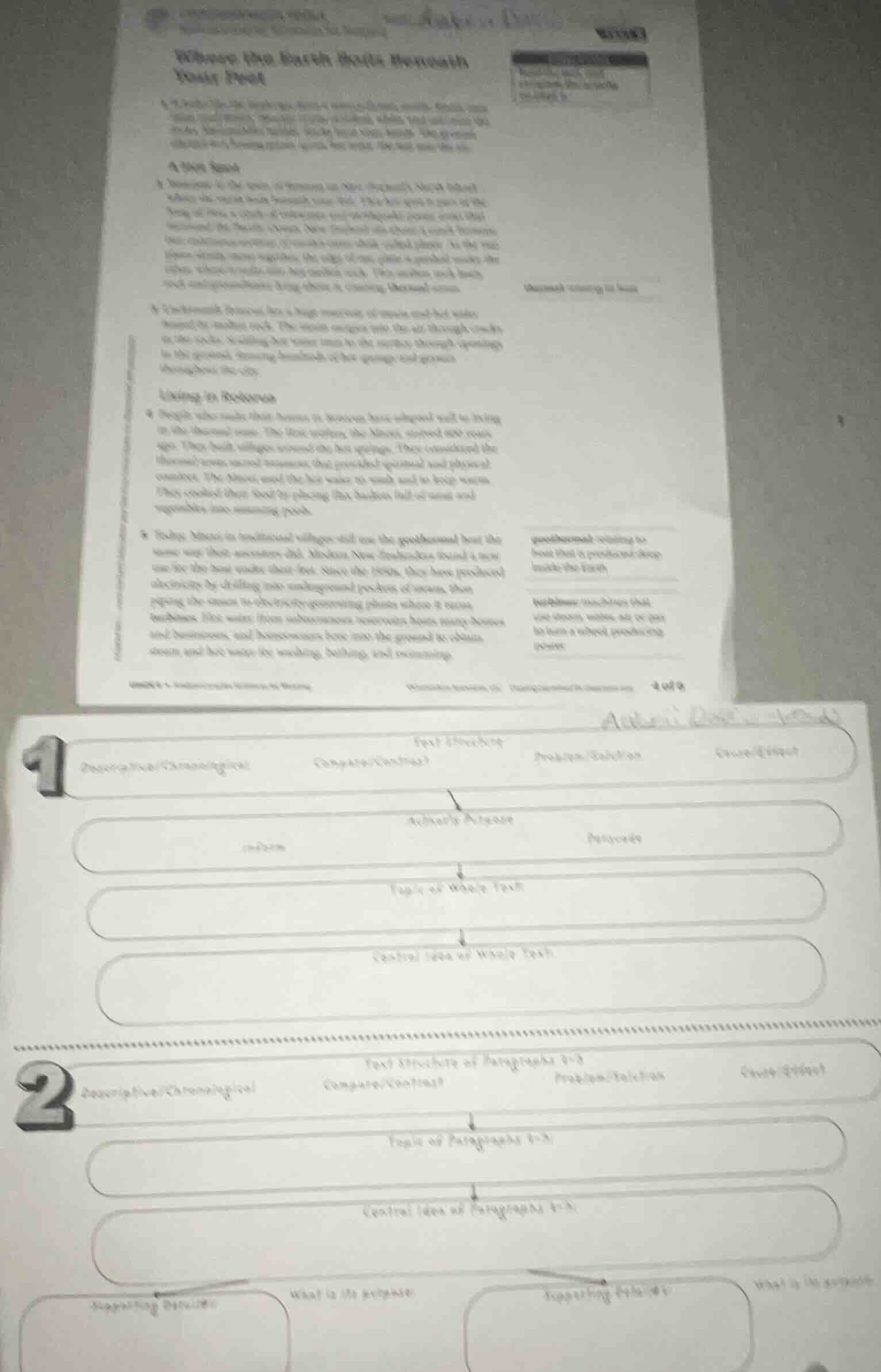
- rotorua is the town of rotorua in new zealands north island,
where the earth heats beneath your feet. this hot spot is part of the
ring of fire, a circle of volcanoes and earthquake zones that ring
around the pacific ocean. new zealand sits above a crack between
huge underground sections of earths crust called plates. as the two
plates slowly move together, the edge of one plate is pushed under the
other, where it melts into hot molten rock. this molten rock heats
rock and groundwater. being hotter is coming, heated water
underground returning to heat
- underground rotorua has a huge reservoir of steam and hot water
heated by molten rock. the steam escapes into the air through cracks
in the rocks. so boiling-hot water rises to the surface through openings
in the ground, forming hundreds of hot springs and geysers
throughout the city.
living in rotorua
- people who made their homes in rotorua have adapted well to living
in this thermal zone. the first settlers, the maori, started 600 years
ago. they built villages around the hot springs. they considered the
thermal areas sacred treasures that provided spiritual and physical
comfort. the maori used the hot water to wash and to keep warm.
they cooked their food by placing their baskets full of meat and
vegetables into steaming pools.
- today, maori in traditional villages still use the geothermal heat the
same way that ancestors did. modern new zealanders found a new
use for the heat under their feet. since the 1950s, they have produced
electricity by drilling into underground pockets of steam, then
piping the steam to electricity-generating plants where it turns
turbines. hot water from underground reservoirs heats many homes
and businesses, and homeowners bore into the ground to obtain
steam and hot water for washing, bathing, and entertaining.
geothermal relating to
heat that is produced deep
inside the earth
techniques techniques that
use steam, water, air or gas
to form a wheel producing
power
1
text structure
descriptive/chronological compare/contrast problem/solution cause/effect
authors purpose
inform persuade
topic of whole text
central idea of whole text
2
text structure of paragraphs 3-4
descriptive/chronological compare/contrast problem/solution cause/effect
topic of paragraphs 3-4
central idea of paragraphs 3-4
supporting details what is its purpose supporting details what is its purpose
For Section 1 (Whole Text):
- Text Structure: The text first explains how the geothermal system forms (descriptive) and then covers past to present use of geothermal resources (chronological), so it is Descriptive/Chronological.
- Author's Purpose: The text shares information about Rotorua's geothermal features and human use of them, so it is Inform.
- Topic of Whole Text: The text focuses on Rotorua, New Zealand's geothermal system and how people interact with it.
- Central Idea of Whole Text: Rotorua, New Zealand has a unique geothermal system that has been used by Indigenous and modern communities for traditional needs and electricity generation.
For Section 2 (Paragraphs 4-5):
- Text Structure: Paragraphs 4-5 compare historic Māori use of geothermal heat to modern New Zealander use, so it is Compare/Contrast.
- Topic of Paragraphs 4-5: Human use of Rotorua's geothermal resources over time.
- Central Idea of Paragraphs 4-5: Māori have long used Rotorua's geothermal heat for daily needs, while modern communities now also use it to generate electricity.
- Supporting Details:
- Detail 1: Māori settled 600 years ago, used hot springs for cleaning, heating, and cooking, and considered them sacred.
- Detail 2: Modern New Zealanders have used geothermal heat to produce electricity since the 1950s, and use steam/hot water for heating buildings.

Snap & solve any problem in the app
Get step-by-step solutions on Sovi AI
Photo-based solutions with guided steps
Explore more problems and detailed explanations
Section 1 (Whole Text)
- Text Structure: Descriptive/Chronological
- Author's Purpose: Inform
- Topic of Whole Text: Rotorua, New Zealand's geothermal system and human utilization of it
- Central Idea of Whole Text: Rotorua's unique geothermal system has served Indigenous Māori for traditional needs and modern communities for electricity and heating.
Section 2 (Paragraphs 4-5)
- Text Structure: Compare/Contrast
- Topic of Paragraphs 4-5: Historical and modern human use of Rotorua's geothermal resources
- Central Idea of Paragraphs 4-5: Rotorua's geothermal heat has been used by Māori for traditional daily needs, and modern groups have expanded its use to electricity production.
- Supporting Details:
- Māori settled 600 years ago, used geothermal springs for cleaning, heating, cooking, and viewed the sites as sacred.
- Since the 1950s, modern New Zealanders have drilled for geothermal steam to generate electricity, and use geothermal energy to heat buildings and businesses.