QUESTION IMAGE
Question
ural selection
two moths on a light tree
moth b
moth a
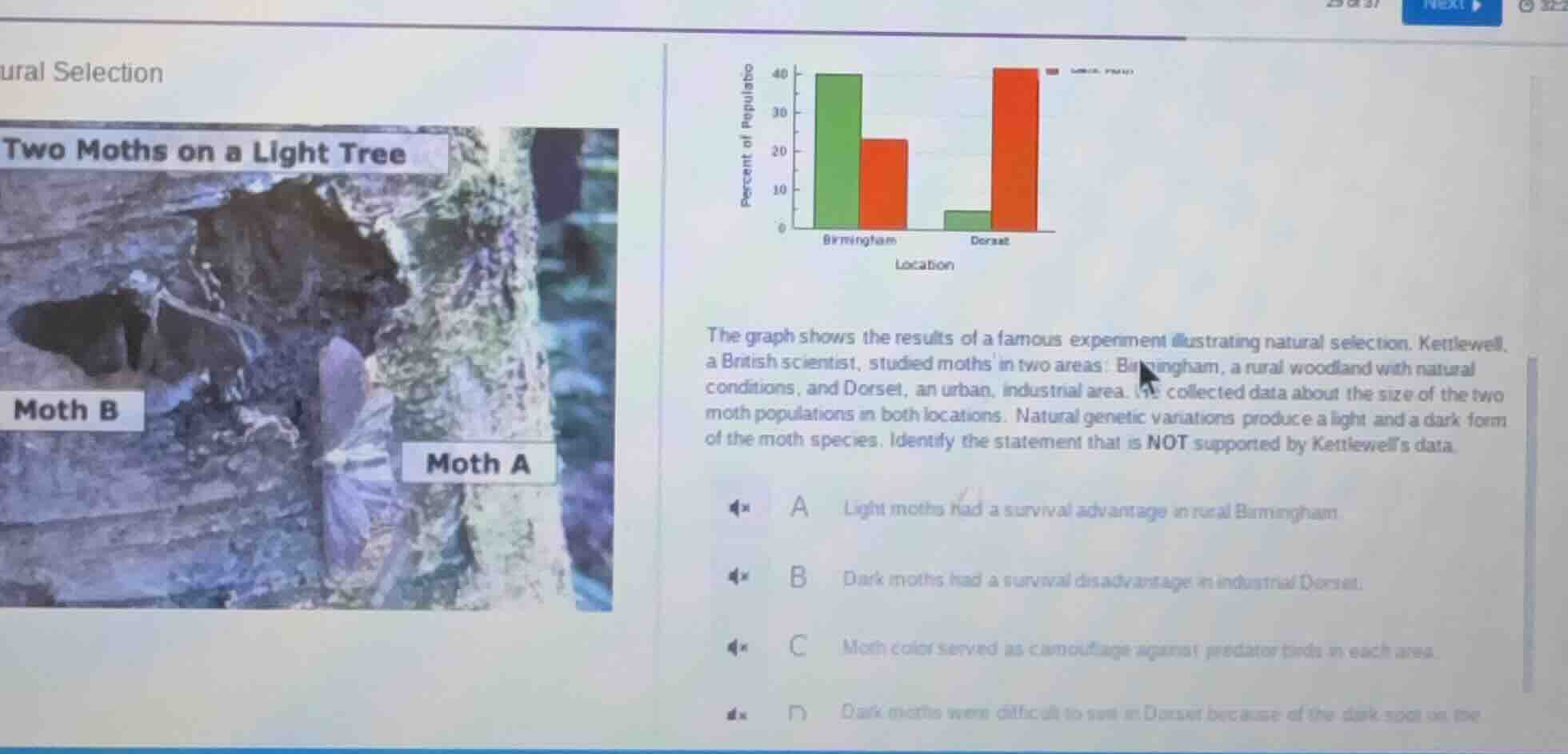
the graph shows the results of a famous experiment illustrating natural selection. kettlewell, a british scientist, studied moths in two areas: birmingham, a rural woodland with natural conditions, and dorset, an urban, industrial area. he collected data about the size of the two moth populations in both locations. natural genetic variations produce a light and a dark form of the moth species. identify the statement that is not supported by kettlewell’s data.
a light moths had a survival advantage in rural birmingham
b dark moths had a survival disadvantage in industrial dorset.
c moth color served as camouflage against predator birds in each area.
d dark moths were difficult to see in dorset because of the dark soot on the
- Analyze the bar graph: In rural Birmingham, light moths (green bar) make up ~40% of the population, dark moths (orange bar) ~20%. This supports that light moths have a survival advantage here (Option A is supported).
- In industrial Dorset, dark moths (orange bar) make up ~40% of the population, light moths (green bar) ~5%. This shows dark moths have a survival advantage, not a disadvantage, in Dorset (Option B is NOT supported).
- The data aligns with camouflage: light moths survive better on unpolluted rural trees, dark moths on soot-covered industrial trees, so color acts as camouflage from predators (Option C is supported).
- Dark moths' high population in Dorset implies they are hard to see against dark soot-covered trees (Option D is supported).

Snap & solve any problem in the app
Get step-by-step solutions on Sovi AI
Photo-based solutions with guided steps
Explore more problems and detailed explanations
B. Dark moths had a survival disadvantage in industrial Dorset.