QUESTION IMAGE
Question
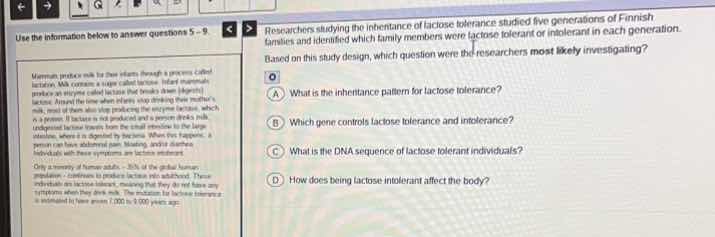
use the information below to answer questions 3 - 5. mammary glands in male mice normally dont produce milk. a scientist called malaise removed the testes from male mice. these mice then produced milk. malaise also transplanted ovaries from female mice into the male mice. the male mice with ovaries produced even more milk. malaise concluded that male mice have mammary glands that are kept from producing milk by testosterone, a hormone made in the testes. he also concluded that the ovaries produce a hormone that helps with milk production. only a minority of human adults can drink milk. this is because most humans stop producing the enzyme lactase after childhood. lactase is needed to digest lactose, a sugar in milk. people who cant digest lactose are lactose intolerant. (2023) the big test: how the secrets of the sat changed the world researchers studying the inheritance of lactose tolerance studied five generations of finnish families and identified which family members were lactose tolerant or intolerant in each generation. based on this study design, which question were the researchers most likely investigating? a what is the inheritance pattern for lactose intolerance? b which gene controls lactose tolerance and intolerance? c what is the dna sequence of lactose tolerant individuals? d how does being lactose intolerant affect the body?
The study focuses on tracking lactose tolerance (lactase persistence) across five generations of Finnish families, noting which members are tolerant or intolerant each generation. This design is centered on observing how the trait is passed down through family lines, which directly relates to identifying its inheritance pattern. The other options are not aligned: option B focuses on a specific gene (not the pattern of inheritance), option C focuses on DNA sequences (not generational inheritance tracking), and option D focuses on bodily effects (not inheritance).

Snap & solve any problem in the app
Get step-by-step solutions on Sovi AI
Photo-based solutions with guided steps
Explore more problems and detailed explanations
A. What is the inheritance pattern for lactose tolerance?