QUESTION IMAGE
Question
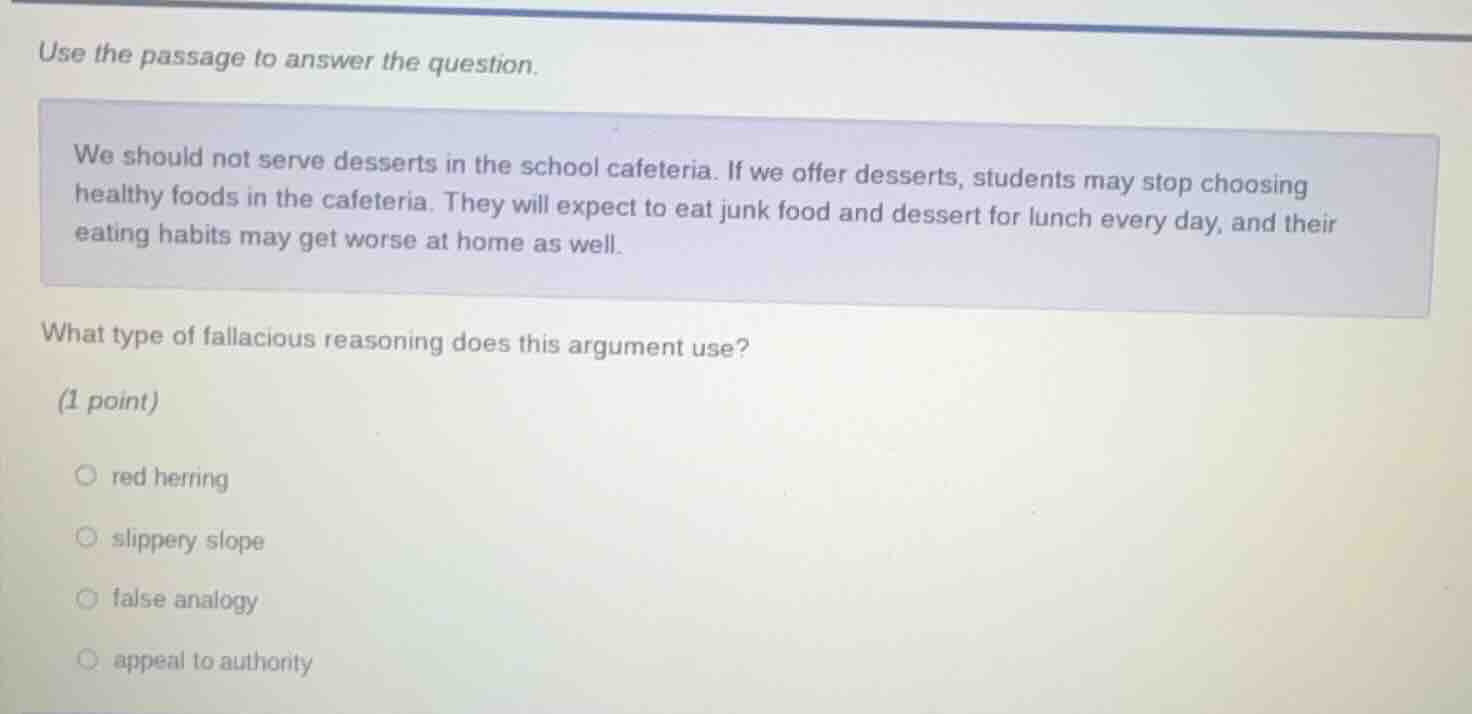
use the passage to answer the question.
we should not serve desserts in the school cafeteria. if we offer desserts, students may stop choosing healthy foods in the cafeteria. they will expect to eat junk food and dessert for lunch every day, and their eating habits may get worse at home as well.
what type of fallacious reasoning does this argument use?
(1 point)
red herring
slippery slope
false analogy
appeal to authority
A slippery slope fallacy assumes that one small action (offering desserts) will lead to a series of increasingly negative consequences (students stop choosing healthy foods, expect junk food daily, eating habits worsen at home) without sufficient evidence that these chain reactions will actually occur. A red herring distracts from the main issue, a false analogy compares unrelated things, and appeal to authority relies on an expert's opinion. Here, the argument is about a supposed chain of negative events from a single action, so it's a slippery slope.

Snap & solve any problem in the app
Get step-by-step solutions on Sovi AI
Photo-based solutions with guided steps
Explore more problems and detailed explanations
B. slippery slope