QUESTION IMAGE
Question
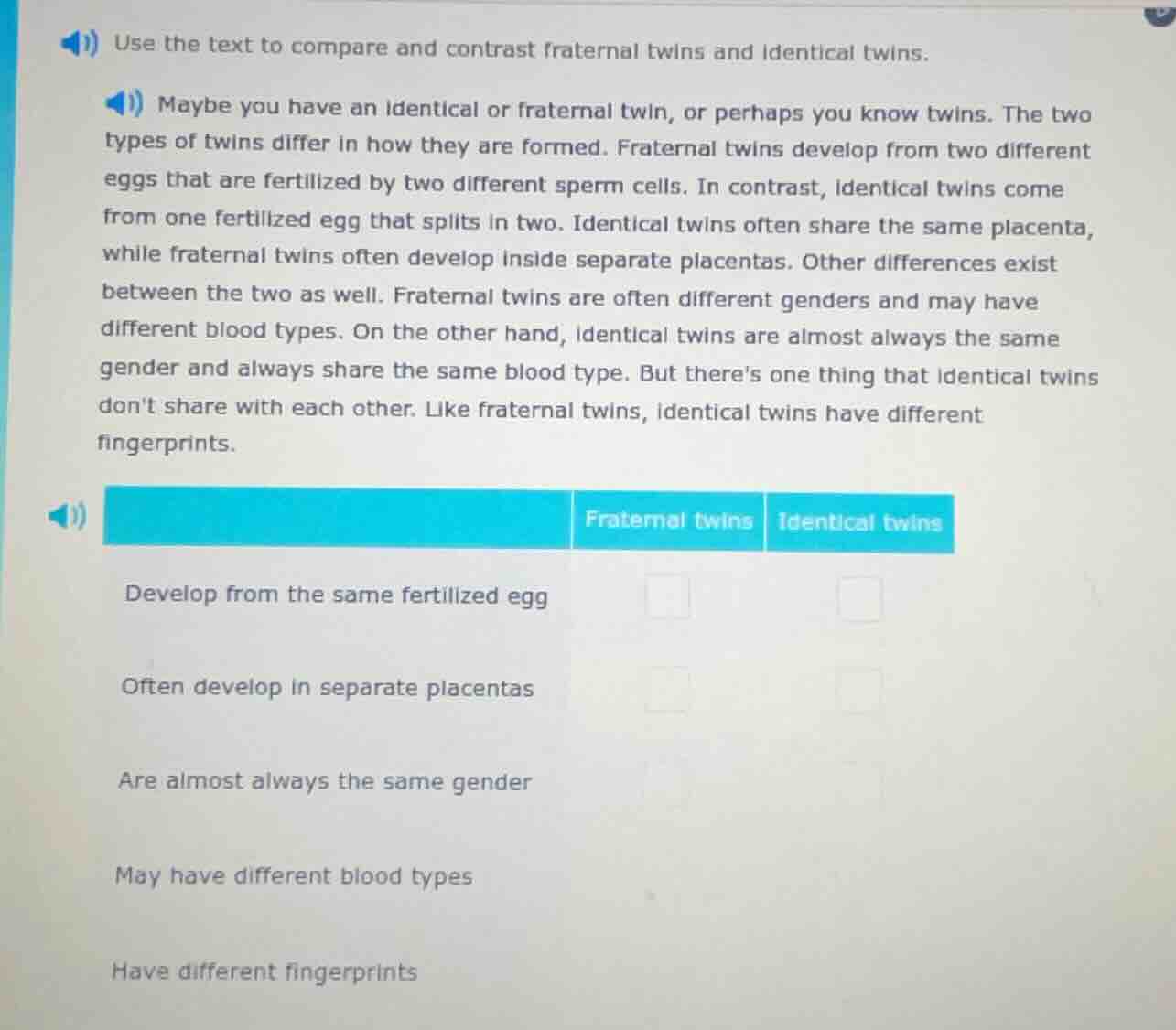
use the text to compare and contrast fraternal twins and identical twins.
maybe you have an identical or fraternal twin, or perhaps you know twins. the two types of twins differ in how they are formed. fraternal twins develop from two different eggs that are fertilized by two different sperm cells. in contrast, identical twins come from one fertilized egg that splits in two. identical twins often share the same placenta, while fraternal twins often develop inside separate placentas. other differences exist between the two as well. fraternal twins are often different genders and may have different blood types. on the other hand, identical twins are almost always the same gender and always share the same blood type. but theres one thing that identical twins dont share with each other. like fraternal twins, identical twins have different fingerprints.
| fraternal twins | identical twins | |
|---|---|---|
| often develop in separate placentas | ||
| are almost always the same gender | ||
| may have different blood types | ||
| have different fingerprints |
To solve this, we analyze the text and match each statement to fraternal or identical twins:
1. Develop from the same fertilized egg
- From the text: "Identical twins come from one fertilized egg that splits in two."
- So, Identical twins (check the box for Identical twins).
2. Often develop in separate placentas
- From the text: "Fraternal twins often develop inside separate placentas."
- So, Fraternal twins (check the box for Fraternal twins).
3. Are almost always the same gender
- From the text: "Identical twins are almost always the same gender..."
- So, Identical twins (check the box for Identical twins).
4. May have different blood types
- From the text: "Fraternal twins... may have different blood types."
- So, Fraternal twins (check the box for Fraternal twins).
5. Have different fingerprints
- From the text: "Like fraternal twins, identical twins have different fingerprints."
- So, Both Fraternal and Identical twins (check the box for both).
Final Table (with checks):
| Fraternal twins | Identical twins | |
|---|---|---|
| Often develop in separate placentas | ☑ | ☐ |
| Are almost always the same gender | ☐ | ☑ |
| May have different blood types | ☑ | ☐ |
| Have different fingerprints | ☑ | ☑ |

Snap & solve any problem in the app
Get step-by-step solutions on Sovi AI
Photo-based solutions with guided steps
Explore more problems and detailed explanations
To solve this, we analyze the text and match each statement to fraternal or identical twins:
1. Develop from the same fertilized egg
- From the text: "Identical twins come from one fertilized egg that splits in two."
- So, Identical twins (check the box for Identical twins).
2. Often develop in separate placentas
- From the text: "Fraternal twins often develop inside separate placentas."
- So, Fraternal twins (check the box for Fraternal twins).
3. Are almost always the same gender
- From the text: "Identical twins are almost always the same gender..."
- So, Identical twins (check the box for Identical twins).
4. May have different blood types
- From the text: "Fraternal twins... may have different blood types."
- So, Fraternal twins (check the box for Fraternal twins).
5. Have different fingerprints
- From the text: "Like fraternal twins, identical twins have different fingerprints."
- So, Both Fraternal and Identical twins (check the box for both).
Final Table (with checks):
| Fraternal twins | Identical twins | |
|---|---|---|
| Often develop in separate placentas | ☑ | ☐ |
| Are almost always the same gender | ☐ | ☑ |
| May have different blood types | ☑ | ☐ |
| Have different fingerprints | ☑ | ☑ |