QUESTION IMAGE
Question
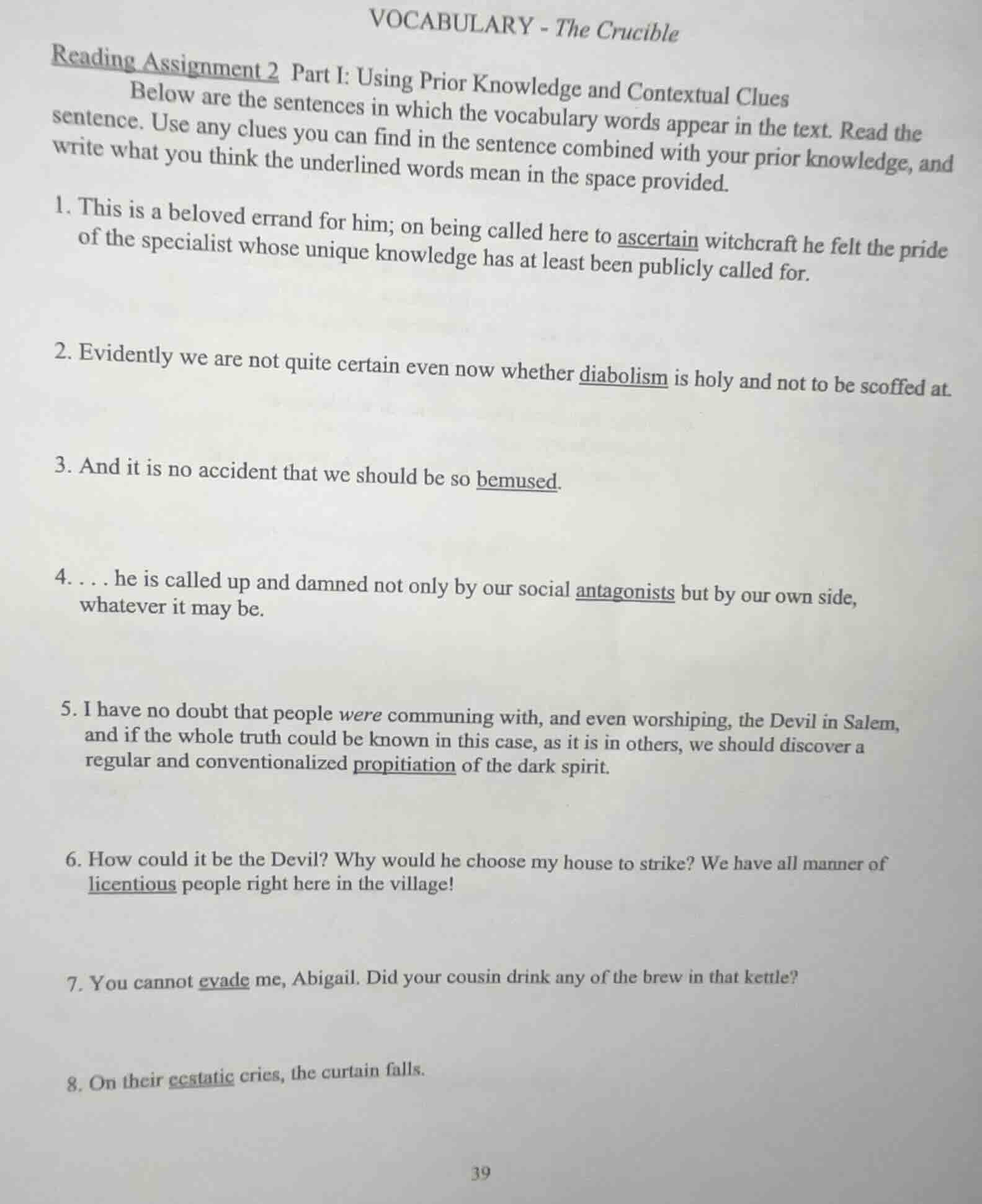
vocabulary - the crucible
reading assignment 2 part i: using prior knowledge and contextual clues
below are the sentences in which the vocabulary words appear in the text. read the sentence. use any clues you can find in the sentence combined with your prior knowledge, and write what you think the underlined words mean in the space provided.
- this is a beloved errand for him; on being called here to ascertain witchcraft he felt the pride of the specialist whose unique knowledge has at least been publicly called for.
- evidently we are not quite certain even now whether diabolism is holy and not to be scoffed at.
- and it is no accident that we should be so bemused.
4.... he is called up and damned not only by our social antagonists but by our own side, whatever it may be.
- i have no doubt that people were communing with, and even worshiping, the devil in salem, and if the whole truth could be known in this case, as it is in others, we should discover a regular and conventionalized propitiation of the dark spirit.
- how could it be the devil? why would he choose my house to strike? we have all manner of licentious people right here in the village!
- you cannot evade me, abigail. did your cousin drink any of the brew in that kettle?
- on their ecstatic cries, the curtain falls.
Brief Explanations
- Context: a specialist is called to confirm witchcraft; "ascertain" means to find out for sure.
- Context: linked to the Devil/witchcraft in The Crucible; "diabolism" refers to devilish or evil practices.
- Context: confusion around Salem's events; "bemused" means confused or puzzled.
- Context: someone is damned by opposing groups; "antagonists" are people who oppose or are enemies.
- Context: worshiping the Devil; "propitiation" means acts to appease or please a spirit/figure.
- Context: village people accused of sin; "licentious" means immoral or lacking self-control.
- Context: questioning Abigail who is avoiding confrontation; "evade" means to avoid or escape.
- Context: intense emotional cries at the play's end; "ecstatic" means feeling intense joy or frenzy.

Snap & solve any problem in the app
Get step-by-step solutions on Sovi AI
Photo-based solutions with guided steps
Explore more problems and detailed explanations
- ascertain: find out or confirm definitively
- diabolism: belief in or practice of devilish, evil acts
- bemused: confused, puzzled, or bewildered
- antagonists: people who oppose or are hostile toward others
- propitiation: acts to appease or gain favor from a powerful (here, evil) figure
- licentious: lacking moral discipline, sexually unrestrained
- evade: avoid or escape from (someone or something)
- ecstatic: feeling or expressing intense, overwhelming emotion (joy, frenzy)