QUESTION IMAGE
Question
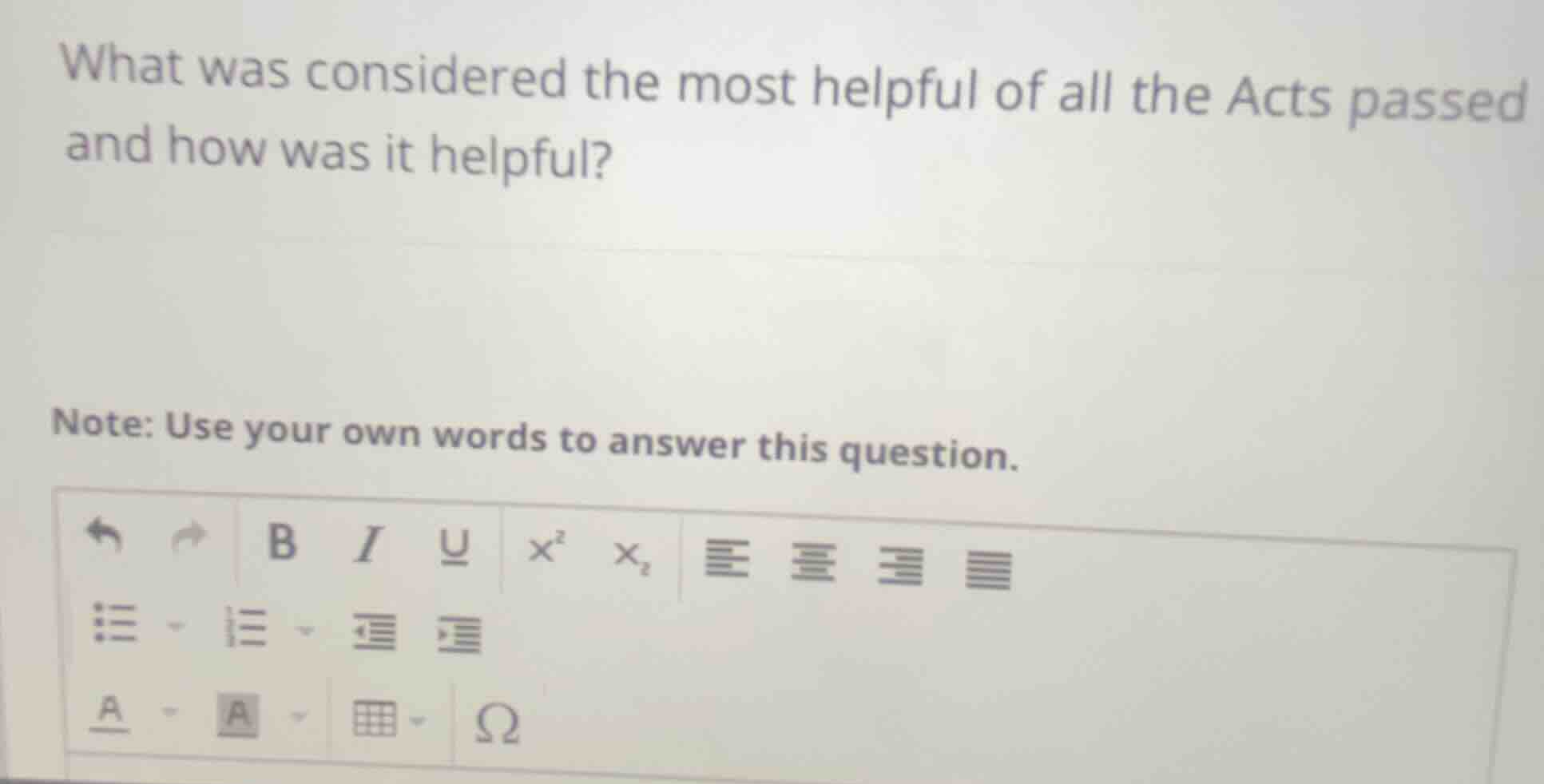
what was considered the most helpful of all the acts passed and how was it helpful? note: use your own words to answer this question.
To answer this, we need context about the "Acts" (e.g., New Deal Acts, labor acts, etc.). For example, if considering the New Deal, the Social Security Act (1935) is often seen as highly helpful. It provided financial support to the elderly, unemployed, and disadvantaged, creating a safety net, reducing poverty among seniors, and establishing a framework for social welfare that persists. Without specific context, a common example is the Social Security Act: it established old - age pensions, unemployment insurance, and aid to dependent children, offering economic security to vulnerable groups, reducing poverty among the elderly, and stabilizing families during hard times.

Snap & solve any problem in the app
Get step-by-step solutions on Sovi AI
Photo-based solutions with guided steps
Explore more problems and detailed explanations
If we take the context of the New Deal Acts in the United States during the Great Depression, the Social Security Act is often considered the most helpful. It was helpful as it established a system of old - age pensions (for retirees), unemployment insurance (to support those out of work), and aid to dependent children (to assist families with children in need). This created a social safety net, reducing poverty among the elderly, providing temporary financial support to the unemployed to help them get back on their feet, and ensuring that children in disadvantaged families had access to basic support, which in turn helped to stabilize society and the economy by maintaining the purchasing power of these groups and fostering a sense of security.
(Note: If the context is different, e.g., labor acts, environmental acts, etc., the answer would change. For example, in labor history, the Wagner Act (National Labor Relations Act) was crucial as it protected workers' rights to organize and bargain collectively, empowering labor unions and improving working conditions and wages.)