QUESTION IMAGE
Question
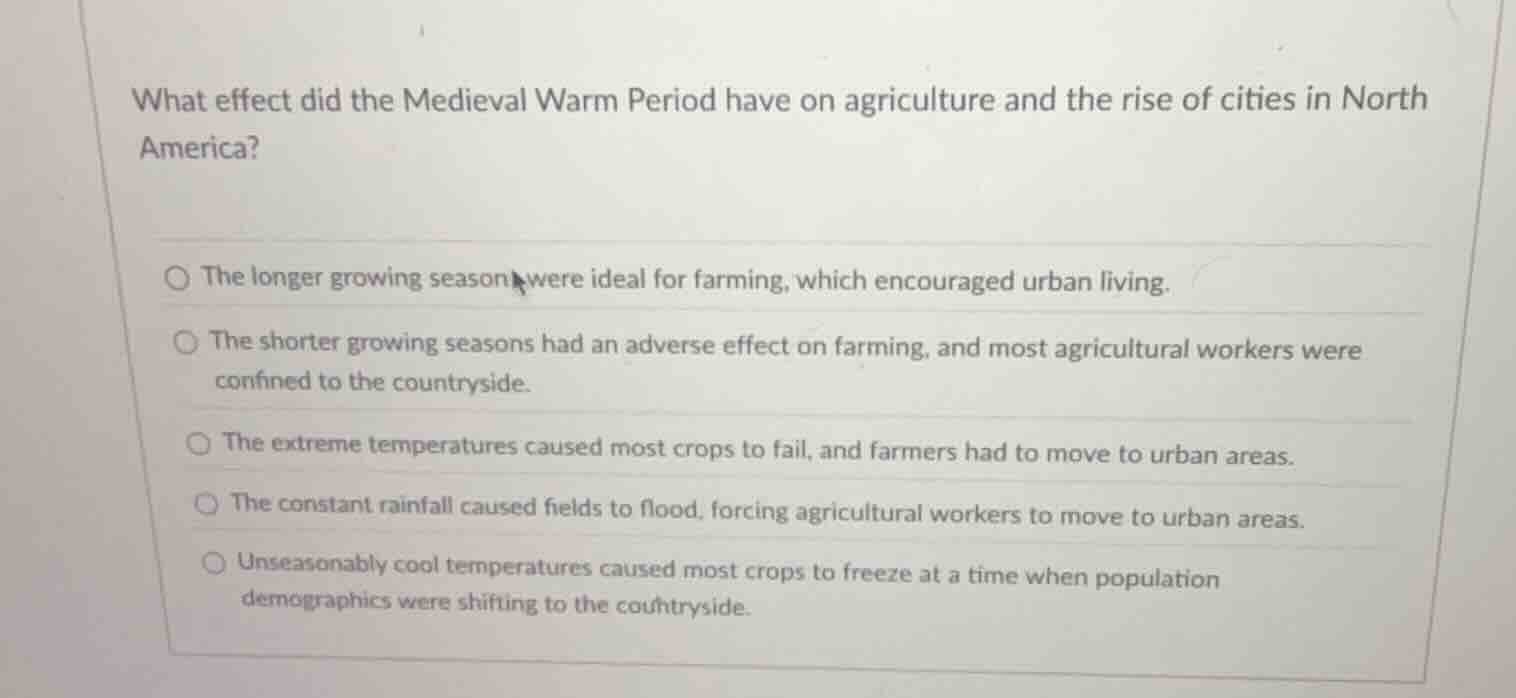
what effect did the medieval warm period have on agriculture and the rise of cities in north america?
the longer growing season were ideal for farming, which encouraged urban living.
the shorter growing seasons had an adverse effect on farming, and most agricultural workers were confined to the countryside.
the extreme temperatures caused most crops to fail, and farmers had to move to urban areas.
the constant rainfall caused fields to flood, forcing agricultural workers to move to urban areas.
unseasonably cool temperatures caused most crops to freeze at a time when population demographics were shifting to the countryside.
The Medieval Warm Period brought milder, longer growing seasons in North America. This improved agricultural productivity, creating surplus food. Surpluses allowed some people to leave farming and settle in growing urban centers, supporting city development. The other options describe conditions opposite to the warm period's effects (shortened seasons, crop failure, flooding, cool temps).

Snap & solve any problem in the app
Get step-by-step solutions on Sovi AI
Photo-based solutions with guided steps
Explore more problems and detailed explanations
A. The longer growing seasons were ideal for farming, which encouraged urban living.