QUESTION IMAGE
Question
what do we see on earths surface where we live?
when we look around at the places where we live, one of the first things we might notice about earths surface could be examples of structures that people have created to help them do things, such as buildings, roads, and farms. these examples characterize the part of earths surface that we encounter every day.
if we look around to find places where there are no structures on the surface, we sometimes find plants growing on the surface. but what is earths surface like underneath all of these? if we could remove all these structures and all of these plants in all of these locations, what are some different things we would find? record your ideas below:
_____________________________________________________________________
_____________________________________________________________________
while some places are covered with thick layers of soil, plants, and forests, other locations have huge pieces of rock visible at the surface, such as mountains and cliffs. many of the places that people live and work have been modified significantly with things that are not necessarily natural to the land, such as adding grass, or cement. but, most of earths surface (70%) is covered by oceans. probably the most striking thing is just how varied earths surface really is.
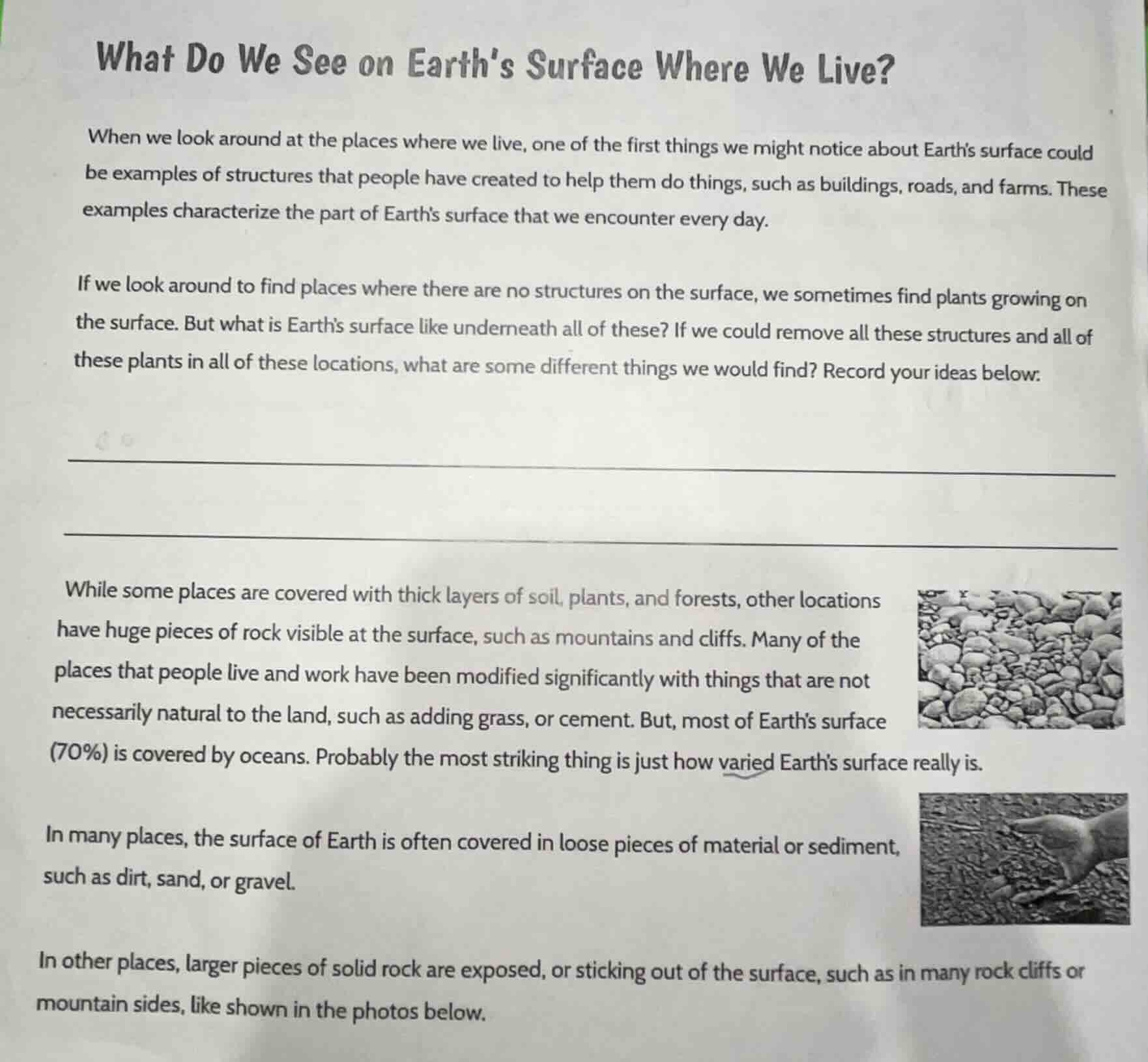
in many places, the surface of earth is often covered in loose pieces of material or sediment, such as dirt, sand, or gravel.
in other places, larger pieces of solid rock are exposed, or sticking out of the surface, such as in many rock cliffs or mountain sides, like shown in the photos below.
When human-made structures and plants are removed, the natural Earth surface consists of its core components: loose sedimentary materials, solid exposed rock, and large bodies of water. These are the unmodified, underlying features described.

Snap & solve any problem in the app
Get step-by-step solutions on Sovi AI
Photo-based solutions with guided steps
Explore more problems and detailed explanations
- Loose sediment (dirt, sand, gravel)
- Exposed solid rock (cliffs, mountain rock)
- Bodies of water (oceans, which cover 70% of Earth's surface)