QUESTION IMAGE
Question
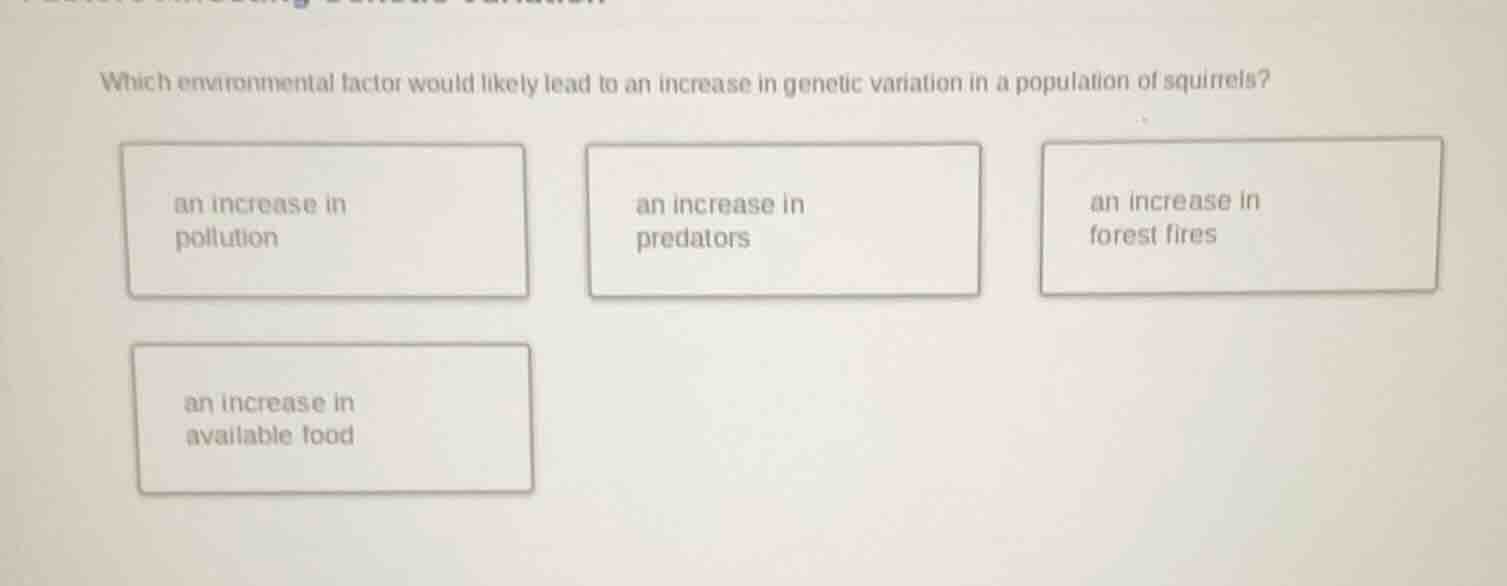
which environmental factor would likely lead to an increase in genetic variation in a population of squirrels? an increase in pollution; an increase in predators; an increase in forest fires; an increase in available food
Brief Explanations
- Analyze "an increase in pollution": Pollution is often harmful, causing stress, disease, or death in squirrels. It typically reduces population size and genetic diversity as it may eliminate individuals with certain genetic traits, rather than increasing variation.
- Analyze "an increase in predators": More predators increase predation pressure, leading to a smaller population. This usually reduces genetic variation through natural selection (favoring specific traits for survival) or random loss of genes (genetic drift in a smaller population), not increasing variation.
- Analyze "an increase in forest fires": Forest fires destroy habitats, killing many squirrels. The resulting smaller population experiences genetic drift, reducing genetic variation, and the harsh environment may select for specific traits, further limiting variation.
- Analyze "an increase in available food": More food supports a larger population. A larger population has more opportunities for genetic mutations to occur and be passed on, and there is less intense natural selection (since resources are abundant, more genetic traits can be maintained). This leads to an increase in genetic variation as the population can expand and accumulate more genetic differences.

Snap & solve any problem in the app
Get step-by-step solutions on Sovi AI
Photo-based solutions with guided steps
Explore more problems and detailed explanations
an increase in available food