QUESTION IMAGE
Question
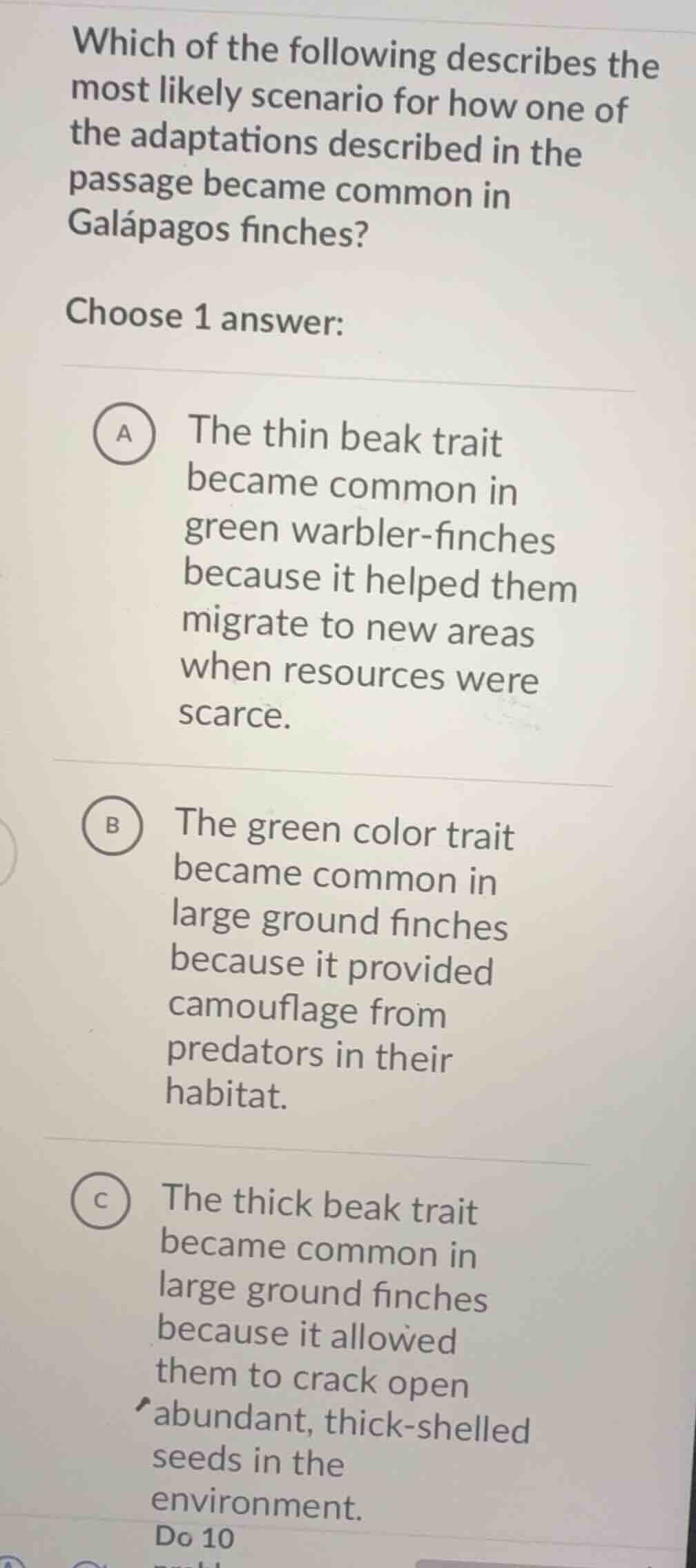
which of the following describes the most likely scenario for how one of the adaptations described in the passage became common in galápagos finches? choose 1 answer: a the thin beak trait became common in green warbler - finches because it helped them migrate to new areas when resources were scarce. b the green color trait became common in large ground finches because it provided camouflage from predators in their habitat. c the thick beak trait became common in large ground finches because it allowed them to crack open abundant, thick - shelled seeds in the environment. do 10
To determine the correct answer, we analyze each option based on evolutionary adaptation principles (natural selection):
- Option A: A thin beak is related to feeding (e.g., insect - eating or nectar - sipping), not migration. So this is incorrect.
- Option B: Large ground finches are not green (they are typically brownish - gray), and their survival is more related to feeding adaptations (beak shape) than camouflage via green color. So this is incorrect.
- Option C: Large ground finches' thick beaks are an adaptation for cracking thick - shelled seeds. If thick - shelled seeds are abundant, finches with thick beaks would have a survival advantage (able to access food), and over time, this trait would become more common due to natural selection. This matches the concept of adaptation.

Snap & solve any problem in the app
Get step-by-step solutions on Sovi AI
Photo-based solutions with guided steps
Explore more problems and detailed explanations
C. The thick beak trait became common in large ground finches because it allowed them to crack open abundant, thick - shelled seeds in the environment.