QUESTION IMAGE
Question
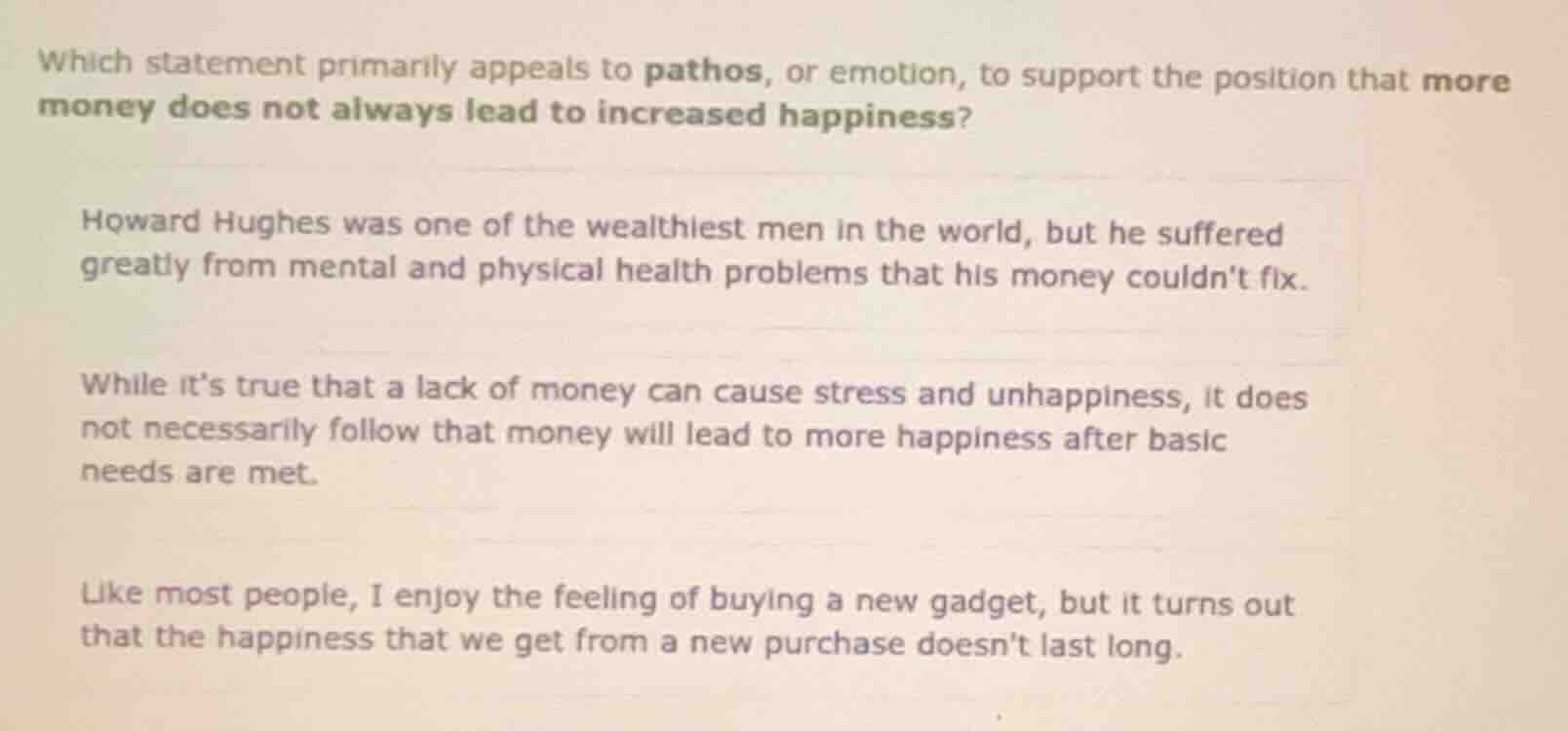
which statement primarily appeals to pathos, or emotion, to support the position that more money does not always lead to increased happiness? howard hughes was one of the wealthiest men in the world, but he suffered greatly from mental and physical health problems that his money couldnt fix. while its true that a lack of money can cause stress and unhappiness, it does not necessarily follow that money will lead to more happiness after basic needs are met. like most people, i enjoy the feeling of buying a new gadget, but it turns out that the happiness that we get from a new purchase doesnt last long.
To determine which statement appeals to pathos, we analyze each:
- The first statement about Howard Hughes uses a real - life example of a wealthy person suffering from health problems. This evokes empathy (an emotional response) as we feel for his suffering, showing that money didn't bring him happiness.
- The second statement is a logical argument (logos) about the relationship between money and happiness after basic needs are met, without appealing to emotion.
- The third statement is a personal anecdote about buying gadgets, but it is more of a relatable personal experience rather than an appeal to strong emotions like the first statement. The story of Howard Hughes' suffering is more likely to stir emotions related to pity or concern, making it a stronger pathos appeal.

Snap & solve any problem in the app
Get step-by-step solutions on Sovi AI
Photo-based solutions with guided steps
Explore more problems and detailed explanations
The statement "Howard Hughes was one of the wealthiest men in the world, but he suffered greatly from mental and physical health problems that his money couldn't fix."