QUESTION IMAGE
Question
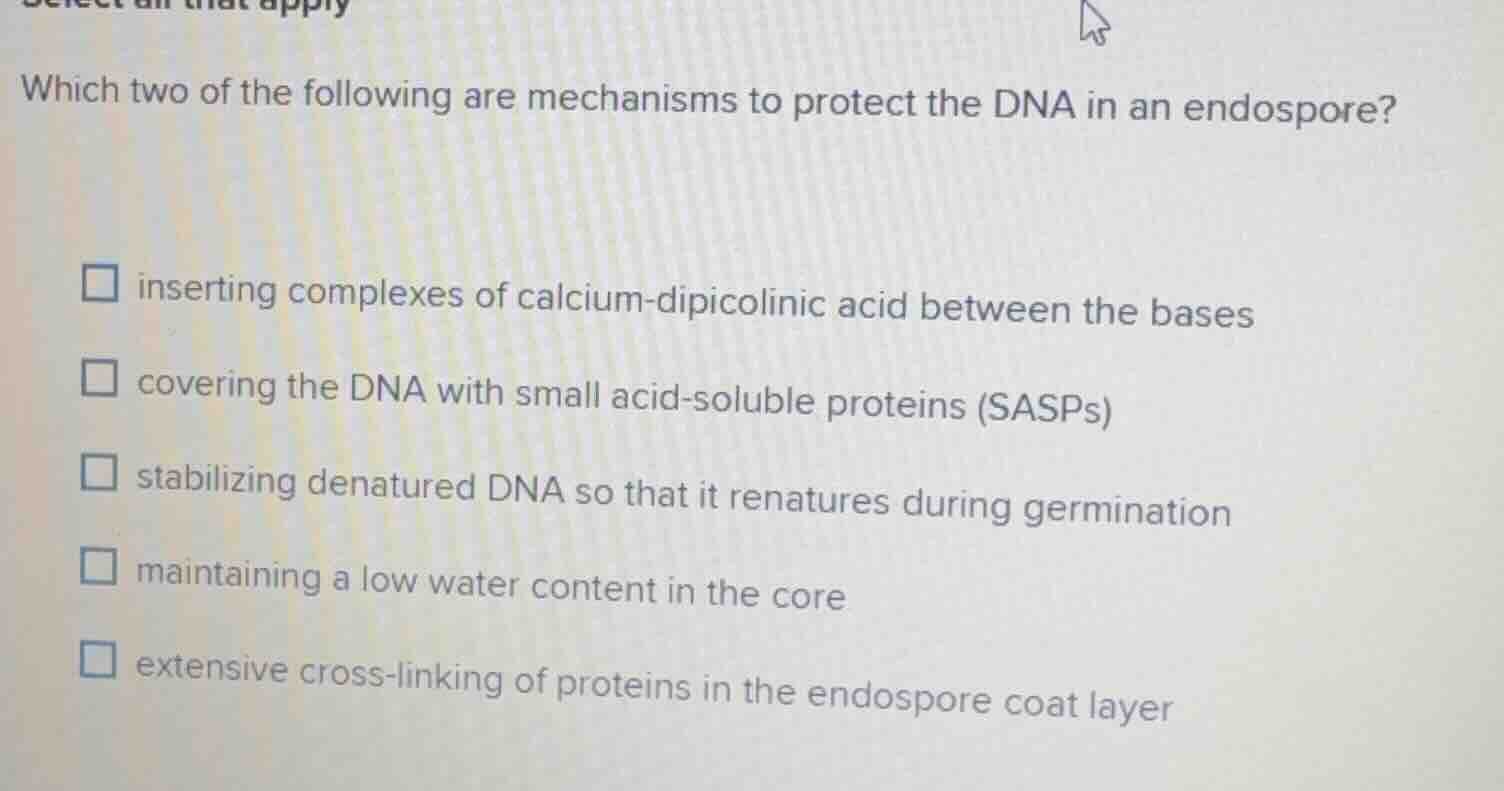
which two of the following are mechanisms to protect the dna in an endospore?
- inserting complexes of calcium - dipicolinic acid between the bases
- covering the dna with small acid - soluble proteins (sasps)
- stabilizing denatured dna so that it renatures during germination
- maintaining a low water content in the core
- extensive cross - linking of proteins in the endospore coat layer
Brief Explanations
- Inserting complexes of calcium - dipicolinic acid between the bases: Calcium - dipicolinic acid complexes are involved in protecting the DNA in endospores by inserting between the DNA bases, which helps stabilize the DNA structure.
- Covering the DNA with small acid - soluble proteins (SASPs): SASPs bind to the DNA in endospores. They protect the DNA from damage, such as from UV radiation and desiccation, and also help in stabilizing the DNA structure.
The other options:
- "Stabilizing denatured DNA so that it renatures during germination" is a function of SASPs, but the option itself is not a mechanism of protection during the endospore state (rather a result of SASP action during germination).
- "Maintaining a low water content in the core" is a general feature of endospores for overall stability but not a direct mechanism for DNA protection.
- "Extensive cross - linking of proteins in the endospore coat layer" is related to the protection of the endospore as a whole, not specifically the DNA.

Snap & solve any problem in the app
Get step-by-step solutions on Sovi AI
Photo-based solutions with guided steps
Explore more problems and detailed explanations
- inserting complexes of calcium - dipicolinic acid between the bases
- covering the DNA with small acid - soluble proteins (SASPs)