QUESTION IMAGE
Question
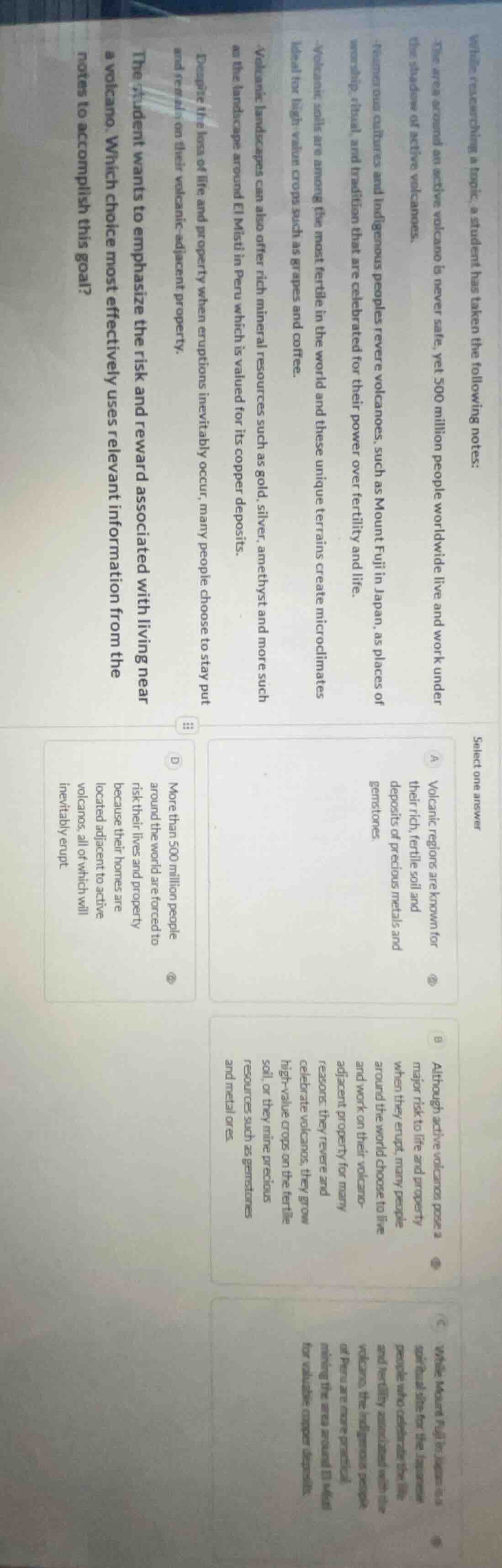
while researching a topic, a student has taken the following notes: the area around an active volcano is never safe, yet 500 million people worldwide live and work under the shadow of active volcanoes. numerous cultures and indigenous peoples revere volcanoes, such as mount fuji in japan, as places of worship, ritual, and tradition that are celebrated for their power over fertility and life. volcanic soils are among the most fertile in the world and these unique terrains create microclimates ideal for high value crops such as grapes and coffee. volcanic landscapes can also offer rich mineral resources such as gold, silver, amethyst and more such as the landscape around el misti in peru which is valued for its copper deposits. despite the loss of life and property when eruptions inevitably occur, many people choose to stay put and rebuild on their volcanic - adjacent property. the student wants to emphasize the risk and reward associated with living near a volcano. which choice most effectively uses relevant information from the notes to accomplish this goal? select one answer a volcanic regions are known for their rich, fertile soil and deposits of precious metals and gemstones. b although active volcanoes pose a major risk to life and property when they erupt, many people around the world choose to live and work on their volcano - adjacent property for many reasons: they revere and celebrate volcanoes, they grow high - value crops on the fertile soil, or they mine precious resources such as gemstones. d more than 500 million people around the world are forced to risk their lives and property because their homes are located adjacent to active volcanoes, all of which will inevitably erupt.
To determine the best option, we analyze each choice:
- Option A only focuses on the rewards (fertile soil, precious metals/gemstones) and does not mention the risks of living near volcanoes, so it does not emphasize both risk and reward.
- Option B states that active volcanoes pose a major risk to life and property (addressing the risk) and then explains that many people still choose to live around them because of the rewards like fertile soil for crops and precious resources (addressing the reward). This option effectively covers both aspects.
- Option C focuses on specific examples (Mount Fuji, El Misti) and their cultural or economic aspects but does not clearly balance the risk and reward of living near volcanoes in a general sense.
- Option D misrepresents the situation by claiming people are "forced" to live near volcanoes and that all adjacent volcanoes will erupt, which is not accurate and does not properly address the risk - reward balance.

Snap & solve any problem in the app
Get step-by-step solutions on Sovi AI
Photo-based solutions with guided steps
Explore more problems and detailed explanations
B. Although active volcanoes pose a major risk to life and property when they erupt, many people around the world choose to live and work on their volcano - adjacent property for many reasons: they revere and celebrate volcanoes, they grow high - value crops on the fertile soil, or they mine precious resources such as gemstones and metal ores.