QUESTION IMAGE
Question
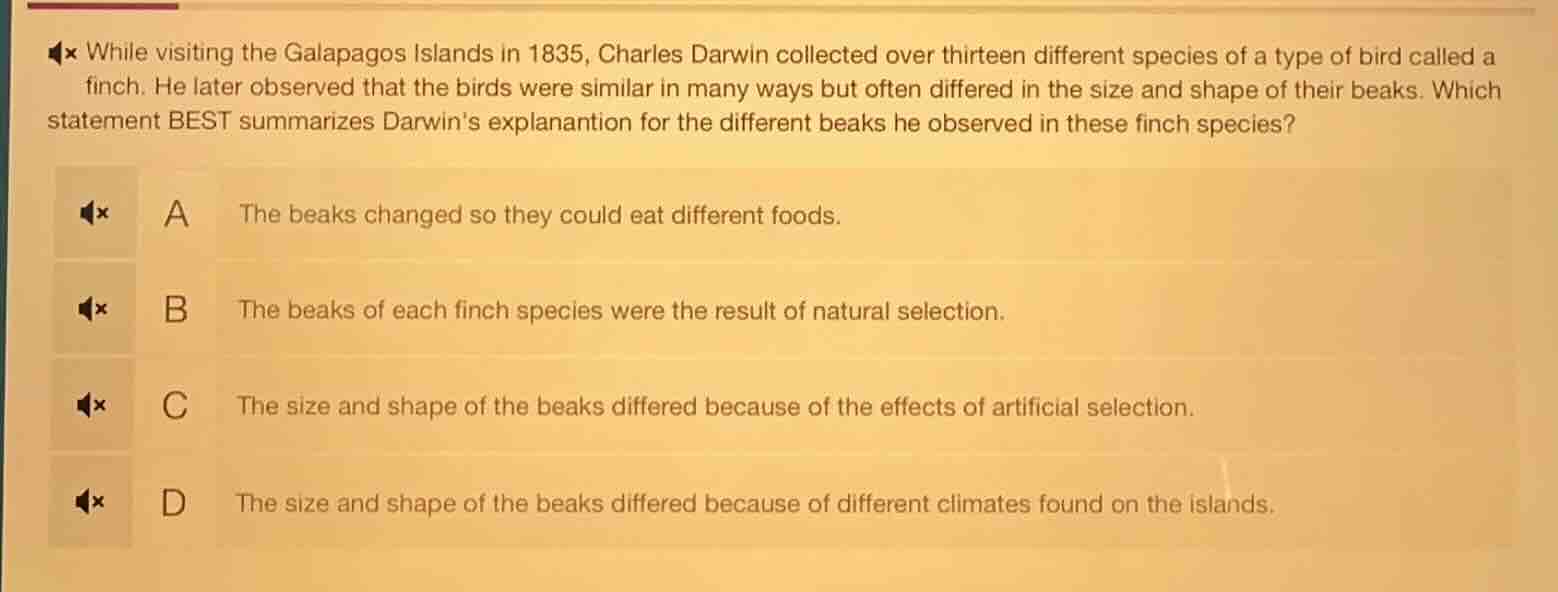
while visiting the galapagos islands in 1835, charles darwin collected over thirteen different species of a type of bird called a finch. he later observed that the birds were similar in many ways but often differed in the size and shape of their beaks. which statement best summarizes darwins explanation for the different beaks he observed in these finch species? a the beaks changed so they could eat different foods. b the beaks of each finch species were the result of natural selection. c the size and shape of the beaks differed because of the effects of artificial selection. d the size and shape of the beaks differed because of different climates found on the islands.
- Option A: While beak changes relate to food, Darwin's key explanation was natural selection, not just a direct "to eat different foods" purposeful change.
- Option B: Darwin's theory of natural selection explains that finch beaks evolved (differed) because those with beak variations suited to their environment (food sources, etc.) survived and reproduced, leading to different species. This matches his explanation.
- Option C: Artificial selection is human - driven, but the Galapagos finches' beak differences came from natural environmental pressures, not human selection.
- Option D: The beak differences were related to food sources (adaptation to eat different foods) and natural selection, not directly to climate.

Snap & solve any problem in the app
Get step-by-step solutions on Sovi AI
Photo-based solutions with guided steps
Explore more problems and detailed explanations
B. The beaks of each finch species were the result of natural selection.