QUESTION IMAGE
Question
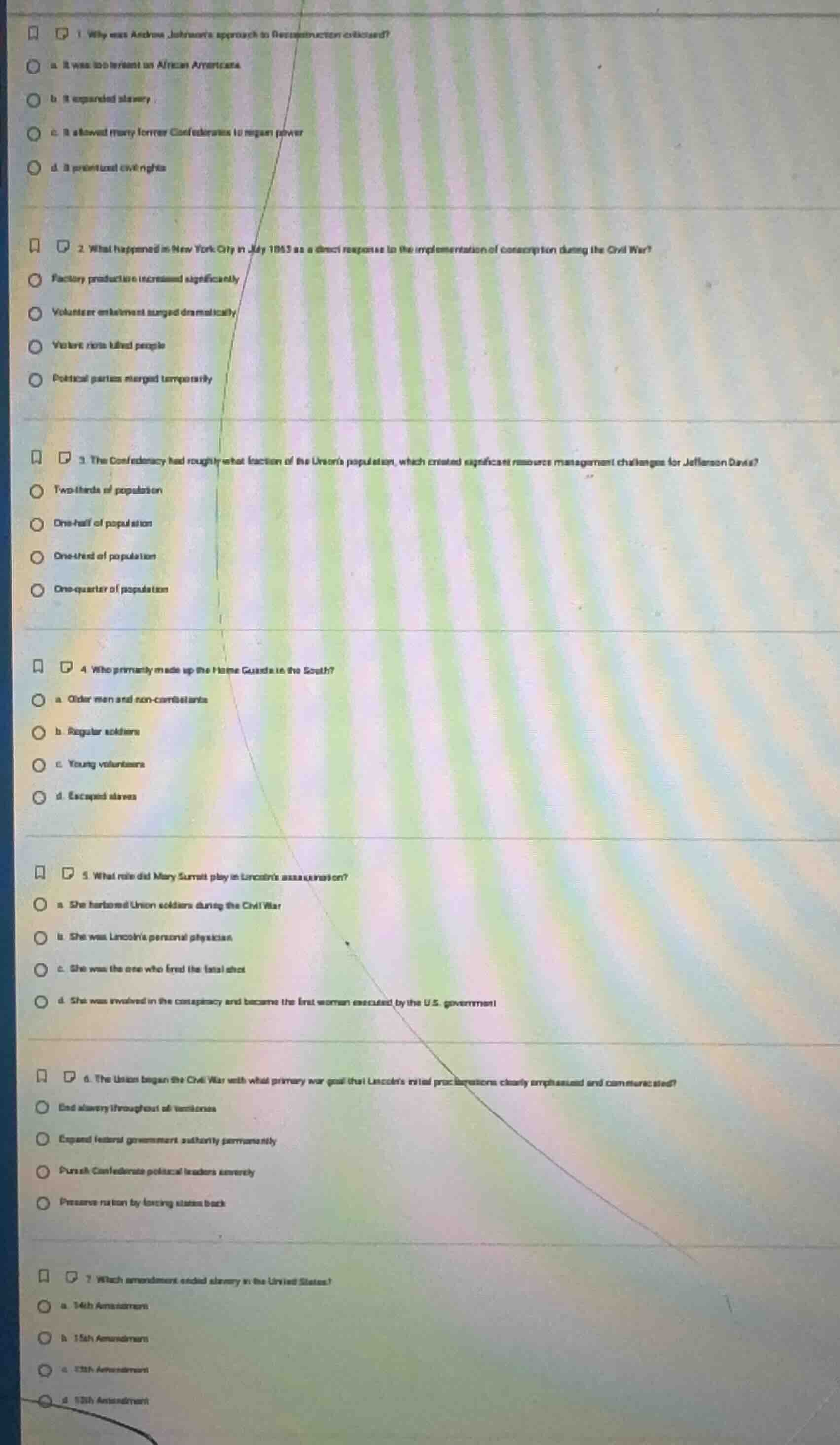
1 why was andrew johnsons approach to reconstruction criticized?
a. it was too lenient on african americans
b. it supported slavery
c. it allowed many former confederates to regain power
d. it prioritized civil rights
2 what happened in new york city in july 1863 as a direct response to the implementation of conscription during the civil war?
factory production increased significantly
volunteer enlistment surged dramatically
violent riots killed people
political parties merged temporarily
3 the confederacy had roughly what fraction of the unions population, which created significant resource management challenges for jefferson davis?
two - thirds of population
one - half of population
one - third of population
one - quarter of population
4 who primarily made up the home guards in the south?
a. older men and non - combatants
b. regular soldiers
c. young volunteers
d. escaped slaves
5 what role did mary surratt play in lincolns assassination?
a. she harbored union soldiers during the civil war
b. she was lincolns personal physician
c. she was the one who fired the fatal shot
d. she was involved in the conspiracy and became the first woman executed by the u.s. government
6 the union began the civil war with what primary war goal that lincolns initial proclamations clearly emphasized and communicated?
end slavery throughout all territories
expand federal government authority permanently
punish confederate political leaders severely
preserve nation by forcing states back
7 which amendment ended slavery in the united states?
a. 14th amendment
b. 15th amendment
c. 13th amendment
d. 12th amendment
- Andrew Johnson's Reconstruction plan was lenient toward former Confederates, letting many regain power, which drew criticism from Radical Republicans.
- The 1863 New York City Draft Riots were violent protests against conscription, resulting in deaths and destruction.
- The Confederacy had approximately one-third of the Union's total population, straining its ability to compete for resources.
- The Southern Home Guard was made up of older men and those unable to serve in regular combat roles.
- Mary Surrrett provided support to Lincoln's conspirators, was convicted, and became the first woman executed by the U.S. government.
- Lincoln's initial goal for the Civil War was to preserve the Union, not end slavery, which came later as a war measure.
- The 13th Amendment to the U.S. Constitution formally abolished slavery nationwide.

Snap & solve any problem in the app
Get step-by-step solutions on Sovi AI
Photo-based solutions with guided steps
Explore more problems and detailed explanations
- c. It allowed many former Confederates to regain power
- Violent riots killed people
- One-third of population
- a. Older men and non-combatants
- d. She was involved in the conspiracy and became the first woman executed by the U.S. government
- Preserve nation by forcing states back
- c. 13th Amendment