QUESTION IMAGE
Question
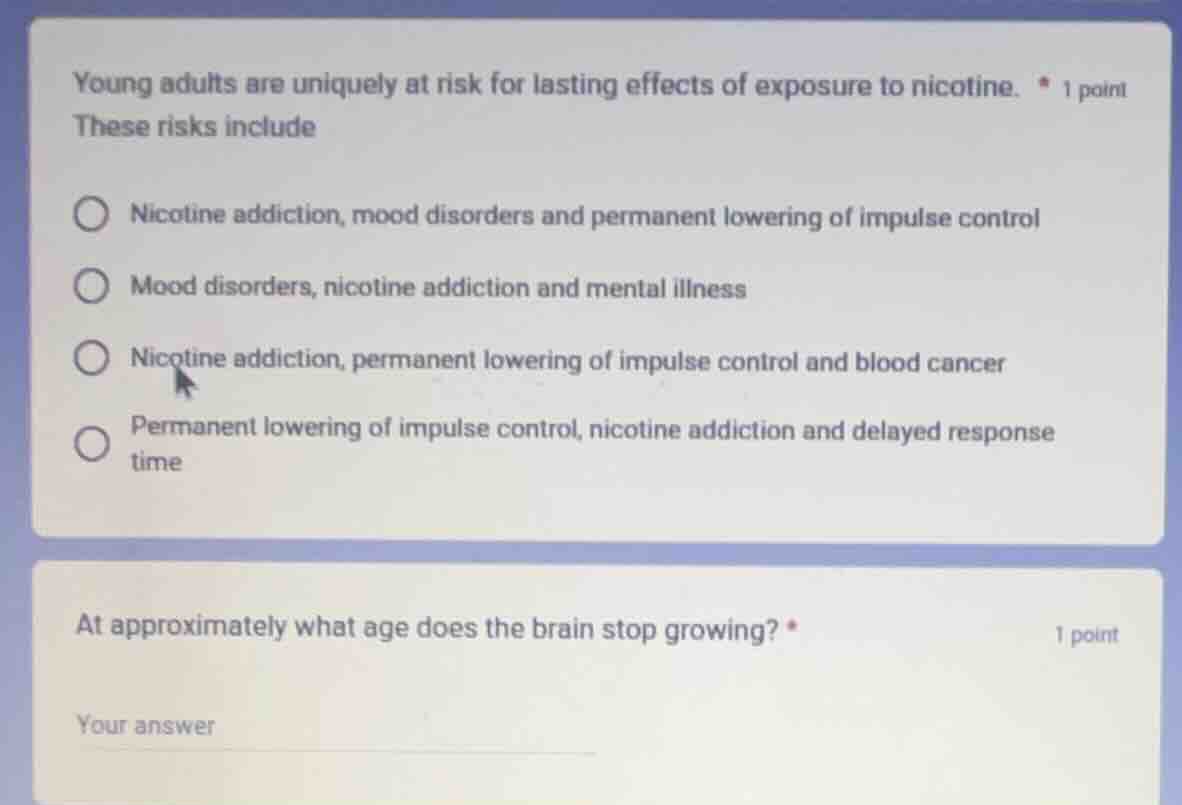
young adults are uniquely at risk for lasting effects of exposure to nicotine. * 1 point
these risks include
○ nicotine addiction, mood disorders and permanent lowering of impulse control
○ mood disorders, nicotine addiction and mental illness
○ nicotine addiction, permanent lowering of impulse control and blood cancer
○ permanent lowering of impulse control, nicotine addiction and delayed response time
at approximately what age does the brain stop growing? *
1 point
your answer
For the first question: Young adults' developing brains are vulnerable to nicotine, which leads to addiction, disrupts mood regulation, and impairs impulse control permanently. Blood cancer is not linked to nicotine exposure in this context, mental illness is too broad, and delayed response time is not a core lasting risk compared to the first option.
For the second question: Research in neuroscience shows that the brain's prefrontal cortex (the last area to mature) finishes developing around the mid-20s, which is when the brain is considered to stop growing structurally and functionally.

Snap & solve any problem in the app
Get step-by-step solutions on Sovi AI
Photo-based solutions with guided steps
Explore more problems and detailed explanations
- Nicotine addiction, mood disorders and permanent lowering of impulse control
- Approximately 25 years old