QUESTION IMAGE
Question
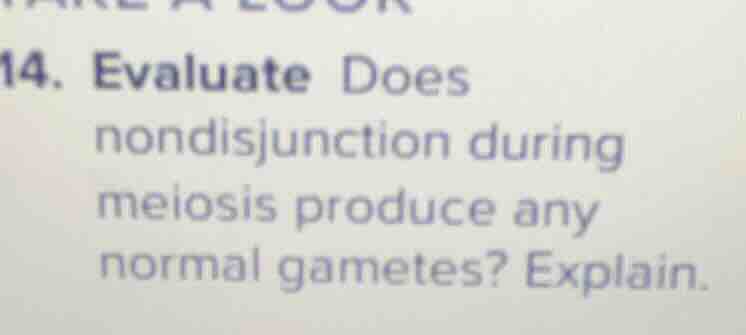
- evaluate does nondisjunction during meiosis produce any normal gametes? explain.
Nondisjunction in meiosis is the failure of homologous chromosomes (in meiosis I) or sister chromatids (in meiosis II) to separate properly. In meiosis I nondisjunction, all four resulting gametes will have an abnormal number of chromosomes (either n + 1 or n - 1). In meiosis II nondisjunction, two gametes will be normal (with n chromosomes) and two will be abnormal (one with n + 1 and one with n - 1). So, in the case of meiosis II nondisjunction, some normal gametes (with the correct haploid number) are produced, while in meiosis I nondisjunction, no normal gametes are produced. Overall, depending on the stage of meiosis where nondisjunction occurs, there can be normal gametes (specifically when nondisjunction happens in meiosis II).

Snap & solve any problem in the app
Get step-by-step solutions on Sovi AI
Photo-based solutions with guided steps
Explore more problems and detailed explanations
Nondisjunction during meiosis may produce normal gametes. If nondisjunction occurs in meiosis I, all four gametes are abnormal (with abnormal chromosome numbers). If it occurs in meiosis II, two gametes are normal (with the correct haploid number of chromosomes) and two are abnormal (one with an extra chromosome, one with a missing chromosome). So, when nondisjunction happens in meiosis II, normal gametes are produced.