QUESTION IMAGE
Question
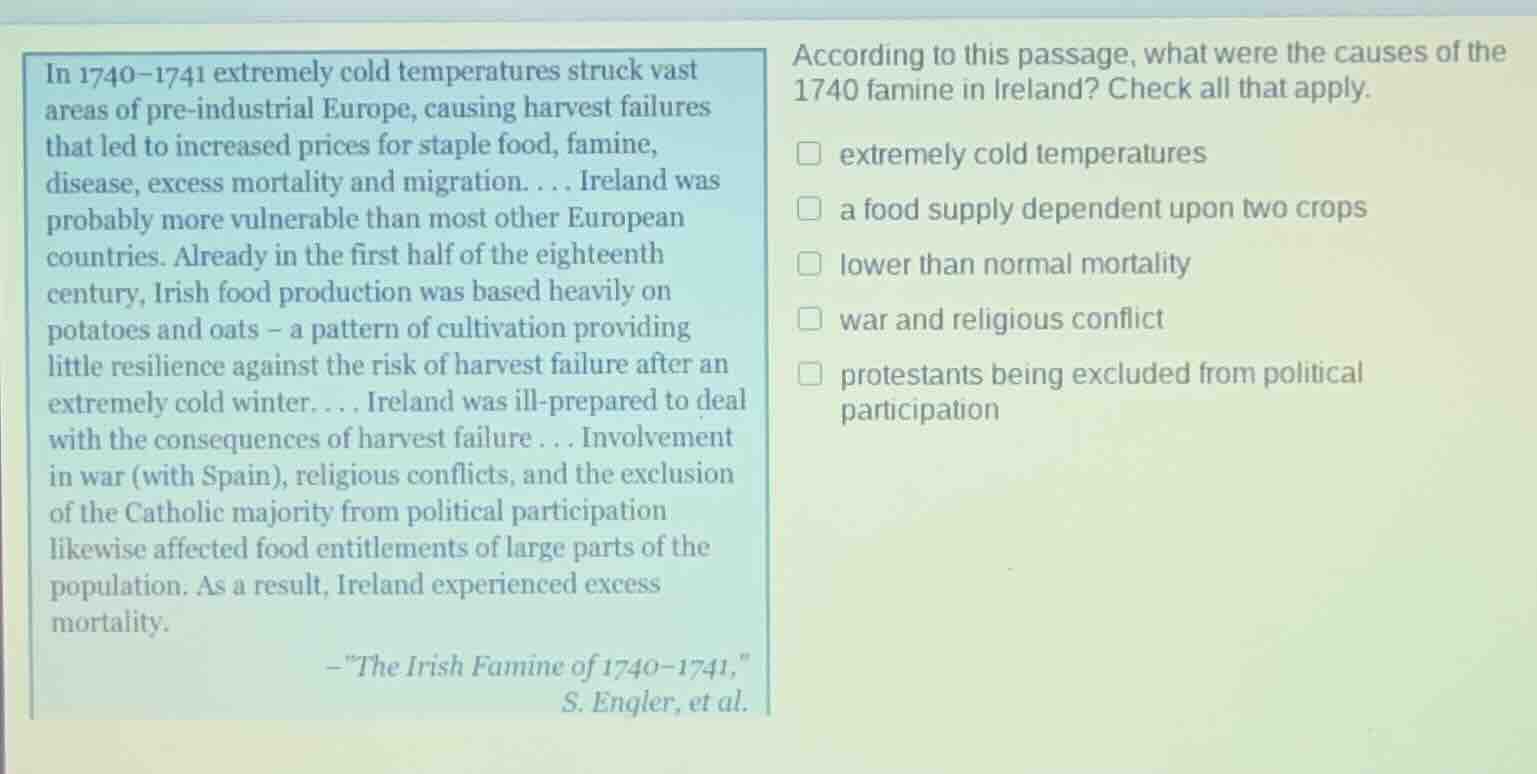
in 1740-1741 extremely cold temperatures struck vast areas of pre-industrial europe, causing harvest failures that led to increased prices for staple food, famine, disease, excess mortality and migration. . . . ireland was probably more vulnerable than most other european countries. already in the first half of the eighteenth century, irish food production was based heavily on potatoes and oats – a pattern of cultivation providing little resilience against the risk of harvest failure after an extremely cold winter. . . . ireland was ill-prepared to deal with the consequences of harvest failure . . . involvement in war (with spain), religious conflicts, and the exclusion of the catholic majority from political participation likewise affected food entitlements of large parts of the population. as a result, ireland experienced excess mortality.
-\the irish famine of 1740-1741,\
s. engler, et al.
according to this passage, what were the causes of the 1740 famine in ireland? check all that apply.
□ extremely cold temperatures
□ a food supply dependent upon two crops
□ lower than normal mortality
□ war and religious conflict
□ protestants being excluded from political participation
- The passage directly states extremely cold temperatures caused harvest failures leading to famine.
- It notes Irish food production relied heavily on potatoes and oats, a two-crop system with low resilience to harvest failure.
- War with Spain and religious conflicts are cited as factors affecting food entitlements and worsening the famine.
- Lower mortality and Protestant exclusion are not mentioned; the passage references excess mortality and Catholic exclusion from politics, so these are incorrect.

Snap & solve any problem in the app
Get step-by-step solutions on Sovi AI
Photo-based solutions with guided steps
Explore more problems and detailed explanations
- extremely cold temperatures
- a food supply dependent upon two crops
- war and religious conflict