QUESTION IMAGE
Question
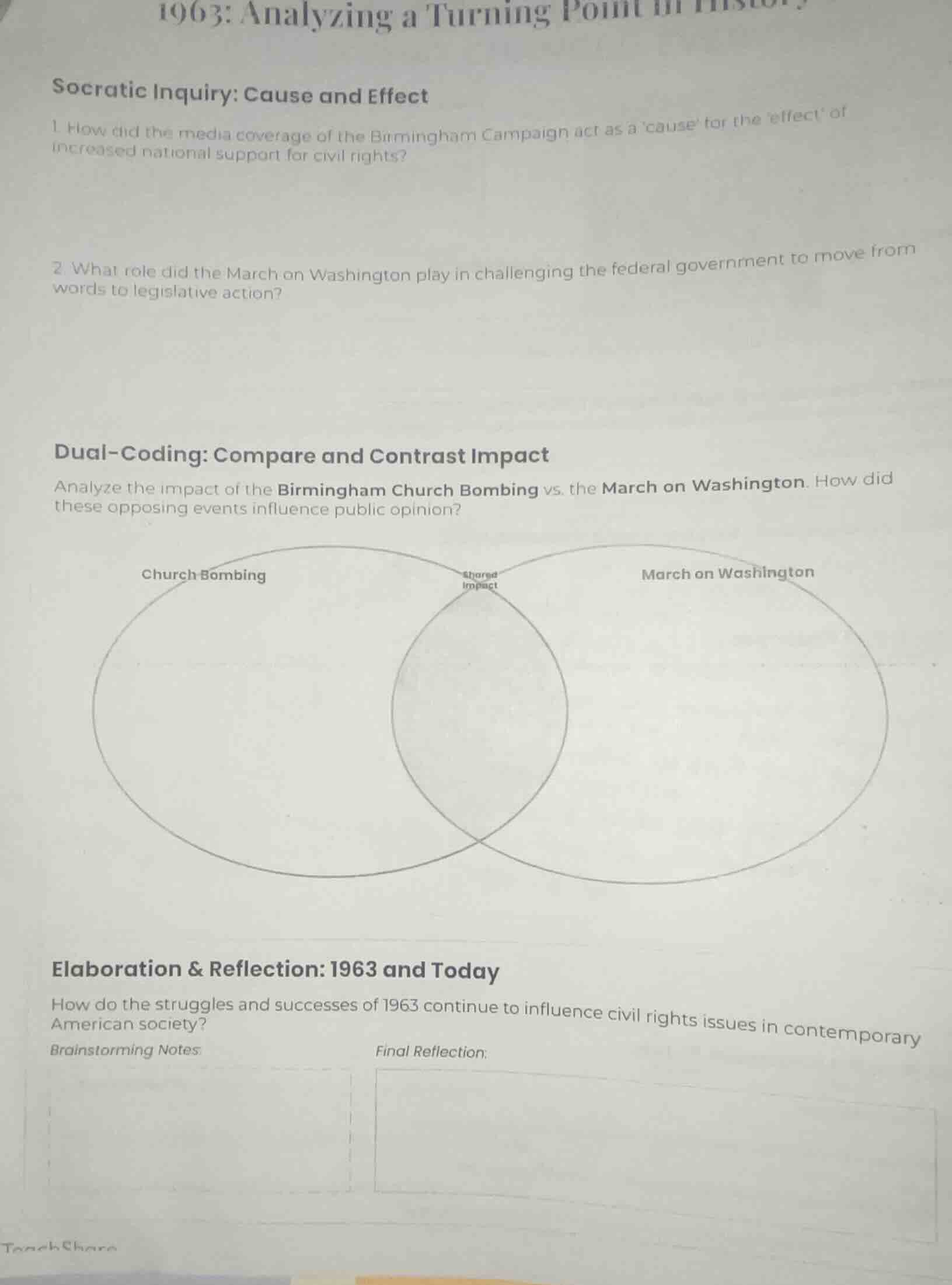
1963: analyzing a turning point in history
socratic inquiry: cause and effect
- how did the media coverage of the birmingham campaign act as a cause for the effect of increased national support for civil rights?
- what role did the march on washington play in challenging the federal government to move from words to legislative action?
dual - coding: compare and contrast impact
analyze the impact of the birmingham church bombing vs. the march on washington. how did these opposing events influence public opinion?
elaboration & reflection: 1963 and today
how do the struggles and successes of 1963 continue to influence civil rights issues in contemporary american society?
brainstorming notes:
final reflection:
Brief Explanations
For Socratic Inquiry Questions:
- Media coverage of the Birmingham Campaign showed violent, racist attacks on peaceful Black protesters (including children) to a national audience. This shocked moderate white Americans, eroding support for segregation and building backing for civil rights reforms.
- The March on Washington drew over 200,000 multiracial peaceful demonstrators to the nation's capital, featuring Martin Luther King Jr.'s "I Have a Dream" speech. It showcased broad, unified public demand for equality, pressuring Congress and the White House to pass concrete civil rights legislation rather than making symbolic statements.
For Dual-Coding Venn Diagram:
- Church Bombing (Unique Impact): Killed 4 Black girls, sparking widespread outrage and grief. It galvanized Black activists, hardened resolve against segregation, and pushed moderate whites to condemn violent white supremacy.
- March on Washington (Unique Impact): Projected a vision of peaceful, integrated equality. It humanized the civil rights movement to national and global audiences, built cross-racial alliances, and created a positive, unifying narrative for reform.
- Shared Impact: Both events dominated national media coverage, drastically shifted public opinion away from segregation, and increased pressure on the federal government to prioritize civil rights legislation.
For Elaboration & Reflection:
- Brainstorming Notes (key points):
- 1963 set a blueprint for peaceful protest (used in modern movements like Black Lives Matter)
- Legacy of 1963 civil rights laws (Voting Rights Act, Civil Rights Act) still shapes policy debates over voting access, racial equity, and police reform
- The tension between peaceful protest and reactionary violence (seen in 1963) remains a feature of contemporary civil rights discourse
- 1963's focus on economic justice (part of the March on Washington's demands) continues in modern calls for racial economic equity
- Final Reflection: The 1963 civil rights movement's combination of peaceful mass action, media advocacy, and moral urgency established a lasting framework for addressing racial injustice in the U.S. Its successes (like foundational civil rights legislation) provide legal tools for modern activists, while the unresolved demands (around economic equality and full racial inclusion) continue to drive contemporary civil rights struggles. The events also highlighted the power of public opinion and media in forcing political change, a strategy still used by activists today.

Snap & solve any problem in the app
Get step-by-step solutions on Sovi AI
Photo-based solutions with guided steps
Explore more problems and detailed explanations
Socratic Inquiry:
- National media showed violent attacks on peaceful Birmingham protesters, shocking moderate whites and turning public opinion against segregation, which directly increased support for civil rights reforms.
- The March on Washington demonstrated massive, unified cross-racial support for civil rights through peaceful assembly and iconic rhetoric, pressuring the federal government to pass tangible civil rights laws instead of symbolic statements.
Dual-Coding Venn Diagram:
- Church Bombing: Sparked intense national grief and outrage over violent white supremacy; galvanized Black activists and pushed moderates to reject segregation's brutality.
- March on Washington: Presented a hopeful, unifying vision of integrated equality; built cross-racial alliances and created a positive, widely resonant narrative for reform.
- Shared Impact: Drove national media attention, shifted mainstream public opinion away from segregation, and intensified pressure on the federal government to enact civil rights legislation.
Elaboration & Reflection:
- Brainstorming Notes:
- Blueprint for peaceful protest (used in BLM)
- 1963 civil rights laws shape modern voting/equity policy debates
- Tension between protest and violent backlash persists
- Unmet 1963 economic justice demands remain relevant
- Final Reflection: The 1963 civil rights turning point created a lasting playbook for racial justice activism, from peaceful mass mobilization to media advocacy. Its legislative wins provide a legal foundation for modern equity efforts, while its unresolved goals (economic justice, full inclusion) continue to define contemporary civil rights struggles. The year's events also cemented the power of public opinion and moral urgency to force political change, a core strategy for activists today.