QUESTION IMAGE
Question
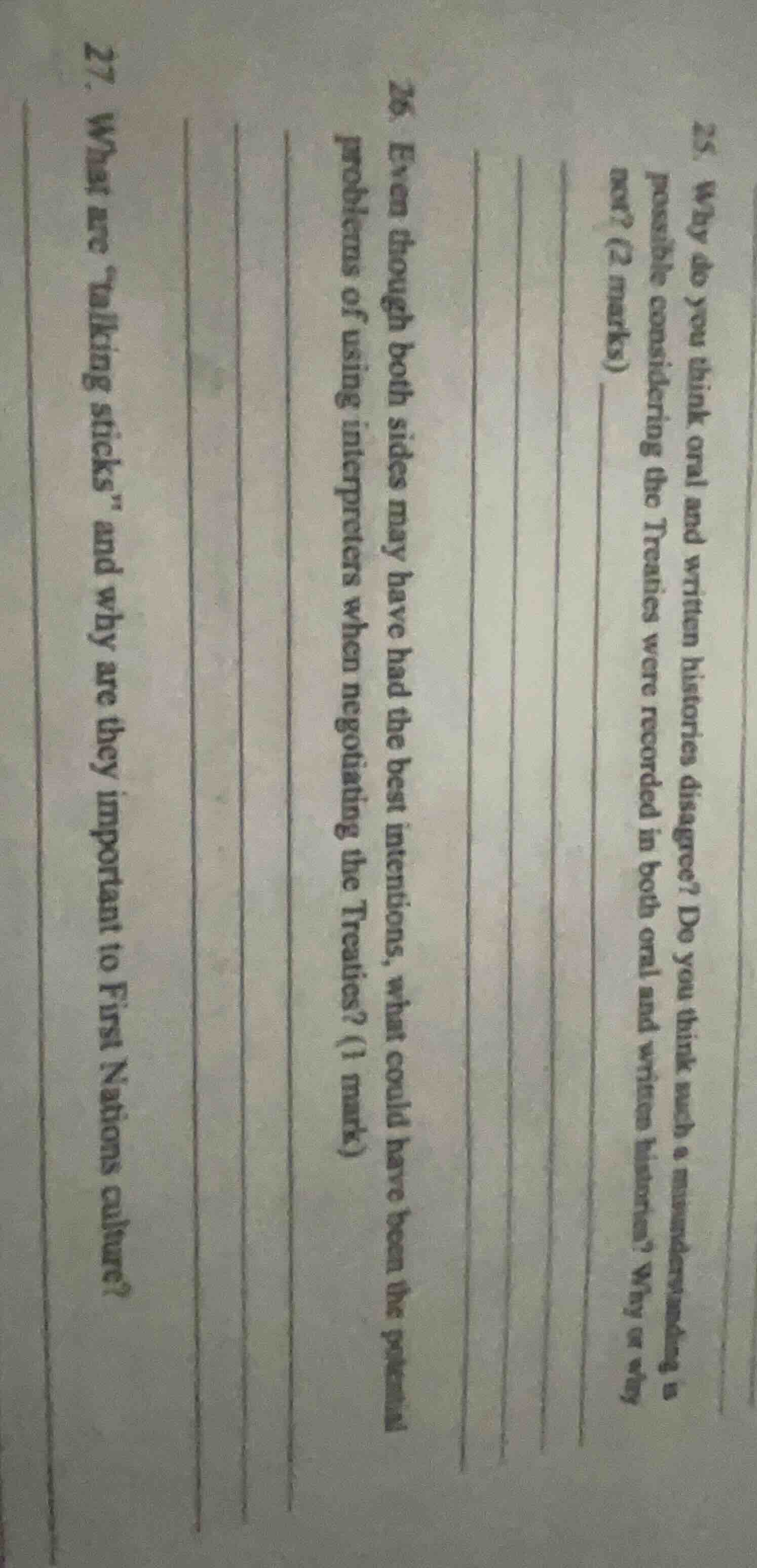
- why do you think oral and written histories disagree? do you think such a misunderstanding is possible considering the treaties were recorded in both oral and written forms? why or why not? (2 marks)
- even though both sides may have had the best intentions, what could have been the potential problems of using interpreters when negotiating the treaties? (1 mark)
- what are \talking sticks\ and why are they important to first nations culture?
For Question 25:
Oral histories rely on verbal transmission, which can shift over time with retellings, while written histories are fixed but may reflect the biases or limited perspective of the recorder. This mismatch can cause disagreements. Such a misunderstanding is possible even with dual-recorded Treaties: oral accounts may hold context, cultural nuance, or unwritten agreements not captured in formal written documents, while written versions may prioritize legalistic, colonial framing that conflicts with oral cultural understandings.
For Question 26:
Interpreters may lack fluency in specific cultural or legal terminology unique to First Nations and colonial systems, leading to mistranslation of critical concepts. They might also have implicit biases, or prioritize the perspective of one negotiating side over the other, distorting the intended meaning of proposals or agreements.
For Question 27:
Talking sticks are traditional ceremonial objects used by many First Nations groups. They are passed among participants in a gathering, and only the holder has the right to speak, ensuring everyone's voice is heard respectfully. They are important because they enforce structured, inclusive communication, uphold cultural protocols, and foster mutual respect and active listening within the community.

Snap & solve any problem in the app
Get step-by-step solutions on Sovi AI
Photo-based solutions with guided steps
Explore more problems and detailed explanations
- Oral and written histories disagree because oral accounts evolve through retelling and carry cultural context, while written records are fixed but may have biased or limited framing. A misunderstanding is possible even with dual-recorded Treaties: oral versions often include unspoken cultural agreements or nuance not captured in formal, legalistic written texts, which may reflect colonial priorities instead of Indigenous perspectives.
- Potential problems include mistranslation of culture-specific or legal terms, and implicit bias from interpreters that favors one negotiating party's perspective over the other.
- Talking sticks are ceremonial objects passed in gatherings; only the holder may speak. They are important to First Nations culture as they ensure respectful, inclusive, structured communication, uphold cultural protocols, and foster mutual respect and equal voice in community discussions.