QUESTION IMAGE
Question
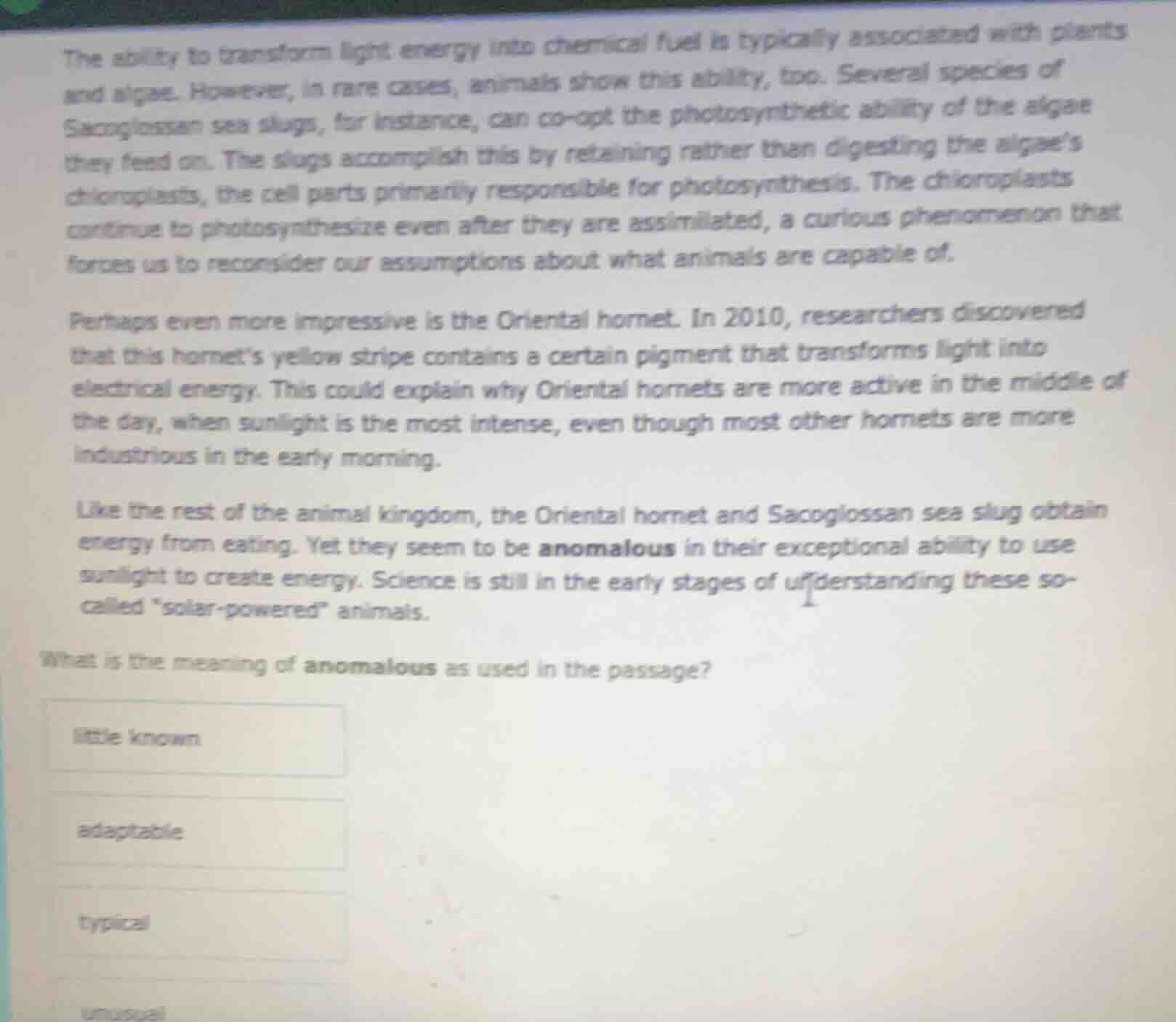
the ability to transform light energy into chemical fuel is typically associated with plants and algae. however, in rare cases, animals show this ability, too. several species of sacoglossan sea slugs, for instance, can co - opt the photosynthetic ability of the algae they feed on. the slugs accomplish this by retaining rather than digesting the algae’s chloroplasts, the cell parts primarily responsible for photosynthesis. the chloroplasts continue to photosynthesize even after they are assimilated, a curious phenomenon that forces us to reconsider our assumptions about what animals are capable of.
perhaps even more impressive is the oriental hornet. in 2010, researchers discovered that this hornet’s yellow stripe contains a certain pigment that transforms light into electrical energy. this could explain why oriental hornets are more active in the middle of the day, when sunlight is the most intense, even though most other hornets are more industrious in the early morning.
like the rest of the animal kingdom, the oriental hornet and sacoglossan sea slug obtain energy from eating. yet they seem to be anomalous in their exceptional ability to use sunlight to create energy. science is still in the early stages of understanding these so - called “solar - powered” animals.
what is the meaning of anomalous as used in the passage?
little known
adaptable
typical
unusual
The passage states that these animals, unlike most others, can use sunlight to create energy, which is an exception to the norm for animals. The word "anomalous" here describes this deviation from typical animal traits, matching the meaning of "unusual". The other options do not fit: "little known" refers to lack of knowledge, "adaptable" refers to ability to adjust, and "typical" is the opposite of the intended meaning.

Snap & solve any problem in the app
Get step-by-step solutions on Sovi AI
Photo-based solutions with guided steps
Explore more problems and detailed explanations
unusual