QUESTION IMAGE
Question
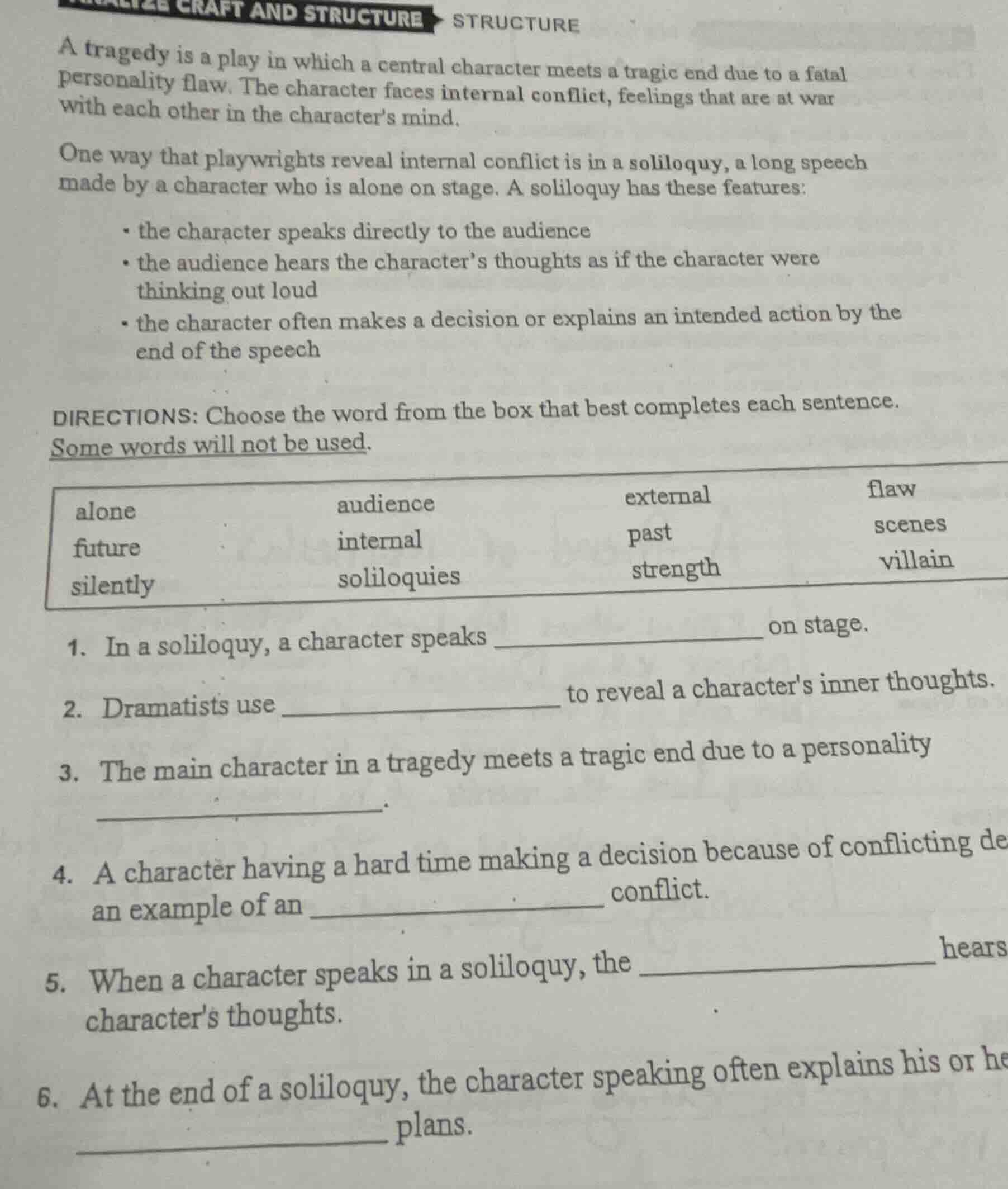
analyze craft and structure structure a tragedy is a play in which a central character meets a tragic end due to a fatal personality flaw. the character faces internal conflict, feelings that are at war with each other in the character’s mind. one way that playwrights reveal internal conflict is in a soliloquy, a long speech made by a character who is alone on stage. a soliloquy has these features: - the character speaks directly to the audience - the audience hears the character’s thoughts as if the character were thinking out loud - the character often makes a decision or explains an intended action by the end of the speech directions: choose the word from the box that best completes each sentence. some words will not be used. alone audience external flaw future internal past scenes silently soliloquies strength villain 1. in a soliloquy, a character speaks ________________ on stage. 2. dramatists use ______________ to reveal a characters inner thoughts. 3. the main character in a tragedy meets a tragic end due to a personality _____________. 4. a character having a hard time making a decision because of conflicting de an example of an _____________ conflict. 5. when a character speaks in a soliloquy, the _____________ hears character’s thoughts. 6. at the end of a soliloquy, the character speaking often explains his or he _______________ plans.
- Matches the definition of a soliloquy where the character is alone on stage.
- Soliloquies are defined as the tool to reveal inner character thoughts.
- Tragedy is defined by a central character's fatal personality flaw leading to their end.
- Internal conflict is defined as conflicting feelings within a character's mind.
- The audience is stated to hear the character's thoughts during a soliloquy.
- The text notes soliloquies often end with explaining intended future actions/plans.

Snap & solve any problem in the app
Get step-by-step solutions on Sovi AI
Photo-based solutions with guided steps
Explore more problems and detailed explanations
- alone
- soliloquies
- flaw
- internal
- audience
- future