QUESTION IMAGE
Question
analyzing how figurative language creates mood
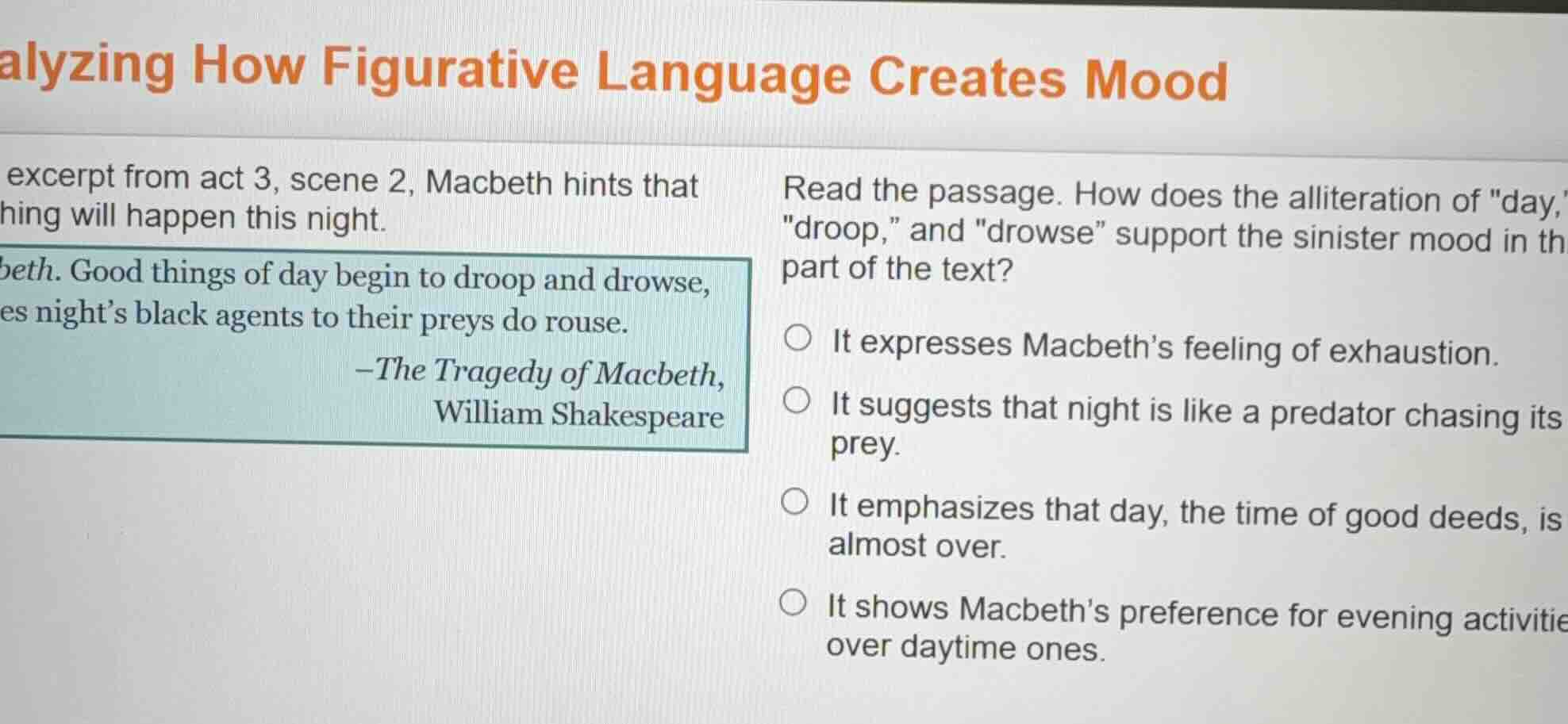
excerpt from act 3, scene 2, macbeth hints that
something will happen this night.
beth. good things of day begin to droop and drowse,
nights black agents to their preys do rouse.
-the tragedy of macbeth,
william shakespeare
read the passage. how does the alliteration of \day,\
\droop,\ and \drowse\ support the sinister mood in this
part of the text?
○ it expresses macbeths feeling of exhaustion.
○ it suggests that night is like a predator chasing its
prey.
○ it emphasizes that day, the time of good deeds, is
almost over.
○ it shows macbeths preference for evening activities
over daytime ones.
Alliteration of "day," "droop," and "drowse" slows the rhythm, emphasizing the fade of positive daytime. This shift lets night's "black agents" (sinister forces) awaken, reinforcing the sinister mood by signaling the end of safety and rise of darkness. The correct option links this to the end of good daytime, enabling the sinister night.

Snap & solve any problem in the app
Get step-by-step solutions on Sovi AI
Photo-based solutions with guided steps
Explore more problems and detailed explanations
It emphasizes that day, the time of good deeds, is almost over.