QUESTION IMAGE
Question
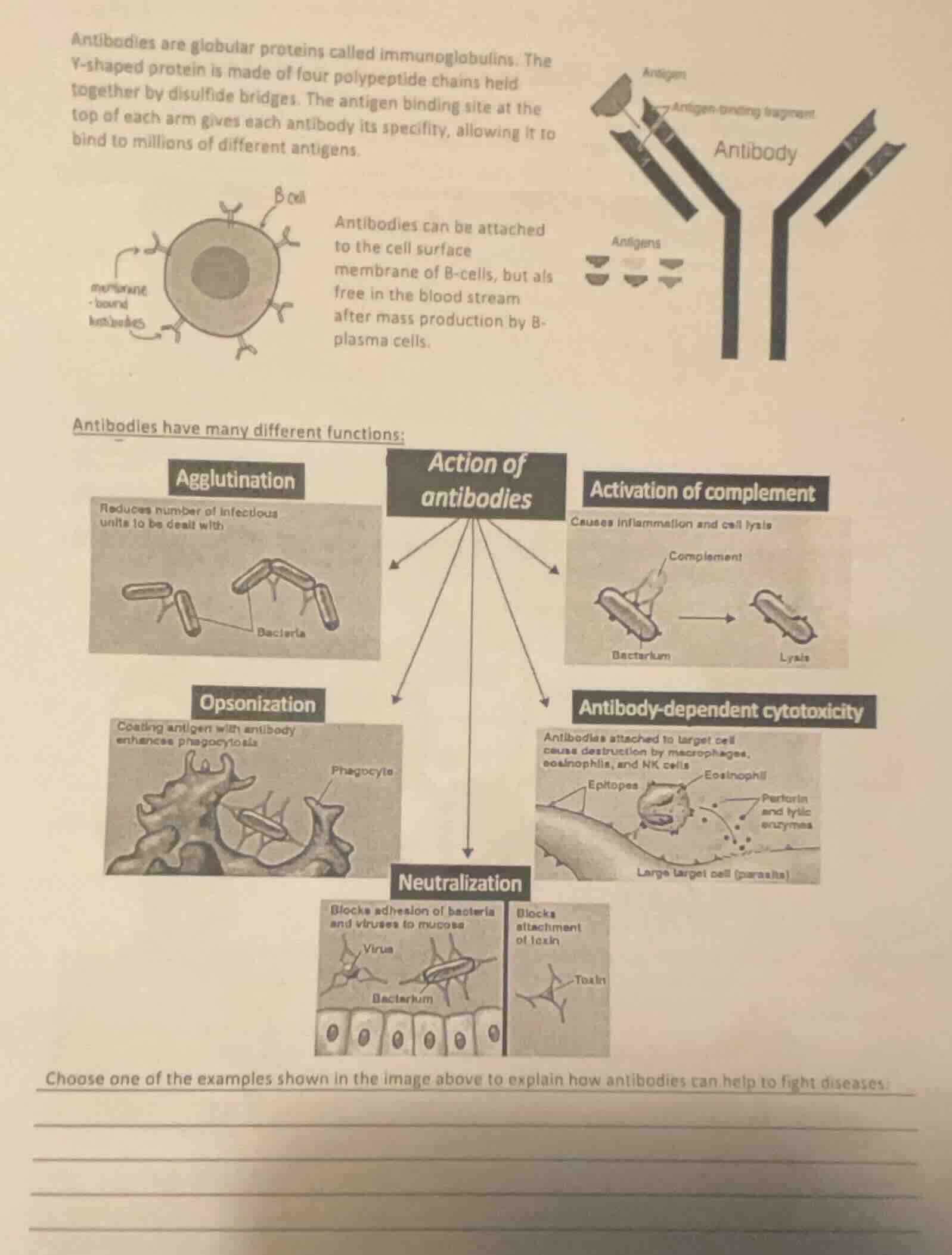
antibodies are globular proteins called immunoglobulins. the y-shaped protein is made of four polypeptide chains held together by disulfide bridges. the antigen binding site at the top of each arm gives each antibody its specificity, allowing it to bind to millions of different antigens.antibodies can be attached to the cell surface membrane of b-cells, but als free in the blood stream after mass production by b-plasma cells.antibodies have many different functions:agglutinationreduces number of infectious units to be dealt withaction of antibodiesactivation of complementcauses inflammation and cell lysisopsonizationcoating antigen with antibody enhances phagocytosisantibody-dependent cytotoxicityantibodies attached to target cell cause destruction by macrophages, eosinophils, and nk cellsneutralizationblocks adhesion of bacteria and viruses to mucosablocks attachment of toxinchoose one of the examples shown in the image above to explain how antibodies can help to fight diseases:
Neutralization is an antibody function that blocks harmful agents from interacting with the body's cells. Antibodies bind to bacteria, viruses, or toxins, preventing them from attaching to and invading host cells (like mucosal cells) or exerting their toxic effects. This stops the pathogen or toxin from causing infection or damage, allowing the immune system to clear the threat.

Snap & solve any problem in the app
Get step-by-step solutions on Sovi AI
Photo-based solutions with guided steps
Explore more problems and detailed explanations
Using neutralization as an example: Antibodies bind to bacteria, viruses, or toxins. This blocks the harmful agents from adhering to mucosal cells (for pathogens) or attaching to their target sites (for toxins). By preventing this attachment, the antibodies stop the pathogen from invading host cells or the toxin from causing damage, effectively halting the progression of disease and enabling the immune system to eliminate the threat.