QUESTION IMAGE
Question
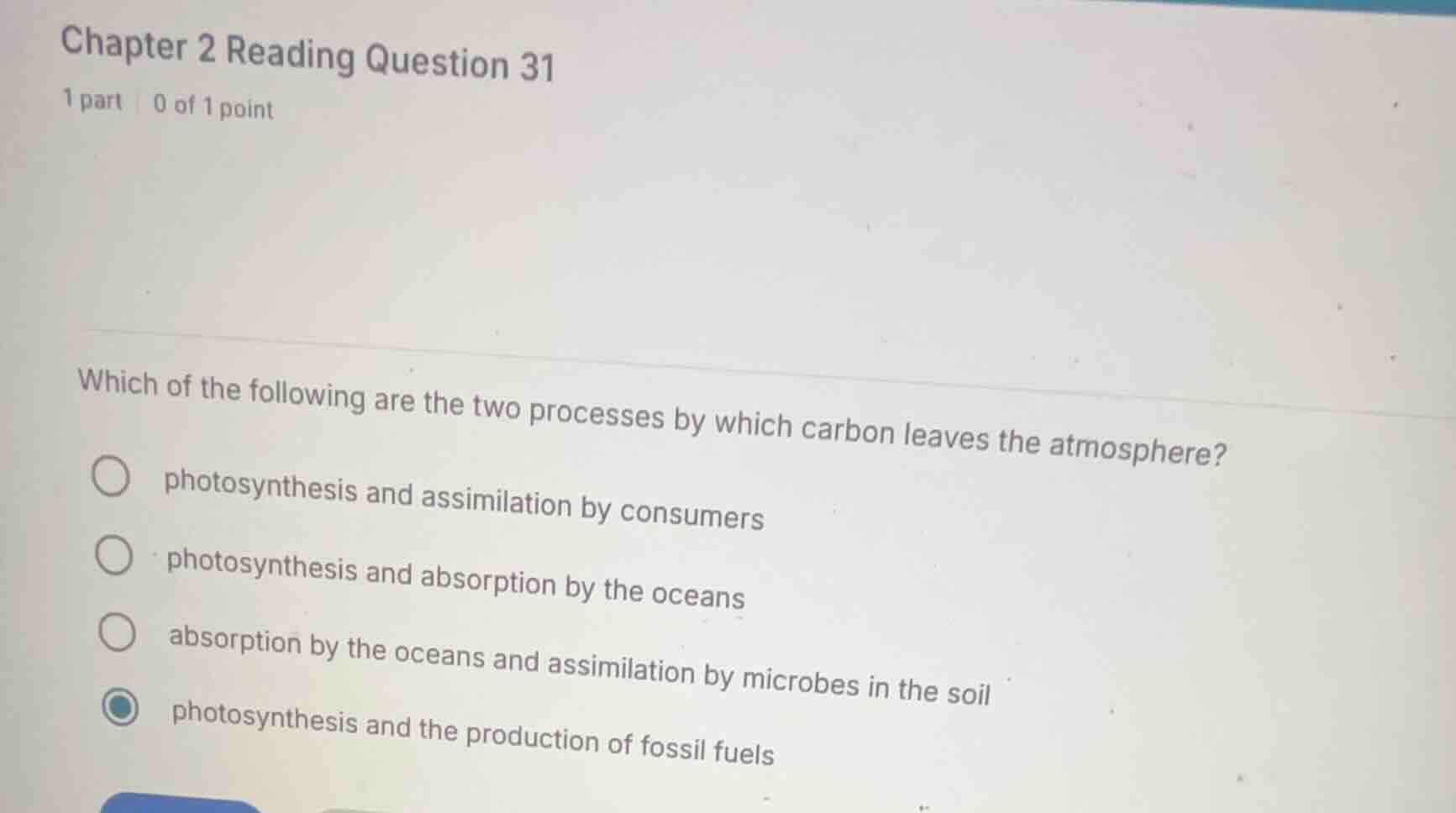
chapter 2 reading question 31
1 part 0 of 1 point
which of the following are the two processes by which carbon leaves the atmosphere?
○ photosynthesis and assimilation by consumers
○ photosynthesis and absorption by the oceans
○ absorption by the oceans and assimilation by microbes in the soil
○ photosynthesis and the production of fossil fuels
Brief Explanations
To determine the two processes by which carbon leaves the atmosphere, we analyze each option:
- Option 1 (photosynthesis and assimilation by consumers): Assimilation by consumers involves organisms taking in carbon - containing compounds from their food, but this is more about carbon movement within the biosphere rather than carbon leaving the atmosphere.
- Option 2 (photosynthesis and absorption by the oceans): Photosynthesis is the process by which plants (and some other organisms) take in carbon dioxide ($CO_2$) from the atmosphere and convert it into organic matter, effectively removing carbon from the atmosphere. Oceans can absorb large amounts of carbon dioxide from the atmosphere, either in the form of dissolved $CO_2$ or through the formation of carbonate compounds. So both these processes remove carbon from the atmosphere.
- Option 3 (absorption by the oceans and assimilation by microbes in the soil): Assimilation by microbes in the soil is about the cycling of carbon within the soil ecosystem and does not directly remove carbon from the atmosphere.
- Option 4 (photosynthesis and the production of fossil fuels): The production of fossil fuels involves the burial and transformation of organic matter over long periods. It is not a process by which carbon leaves the atmosphere; in fact, the burning of fossil fuels releases carbon into the atmosphere.

Snap & solve any problem in the app
Get step-by-step solutions on Sovi AI
Photo-based solutions with guided steps
Explore more problems and detailed explanations
B. photosynthesis and absorption by the oceans