QUESTION IMAGE
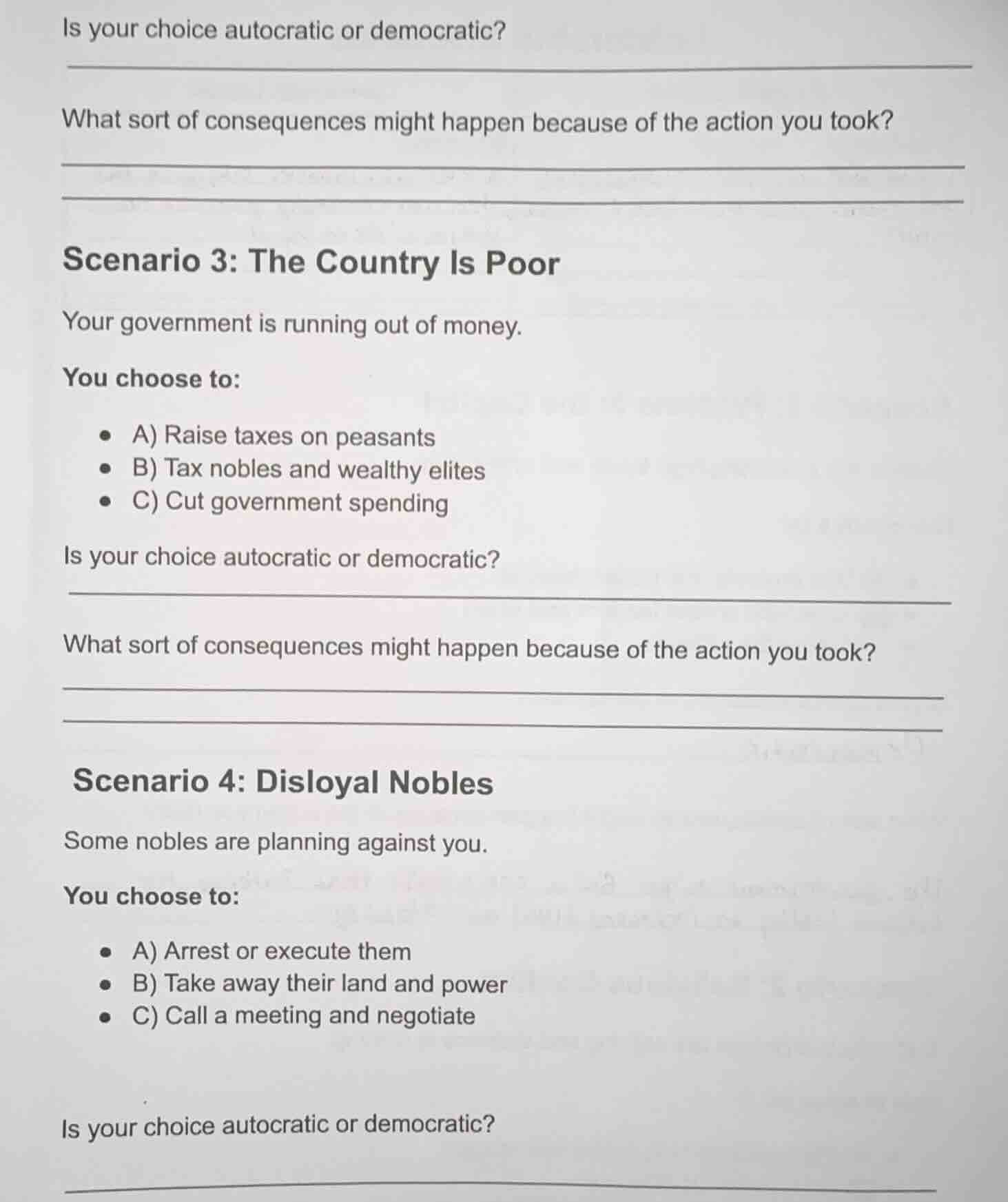
Question
is your choice autocratic or democratic?
what sort of consequences might happen because of the action you took?
scenario 3: the country is poor
your government is running out of money.
you choose to:
- a) raise taxes on peasants
- b) tax nobles and wealthy elites
- c) cut government spending
is your choice autocratic or democratic?
what sort of consequences might happen because of the action you took?
scenario 4: disloyal nobles
some nobles are planning against you.
you choose to:
- a) arrest or execute them
- b) take away their land and power
- c) call a meeting and negotiate
is your choice autocratic or democratic?
Response
Since the problem is about analyzing political choices and their democratic/autocratic nature along with consequences, we'll use the Answer - Explanation Format.
Scenario 3: The Country Is Poor
Brief Explanations
- Choice A (Raise taxes on peasants): Autocratic. Peasants are a vulnerable group; imposing taxes on them without broader consultation (targeting the less powerful) shows autocratic control. Consequences: Peasant unrest, reduced support for the government, possible uprisings as they bear the burden unfairly.
- Choice B (Tax nobles and wealthy elites): Democratic. Targeting the wealthy (who have more resources and power) to address government funds, and this is a more equitable approach that considers the broader good (sharing the burden of the rich). Consequences: Nobles may resist (e.g., political opposition, attempts to undermine the government), but the general population may support the move as it's fair.
- Choice C (Cut government spending): Can be democratic or autocratic depending on the process. If the cuts are decided through a consultative process (e.g., involving different groups), democratic. If imposed unilaterally, autocratic. Consequences: Reduced public services (affecting citizens), possible protests if essential services are cut, but it addresses the financial issue in the short - term.
Brief Explanations
- Choice A (Arrest or execute them): Autocratic. Using force unilaterally to deal with opposition, without due process or negotiation. Consequences: Fear among other nobles (possible more plotting against the ruler), a show of power but potential for more unrest as it's a harsh measure.
- Choice B (Take away their land and power): Autocratic. Unilaterally stripping nobles of their rights and resources without a fair process. Consequences: Nobles' anger (more opposition), loss of land - related income for the nobles (may lead to economic disruptions if they were significant landowners), and a power shift.
- Choice C (Call a meeting and negotiate): Democratic. Engaging in dialogue to resolve the conflict, giving the nobles a chance to voice their concerns and find a peaceful solution. Consequences: May reach a peaceful resolution (e.g., nobles stop plotting, a new agreement is formed), but negotiations may take time and there's a risk the nobles may not cooperate.

Snap & solve any problem in the app
Get step-by-step solutions on Sovi AI
Photo-based solutions with guided steps
Explore more problems and detailed explanations
- For Choice A: Autocratic. Consequences: Peasant unrest, reduced government support.
- For Choice B: Democratic. Consequences: Nobles' resistance, public support.
- For Choice C: Depends on process; if unilateral - Autocratic, if consultative - Democratic. Consequences: Reduced public services, possible protests.