QUESTION IMAGE
Question
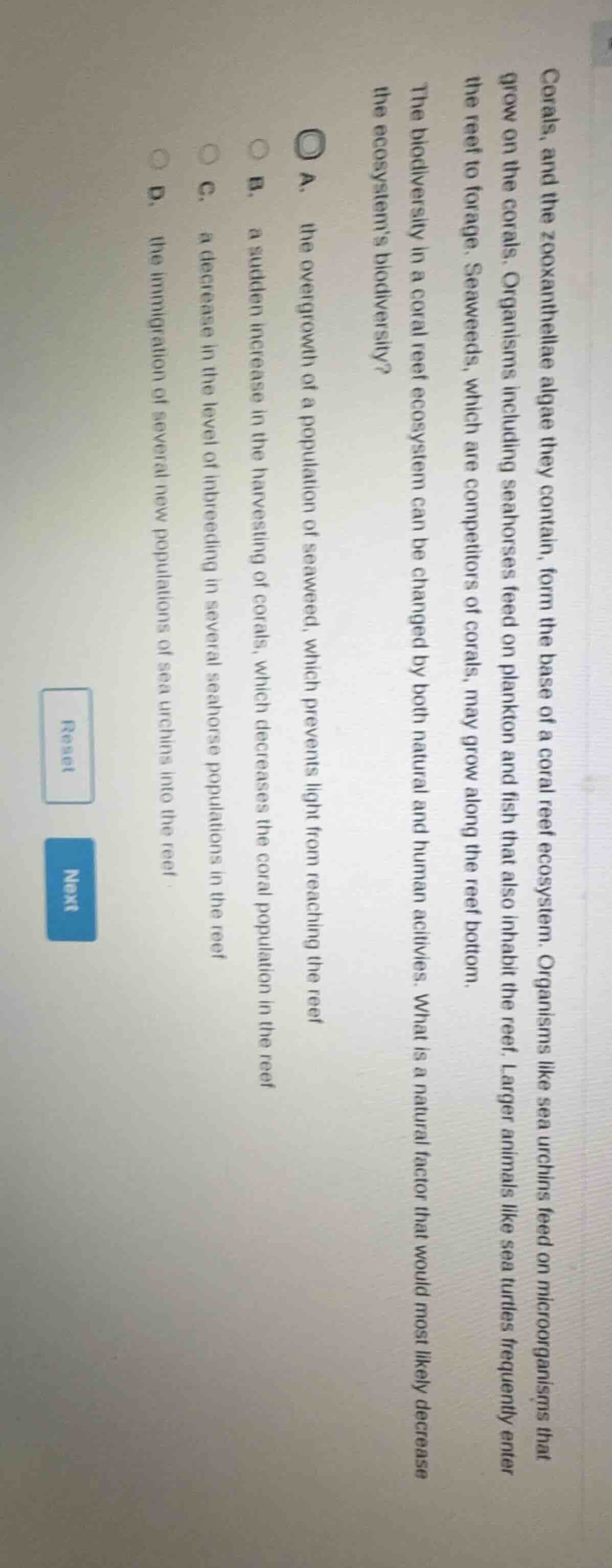
corals, and the zooxanthellae algae they contain, form the base of a coral reef ecosystem. organisms like sea urchins feed on microorganisms that grow on the corals. organisms including seahorses feed on plankton and fish that also inhabit the reef. larger animals like sea turtles frequently enter the reef to forage. seaweeds, which are competitors of corals, may grow along the reef bottom.
the biodiversity in a coral reef ecosystem can be changed by both natural and human activities. what is a natural factor that would most likely decrease the ecosystem’s biodiversity?
a. the overgrowth of a population of seaweed, which prevents light from reaching the reef
b. a sudden increase in the harvesting of corals, which decreases the coral population in the reef
c. a decrease in the level of inbreeding in several seahorse populations in the reef
d. the immigration of several new populations of sea urchins into the reef
Natural factors are ecological changes not caused by human activity. Option A describes seaweed overgrowth (a natural ecological shift) that blocks light for corals, the base of the reef ecosystem, reducing biodiversity. Option B is human-driven coral harvesting, option C is a genetic change not a direct biodiversity reducer, and option D would increase biodiversity via new species.

Snap & solve any problem in the app
Get step-by-step solutions on Sovi AI
Photo-based solutions with guided steps
Explore more problems and detailed explanations
A. the overgrowth of a population of seaweed, which prevents light from reaching the reef