QUESTION IMAGE
Question
date:
period:
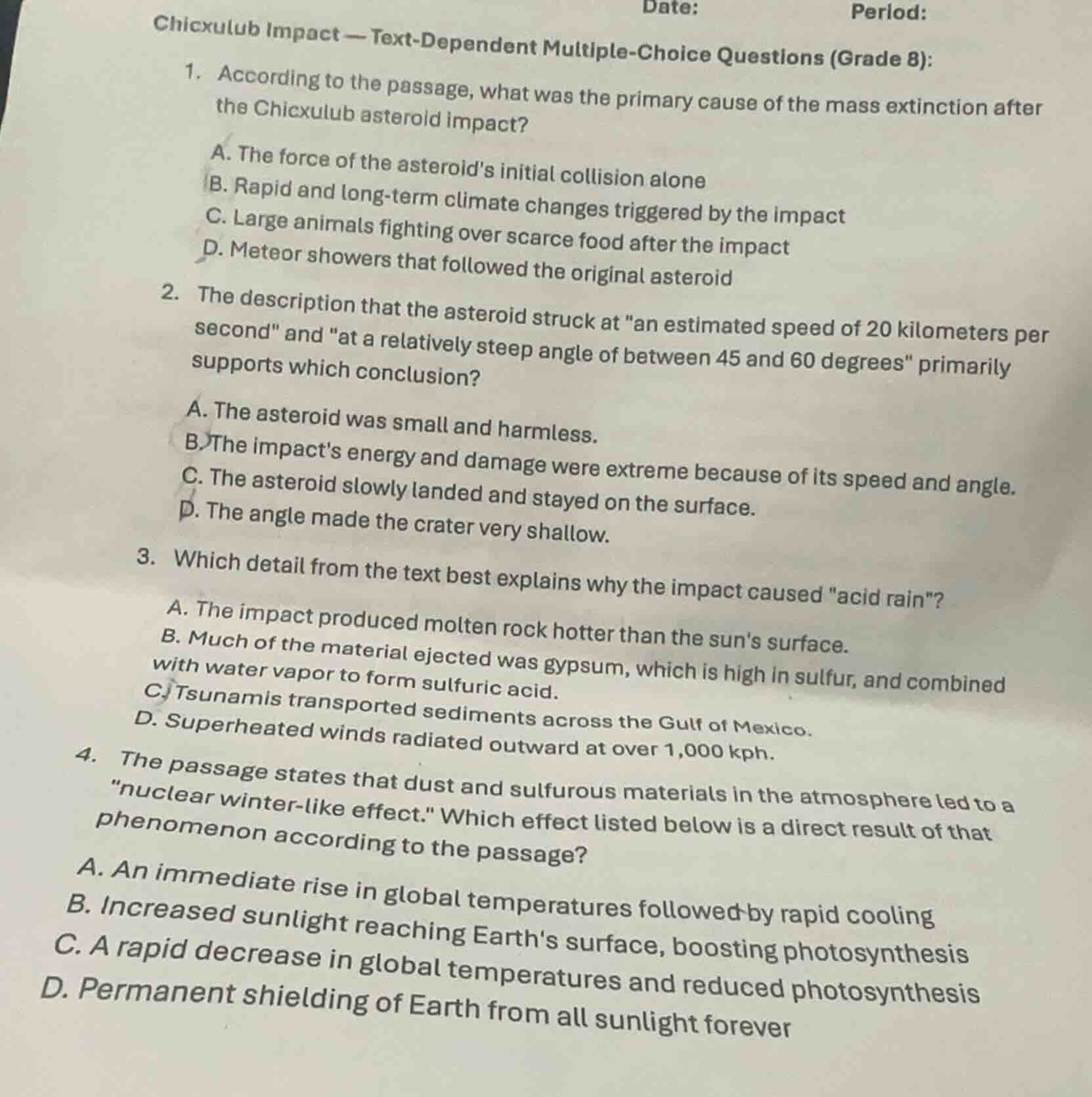
chicxulub impact — text - dependent multiple - choice questions (grade 8):
- according to the passage, what was the primary cause of the mass extinction after the chicxulub asteroid impact?
a. the force of the asteroid’s initial collision alone
b. rapid and long - term climate changes triggered by the impact
c. large animals fighting over scarce food after the impact
d. meteor showers that followed the original asteroid
- the description that the asteroid struck at “an estimated speed of 20 kilometers per second” and “at a relatively steep angle of between 45 and 60 degrees” primarily supports which conclusion?
a. the asteroid was small and harmless.
b. the impact’s energy and damage were extreme because of its speed and angle.
c. the asteroid slowly landed and stayed on the surface.
d. the angle made the crater very shallow.
- which detail from the text best explains why the impact caused “acid rain”?
a. the impact produced molten rock hotter than the sun’s surface.
b. much of the material ejected was gypsum, which is high in sulfur, and combined with water vapor to form sulfuric acid.
c. tsunamis transported sediments across the gulf of mexico.
d. superheated winds radiated outward at over 1,000 kph.
- the passage states that dust and sulfurous materials in the atmosphere led to a “nuclear winter - like effect.” which effect listed below is a direct result of that phenomenon according to the passage?
a. an immediate rise in global temperatures followed by rapid cooling
b. increased sunlight reaching earth’s surface, boosting photosynthesis
c. a rapid decrease in global temperatures and reduced photosynthesis
d. permanent shielding of earth from all sunlight forever
Question 1
To determine the primary cause of mass extinction after the Chicxulub asteroid impact, we analyze each option:
- Option A: The initial collision force alone is unlikely to cause mass extinction as long - term effects are needed.
- Option B: The impact triggered rapid and long - term climate changes (like dust blocking sun, temperature changes) which disrupted ecosystems and led to mass extinction. This is consistent with scientific understanding of the event.
- Option C: Large animals fighting over food is a secondary effect, not the primary cause.
- Option D: There is no evidence that meteor showers following the original asteroid caused mass extinction.
We analyze the effect of the asteroid's speed (20 km per second) and angle (45 - 60 degrees):
- Option A: A speed of 20 km/s and a steep angle mean the asteroid was not small or harmless.
- Option B: A high speed and a steep impact angle would transfer a large amount of energy to the Earth, causing extreme damage. This is in line with physics principles of impact dynamics.
- Option C: A speed of 20 km/s is very fast, not a slow landing.
- Option D: A steep angle (45 - 60 degrees) would create a deep crater, not a shallow one.
To find the cause of acid rain after the impact:
- Option A: Molten rock temperature is not related to acid rain formation.
- Option B: Gypsum (high in sulfur) was ejected and combined with water vapor to form sulfuric acid, which causes acid rain. This is a chemical process consistent with acid rain formation.
- Option C: Tsunamis transporting sediments do not cause acid rain.
- Option D: Superheated winds are not related to acid rain formation.

Snap & solve any problem in the app
Get step-by-step solutions on Sovi AI
Photo-based solutions with guided steps
Explore more problems and detailed explanations
B. Rapid and long - term climate changes triggered by the impact