QUESTION IMAGE
Question
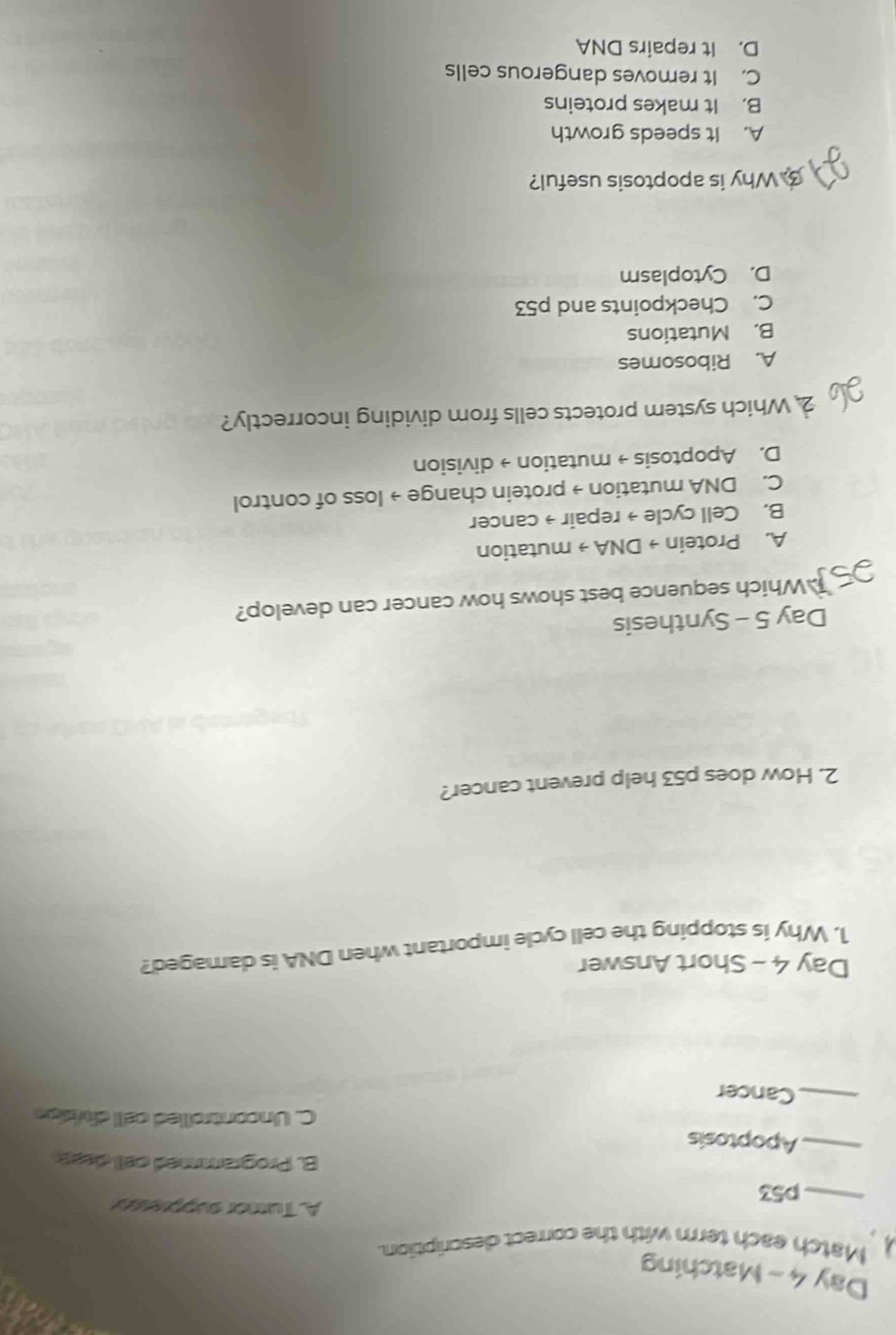
day 4 - matching
a. match each term with the correct description.
—— p53
a. tumor suppressor
—— apoptosis
b. programmed cell death
—— cancer
c. uncontrolled cell division
day 4 - short answer
- why is stopping the cell cycle important when dna is damaged?
- how does p53 help prevent cancer?
day 5 - synthesis
- which sequence best shows how cancer can develop?
a. protein + dna + mutation
b. cell cycle + repair + cancer
c. dna mutation + protein change + loss of control
d. apoptosis + mutation + division
- 2. which system protects cells from dividing incorrectly?
a. ribosomes
b. mutations
c. checkpoints and p53
d. cytoplasm
- 3. why is apoptosis useful?
a. it speeds growth
b. it makes proteins
c. it removes dangerous cells
d. it repairs dna
Brief Explanations
Matching Section
- p53 is a well-known protein that acts to suppress tumor formation, so it matches the tumor suppressor description.
- Apoptosis is defined as the process of programmed, controlled cell death.
- Cancer is characterized by the uncontrolled, abnormal division of cells.
Short Answer Section
- Stopping the cell cycle with damaged DNA prevents the replication and spread of genetic errors to daughter cells, which avoids the development of abnormal, potentially cancerous cells.
- p53 prevents cancer by acting as a cell cycle checkpoint: it halts cell division when DNA damage is detected, triggers DNA repair mechanisms, and initiates apoptosis (programmed cell death) if the damage cannot be fixed, stopping damaged cells from dividing uncontrollably.
Multiple Choice Section (Day 5 - Synthesis)
- Cancer develops when a DNA mutation alters the protein it codes for, leading to a loss of cell cycle control, which allows uncontrolled division.
- Checkpoints (which include p53 as a key regulator) monitor cell health and DNA integrity during division, halting or correcting issues to prevent incorrect division. Ribosomes make proteins, mutations cause damage, and cytoplasm is a cell component, none of these protect from incorrect division.
- Apoptosis is the programmed death of damaged, old, or dangerous cells (like pre-cancerous cells), removing them to prevent harm to the organism.

Snap & solve any problem in the app
Get step-by-step solutions on Sovi AI
Photo-based solutions with guided steps
Explore more problems and detailed explanations
Matching
- p53: A. Tumor suppressor
- Apoptosis: B. Programmed cell death
- Cancer: C. Uncontrolled cell division
Short Answer
- It prevents damaged DNA from being passed to daughter cells, avoiding abnormal cell growth that can lead to cancer.
- p53 acts as a cell cycle checkpoint: it stops division to allow DNA repair, or triggers apoptosis for irreparably damaged cells, blocking the growth of cancerous cells.
Multiple Choice
- C. DNA mutation → protein change → loss of control
- C. Checkpoints and p53
- C. It removes dangerous cells