QUESTION IMAGE
Question
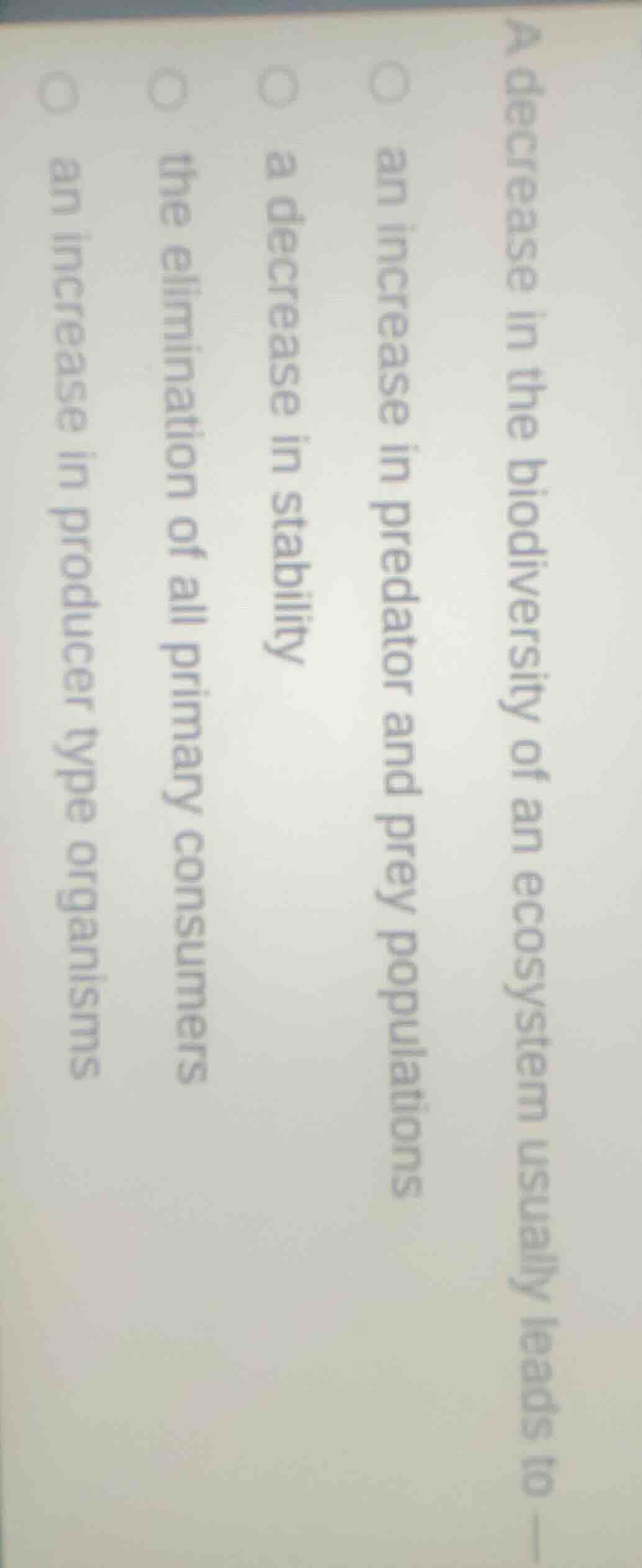
a decrease in the biodiversity of an ecosystem usually leads to —
an increase in predator and prey populations
a decrease in stability
the elimination of all primary consumers
an increase in producer type organisms
Biodiversity refers to the variety of life in an ecosystem. A decrease in biodiversity means there are fewer species and less genetic variation. Ecosystems with high biodiversity are more stable because there are more species to perform different ecological roles (like nutrient cycling, pest control). When biodiversity decreases, the ecosystem becomes more vulnerable to disturbances (e.g., climate change, disease) because there are fewer species to compensate if one species is affected.
- Option 1: An increase in predator and prey populations is unlikely with decreased biodiversity. Fewer species mean less food sources and interactions, so populations would likely decrease or become unstable, not increase.
- Option 2: A decrease in stability matches the concept. With less biodiversity, the ecosystem has less resilience to changes, so stability (the ability to remain functional and recover from disturbances) decreases.
- Option 3: Eliminating all primary consumers is extreme and not a direct result of decreased biodiversity. Biodiversity loss affects many trophic levels but doesn't specifically eliminate all primary consumers.
- Option 4: An increase in producer type organisms would increase biodiversity, not be a result of decreased biodiversity. Decreased biodiversity means fewer producer types (and fewer of other species too).

Snap & solve any problem in the app
Get step-by-step solutions on Sovi AI
Photo-based solutions with guided steps
Explore more problems and detailed explanations
B. a decrease in stability