QUESTION IMAGE
Question
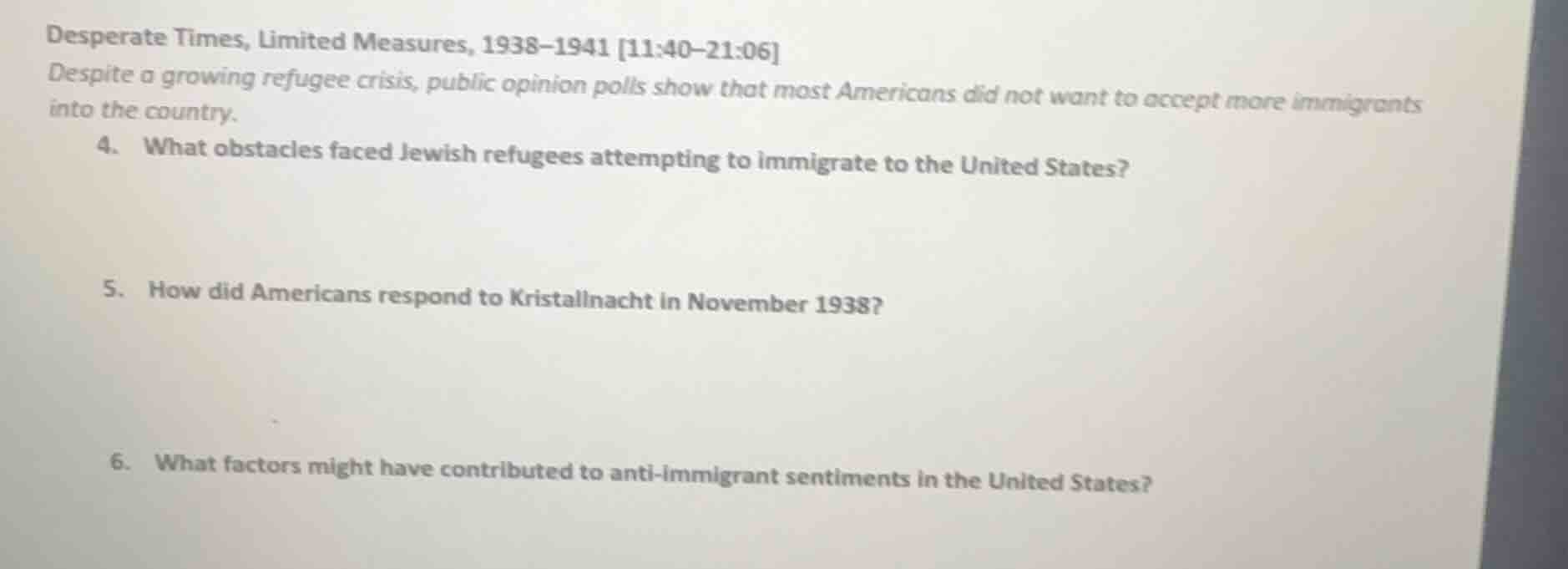
desperate times, limited measures, 1938–1941 11:40–21:06
despite a growing refugee crisis, public opinion polls show that most americans did not want to accept more immigrants into the country.
- what obstacles faced jewish refugees attempting to immigrate to the united states?
- how did americans respond to kristallnacht in november 1938?
- what factors might have contributed to anti - immigrant sentiments in the united states?
Brief Explanations
For Question 4:
- Strict immigration quotas: The U.S. had national-origin quotas (from the 1924 Immigration Act) that severely limited the number of Jewish refugees allowed entry, with tiny allocations for German and Austrian Jews.
- Bureaucratic barriers: Lengthy, complex application processes with extensive documentation requirements delayed or blocked entry for many.
- Anti-Semitism and nativism: Widespread prejudice against Jews, combined with nativist attitudes, led to public and political resistance to accepting more refugees.
- Economic concerns: The Great Depression left many Americans worried about job competition, so they opposed immigrants who might take scarce jobs.
For Question 5:
- Public outrage and sympathy: Many Americans were horrified by news and images of the violence, property destruction, and persecution of Jews during Kristallnacht. There were protests, prayer vigils, and calls for action from religious and civic groups.
- Limited policy change: While there was public outcry, the U.S. government did not adjust its strict immigration quotas. Some temporary relief measures (like extending visas for Jews already in the U.S.) were implemented, but no major expansion of refugee slots was approved.
- Isolationist pushback: A portion of the public and politicians, focused on isolationism and domestic economic issues, opposed any policy that would increase immigration or involve the U.S. more deeply in European conflicts.
For Question 6:
- Great Depression economics: High unemployment and economic hardship made Americans fear immigrants would compete for jobs and strain social services.
- Nativism and xenophobia: Long-standing prejudice against non-Western, non-Protestant groups, including Jews, fueled distrust of foreign-born people.
- Isolationism: In the lead-up to World War II, many Americans wanted to avoid entanglement in European affairs, and limiting immigration was seen as a way to stay disconnected from overseas conflicts.
- Propaganda and misinformation: Anti-immigrant groups spread false claims about immigrants being a threat to American culture, security, and economic stability.
- Cultural anxiety: Concerns that immigrants would dilute traditional American values and cultural norms contributed to negative attitudes.

Snap & solve any problem in the app
Get step-by-step solutions on Sovi AI
Photo-based solutions with guided steps
Explore more problems and detailed explanations
- Jewish refugees faced strict national-origin immigration quotas, complex bureaucratic hurdles, widespread anti-Semitism/nativism, and economic-based resistance from Americans worried about job competition.
- Americans reacted with widespread public outrage and sympathy, holding protests and vigils, but the U.S. government made no major changes to restrictive immigration quotas; isolationist sentiment also pushed back against expanded refugee support, with only minor temporary relief measures implemented.
- Factors included the economic hardship of the Great Depression, nativist and xenophobic prejudices, isolationist sentiment ahead of World War II, anti-immigrant propaganda, and anxiety about preserving traditional American culture and values.