QUESTION IMAGE
Question
discussion topic
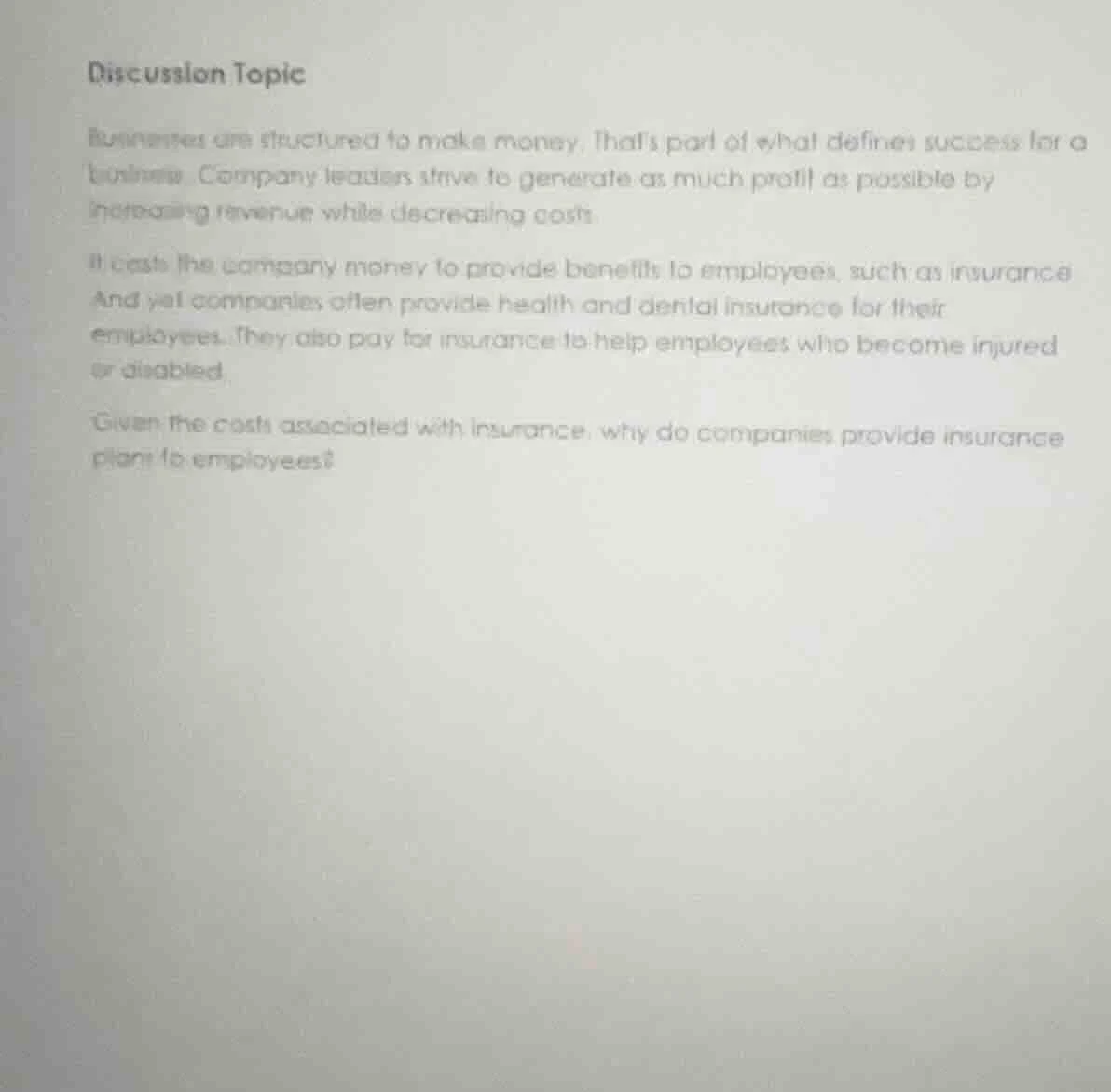
businesses are structured to make money. that’s part of what defines success for a business. company leaders strive to generate as much profit as possible by increasing revenue while decreasing costs.
it costs the company money to provide benefits to employees, such as insurance. and yet companies often provide health and dental insurance for their employees. they also pay for insurance to help employees who become injured or disabled.
given the costs associated with insurance, why do companies provide insurance plans to employees?
- Talent Attraction & Retention: Insurance is a highly valued employee benefit. Offering it helps companies compete for skilled workers and reduce turnover, which avoids the high costs of recruiting, hiring, and training new staff.
- Tax Advantages: In many regions, employer-sponsored insurance premiums are tax-deductible business expenses, reducing the company's overall tax liability and offsetting the direct cost of the plans.
- Productivity & Health: Insured employees are more likely to access preventive care and treat health issues promptly, which reduces absenteeism and maintains higher levels of workplace productivity.
- Legal & Compliance Requirements: In some jurisdictions, companies are legally mandated to provide certain types of insurance (like workers' compensation for on-the-job injuries) to employees.
- Employee Morale & Loyalty: Comprehensive benefits packages foster a positive work environment, increase employee satisfaction, and build loyalty, which can boost overall team performance and reduce workplace conflict.

Snap & solve any problem in the app
Get step-by-step solutions on Sovi AI
Photo-based solutions with guided steps
Explore more problems and detailed explanations
Companies provide insurance plans to employees despite the associated costs for several key reasons:
- To attract and retain top talent, reducing long-term turnover and recruitment costs
- To gain tax deductions on premium payments, lowering overall business tax burdens
- To support employee health and reduce absenteeism, maintaining consistent workplace productivity
- To comply with legal requirements for certain types of coverage (such as workers' compensation)
- To improve employee morale, loyalty, and overall workplace performance