QUESTION IMAGE
Question
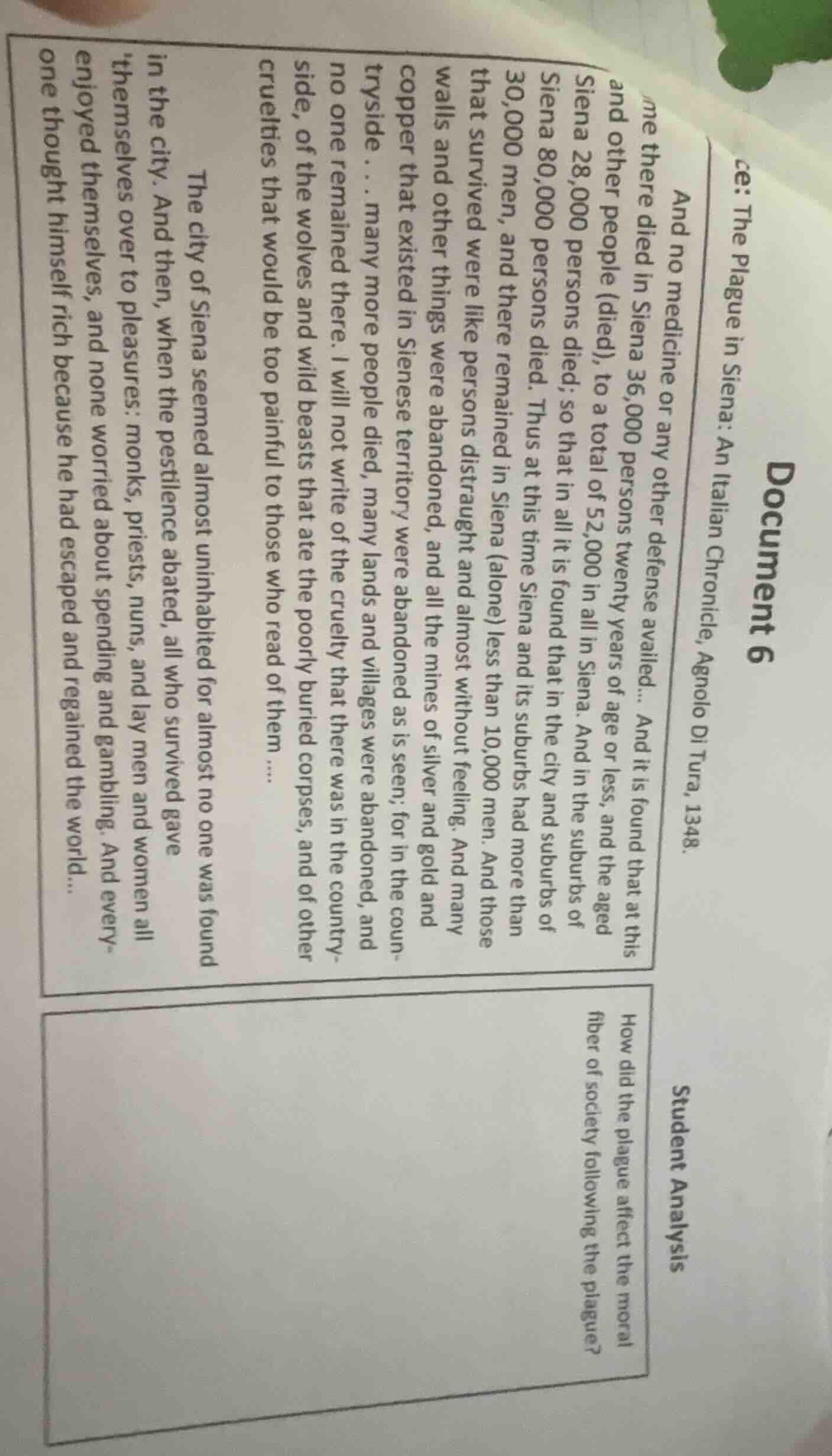
document 6
the plague in siena: an italian chronicle, agnolo di tura, 1348.
and no medicine or any other defense availed, and there died in siena 36,000 persons twenty years of age or less, and the aged siena 28,000 persons died; so that in all it is found that in all it is found that in the city and suburbs of siena 80,000 persons died. thus at this time siena and its suburbs had more than 30,000 men, and there remained in siena (alone) less than 10,000 men. and those that survived were like persons distraught and almost without feeling. and many walls and other things were abandoned, and all the mines of silver and gold and copper that existed in sienese territory were abandoned as is seen; for in the countryside... many more people died, many lands and villages were abandoned, and no one remained there. i will not write of the cruelty that there was in the countryside, of the wolves and wild beasts that ate the poorly buried corpses, and of other cruelties that would be too painful to those who read of them....
the city of siena seemed almost uninhabited for almost no one was found in the city. and then, when the pestilence abated, all who survived gave themselves over to pleasures: monks, priests, nuns, and lay men and women all enjoyed themselves, and none worried about spending and gambling. and every one thought himself rich because he had escaped and regained the world...
student analysis
how did the plague affect the moral fiber of society following the plague?
The plague led to a breakdown in moral fiber. Survivors, including religious figures (monks, priests, nuns) and laypeople, engaged in hedonistic behaviors like excessive pleasure - seeking, gambling, and self - indulgence. There was a lack of concern for others (abandonment of property, not caring about the dead) and a focus on personal enjoyment after surviving, showing a shift from pre - plague moral norms.

Snap & solve any problem in the app
Get step-by-step solutions on Sovi AI
Photo-based solutions with guided steps
Explore more problems and detailed explanations
After the plague, the moral fiber of Siena's society was severely affected. Survivors (including religious and laypeople) engaged in hedonistic behaviors like over - indulging in pleasures, gambling, and self - gratification. There was abandonment of property, indifference to the dead, and a focus on personal enjoyment rather than moral or social responsibilities, deviating from pre - plague moral norms.