QUESTION IMAGE
Question
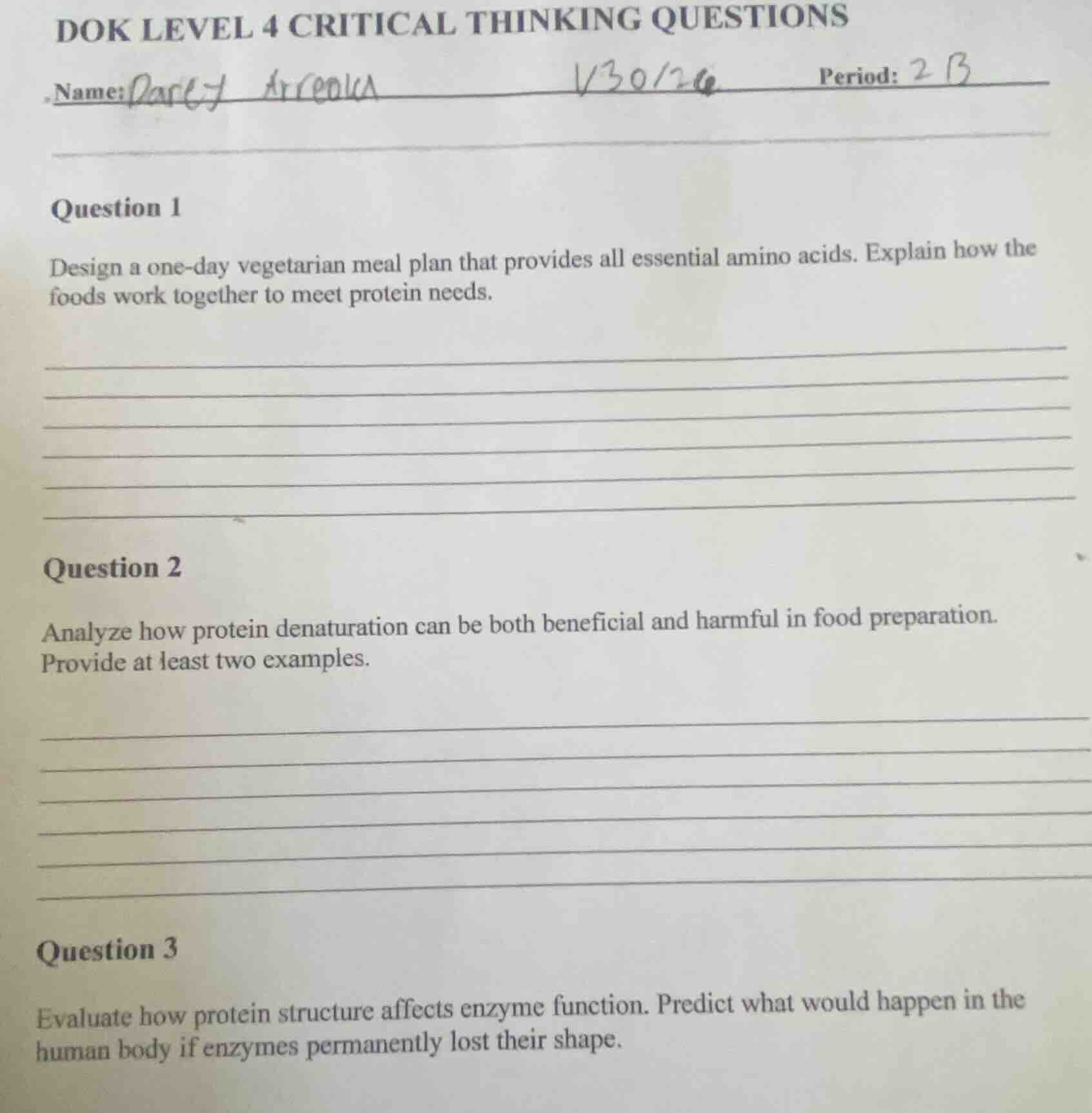
dok level 4 critical thinking questions
name:darcy arreola 1/30/24 period: 2 b
question 1
design a one - day vegetarian meal plan that provides all essential amino acids. explain how the foods work together to meet protein needs.
question 2
analyze how protein denaturation can be both beneficial and harmful in food preparation. provide at least two examples.
question 3
evaluate how protein structure affects enzyme function. predict what would happen in the human body if enzymes permanently lost their shape.
Question 1
To design a vegetarian meal plan with all essential amino acids, we use complementary proteins. For example:
- Breakfast: Oatmeal (low in lysine, high in methionine) with soy milk (high in lysine, low in methionine). Oats and soy complement each other’s amino acid profiles.
- Lunch: Brown rice (low in lysine, high in methionine) and black beans (high in lysine, low in methionine). Rice and beans are a classic complementary protein pair.
- Dinner: Quinoa (a complete protein, has all essential amino acids) with a side of spinach (provides additional nutrients and supports protein absorption).
Essential amino acids are those the body can’t make, so combining plant - based foods with different amino acid deficiencies (like grains and legumes) ensures all are obtained.
- Beneficial Protein Denaturation:
- Cooking Eggs: When eggs are cooked (e.g., scrambled or boiled), the protein albumin denatures. This makes the protein more digestible as the denatured structure is easier for enzymes to break down. Also, it kills harmful bacteria like Salmonella that may be present in raw eggs.
- Making Yogurt: The denaturation of milk protein (casein) during yogurt production (by adding lactic acid bacteria and heat) helps in the formation of the thick yogurt texture. It also makes the milk protein more accessible for digestion and increases the bioavailability of some nutrients.
- Harmful Protein Denaturation:
- Overcooking Meat (in a non - desired way): If meat is overcooked at very high temperatures, the proteins (like myosin and actin) denature excessively. This can make the meat tough and less palatable. Also, some amino acids may be damaged, reducing the nutritional quality of the protein.
- Excessive Heating of Protein - Rich Foods in Processing: In some industrial food processing, if protein - rich foods are heated too much, the denaturation can lead to the formation of compounds that are less nutritious or even potentially harmful (e.g., advanced glycation end - products in some processed meats).
- Protein Structure and Enzyme Function: Enzymes are proteins with a specific three - dimensional structure, including an active site. The active site has a unique shape that is complementary to the substrate (the molecule the enzyme acts on). The primary, secondary, tertiary, and quaternary structures of the enzyme protein determine the shape of the active site. If the protein structure is altered (e.g., by changes in temperature, pH, or chemicals), the active site may lose its specific shape.
- Effect of Permanent Shape Loss (Denaturation) on Enzymes: If enzymes permanently lose their shape (denature), their active sites will no longer be able to bind to the substrate effectively. This means the enzyme - catalyzed reactions (like digestion of food, synthesis of molecules in cells) will slow down or stop. For example, if digestive enzymes like amylase (which breaks down starch) denature, starch digestion in the mouth and small intestine will be impaired. This can lead to problems like malabsorption of nutrients, as the body won't be able to break down and absorb food components efficiently. Over time, this could cause nutritional deficiencies and digestive disorders.

Snap & solve any problem in the app
Get step-by-step solutions on Sovi AI
Photo-based solutions with guided steps
Explore more problems and detailed explanations
- Breakfast: Oatmeal with soy milk. Oatmeal (grain, low in lysine, high in methionine) and soy milk (legume - based, high in lysine, low in methionine) complement each other to provide all essential amino acids.
- Lunch: Brown rice and black beans. Brown rice (grain, low in lysine, high in methionine) and black beans (legume, high in lysine, low in methionine) work together as complementary proteins.
- Dinner: Quinoa (complete protein) with spinach. Quinoa has all essential amino acids, and spinach supports nutrient and protein - related processes.