QUESTION IMAGE
Question
drawing
save and close
actions
crossing over occurs to make genetically different cells
mitosis
meiosis
body cells
binary fission in protists
budding in yeast
cells have 23 chromosomes in humans
somatic cells
final daughter cells have 46 chromosomes in humans
gametes
oogenesis
used for growth & repair
type of cell reproduction
4 daughter cells
used to create gametes
daughter cells are genetically identical
mutations in these cells are guaranteed to be passed to offspring
2 daughter cells
spindle forms to move chromosomes
spermatogenesis
sperm & egg c
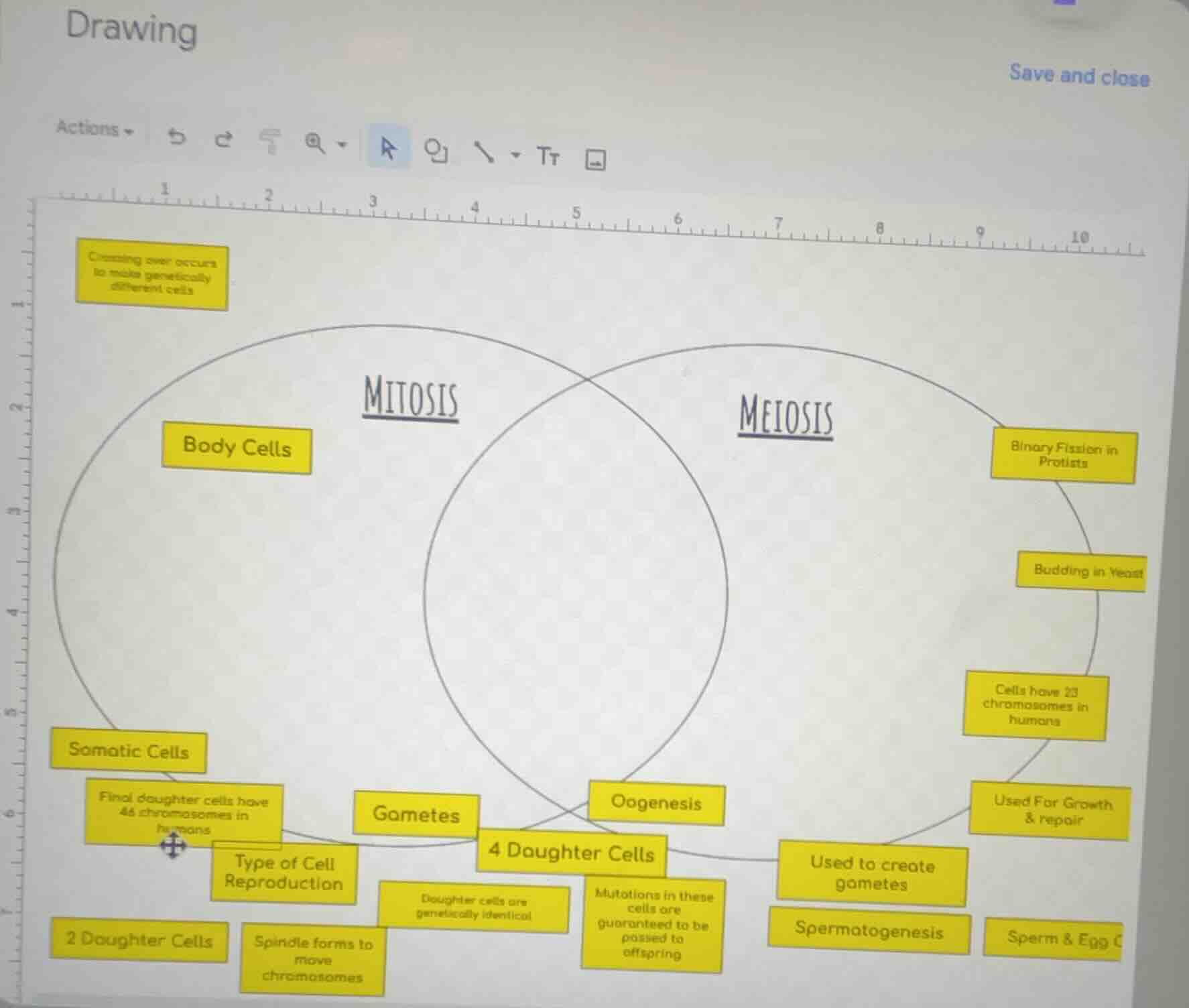
This is a Venn diagram task sorting traits of mitosis and meiosis:
- Only Mitosis (left circle):
- Occurs in body/somatic cells, used for growth & repair, produces 2 genetically identical daughter cells with 46 chromosomes (human), spindle forms to move chromosomes, includes asexual processes like binary fission in protists and budding in yeast.
- Only Meiosis (right circle):
- Produces gametes (sperm/egg), uses spermatogenesis/oogenesis, produces 4 genetically unique daughter cells with 23 chromosomes (human), crossing over occurs, mutations pass to offspring.
- Both (overlap):
- A type of cell reproduction.

Snap & solve any problem in the app
Get step-by-step solutions on Sovi AI
Photo-based solutions with guided steps
Explore more problems and detailed explanations
Only Mitosis
- Body Cells
- Somatic Cells
- Final daughter cells have 46 chromosomes in humans
- 2 Daughter Cells
- Spindle forms to move chromosomes
- Used For Growth & repair
- Binary Fission in Protists
- Budding in Yeast
- Daughter cells are genetically identical
Both Mitosis and Meiosis
- Type of Cell Reproduction
Only Meiosis
- Crossing over occurs to make genetically different cells
- Gametes
- 4 Daughter Cells
- Oogenesis
- Spermatogenesis
- Used to create gametes
- Cells have 23 chromosomes in humans
- Sperm & Egg Cells
- Mutations in these cells are guaranteed to be passed to offspring