QUESTION IMAGE
Question
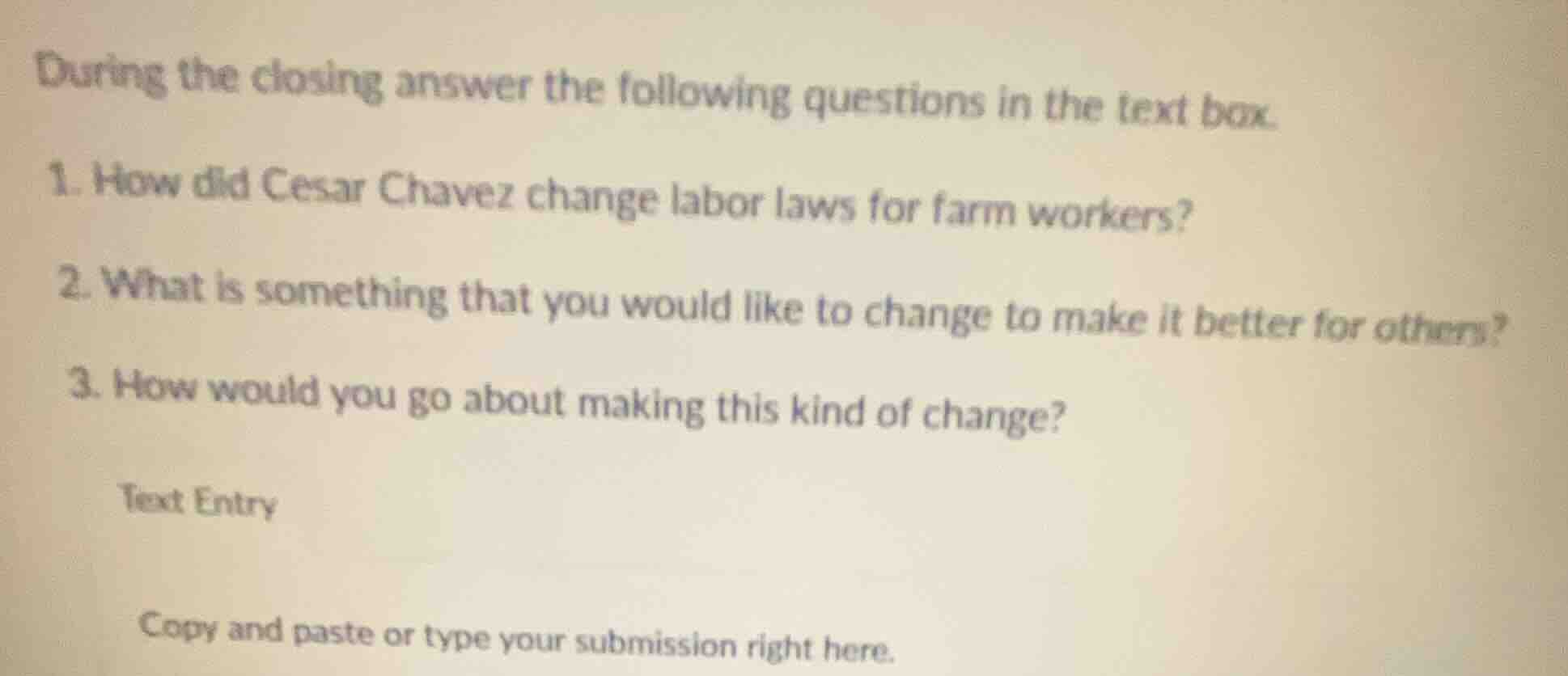
during the closing answer the following questions in the text box. 1. how did cesar chavez change labor laws for farm workers? 2. what is something that you would like to change to make it better for others? 3. how would you go about making this kind of change? text entry copy and paste or type your submission right here.
Brief Explanations
- Cesar Chavez organized farm workers (via the United Farm Workers union), led strikes, boycotts, and advocacy that pressured California to pass the 1975 California Agricultural Labor Relations Act. This law granted farm workers the right to unionize, bargain collectively, and protected them from employer retaliation, establishing formal labor protections they previously lacked.
- A key change to help others is expanding access to free, high-quality after-school tutoring and mental health support for low-income K-12 students, who often lack these resources to succeed academically and emotionally.
- First, partner with local schools, community organizations, and mental health providers to identify student needs and secure volunteer tutors/ counselors. Then, advocate to local school boards and city councils for funding to sustain the program, and launch a public awareness campaign to recruit volunteers and inform families about the free services. Finally, track participant progress to refine the program and demonstrate its impact for long-term support.

Snap & solve any problem in the app
Get step-by-step solutions on Sovi AI
Photo-based solutions with guided steps
Explore more problems and detailed explanations
- Cesar Chavez led the United Farm Workers union in strikes, boycotts, and advocacy that led to California's 1975 Agricultural Labor Relations Act, which granted farm workers the legal right to unionize, bargain collectively, and be protected from employer retaliation, creating formal labor safeguards for this group.
- I would like to expand free, high-quality after-school tutoring and mental health support for low-income K-12 students to reduce educational and emotional inequities.
- I would first collaborate with local schools and community groups to assess needs and recruit volunteer tutors/counselors; then advocate to local officials for sustainable funding; and finally measure program outcomes to refine services and secure long-term support.