QUESTION IMAGE
Question
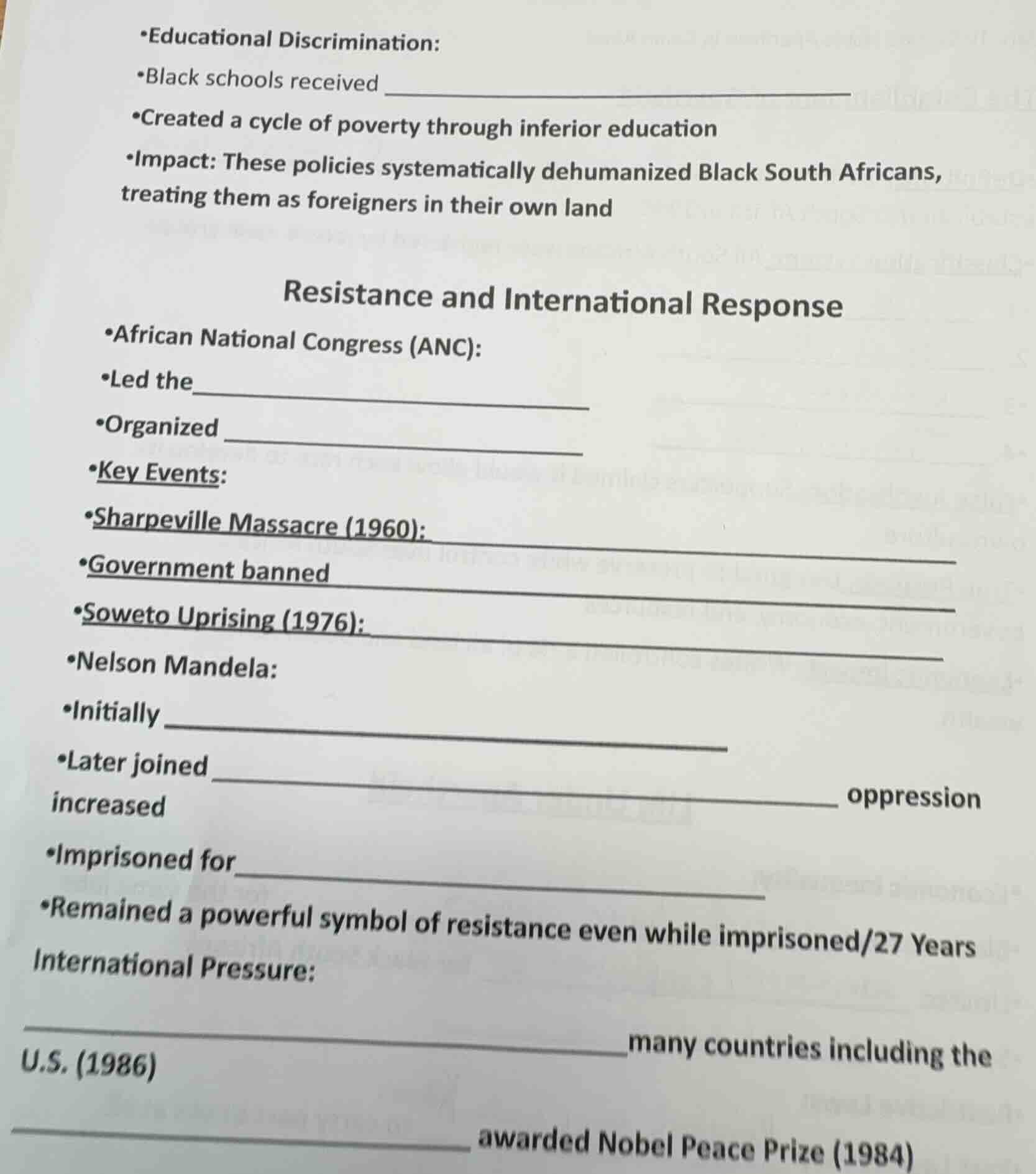
•educational discrimination:
•black schools received
•created a cycle of poverty through inferior education
•impact: these policies systematically dehumanized black south africans, treating them as foreigners in their own land
resistance and international response
•african national congress (anc):
•led the
•organized
•key events:
•sharpeville massacre (1960):
•government banned
•soweto uprising (1976):
•nelson mandela:
•initially
•later joined oppression increased
•imprisoned for
•remained a powerful symbol of resistance even while imprisoned/27 years
international pressure:
many countries including the u.s. (1986)
awarded nobel peace prize (1984)
These blanks relate to the system of apartheid in South Africa, covering educational inequities, domestic resistance, key historical events, and international responses. Each answer is based on established historical facts about this period.

Snap & solve any problem in the app
Get step-by-step solutions on Sovi AI
Photo-based solutions with guided steps
Explore more problems and detailed explanations
- Educational Discrimination: Black schools received far less funding/resources and inferior facilities/curricula
- African National Congress (ANC):
- Led the major anti-apartheid resistance movement
- Organized protests, boycotts, and grassroots campaigns
- Key Events:
- Sharpeville Massacre (1960): Protesters against pass laws were shot by police, killing 69 people
- Government banned the ANC and other anti-apartheid organizations
- Soweto Uprising (1976): Student protests against forced Afrikaans instruction, leading to hundreds of deaths
- Nelson Mandela:
- Initially advocated non-violent resistance
- Later joined armed resistance (Umkhonto we Sizwe) as state oppression increased
- Imprisoned for sabotage and conspiracy to overthrow the government
- International Pressure:
- Economic sanctions were imposed by many countries including the U.S. (1986)
- Desmond Tutu was awarded Nobel Peace Prize (1984)