QUESTION IMAGE
Question
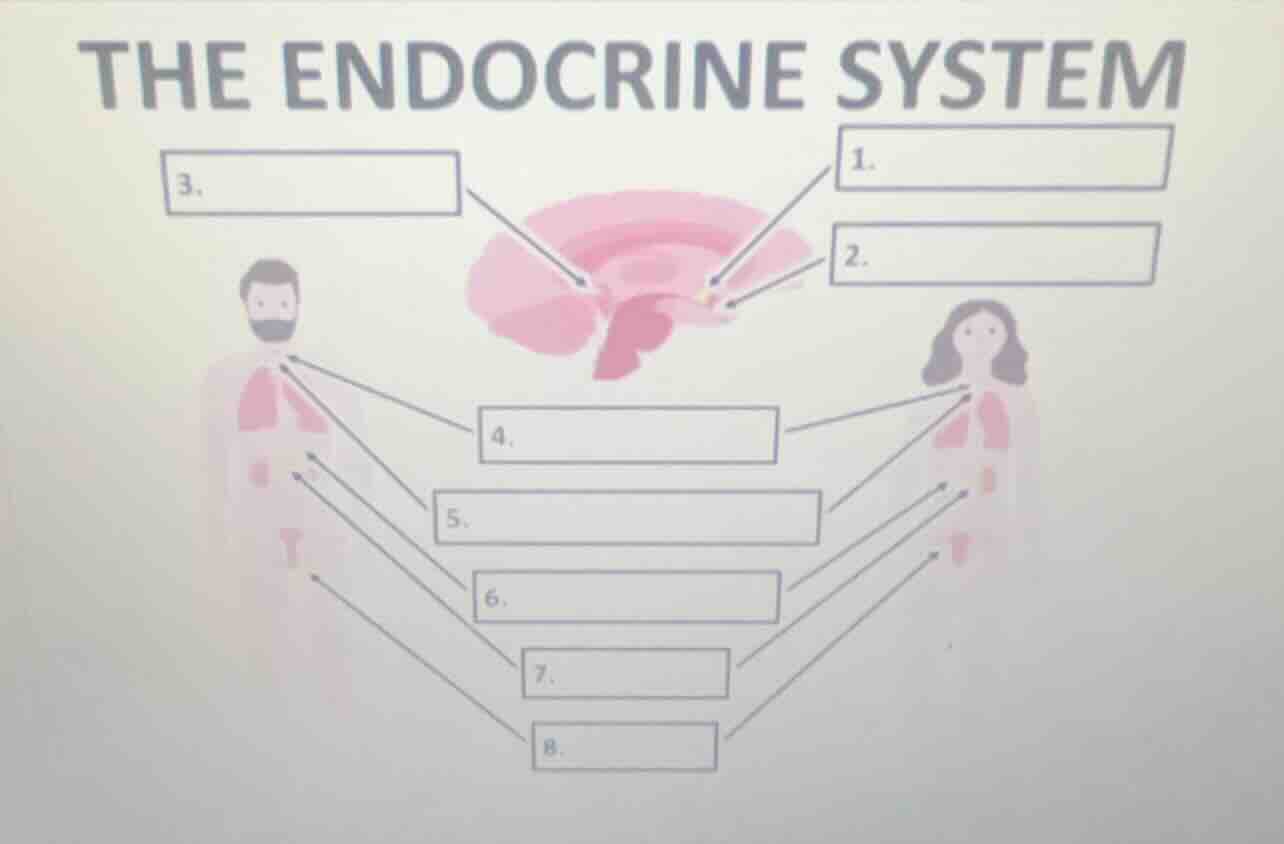
the endocrine system
3.
1.
2.
4.
5.
6.
7.
8.
To label the parts of the endocrine system in the diagram, we identify the key glands and structures:
1. (Pituitary Gland)
The pituitary gland (hypophysis) is a small, pea - sized gland at the base of the brain, often called the “master gland” as it regulates other endocrine glands.
2. (Pineal Gland)
The pineal gland is located in the brain and is responsible for producing melatonin, which regulates sleep - wake cycles.
3. (Hypothalamus)
The hypothalamus is a region of the brain that controls the pituitary gland and helps maintain homeostasis by regulating hormone release.
4. (Thyroid Gland)
The thyroid gland is in the neck, and it produces hormones (like thyroxine) that regulate metabolism.
5. (Parathyroid Glands)
The parathyroid glands are small glands on the thyroid gland, and they regulate calcium levels in the blood.
6. (Thymus)
The thymus is located in the chest (behind the sternum in children, and it shrinks with age). It is important for the development of the immune system, especially T - cells.
7. (Adrenal Glands)
The adrenal glands are on top of the kidneys. They produce hormones like adrenaline (for the “fight - or - flight” response) and cortisol (for stress regulation and metabolism).
8. (Gonads: Testes in Males, Ovaries in Females)
- In males, the testes produce testosterone and sperm.
- In females, the ovaries produce estrogen, progesterone, and eggs.

Snap & solve any problem in the app
Get step-by-step solutions on Sovi AI
Photo-based solutions with guided steps
Explore more problems and detailed explanations
- Pituitary Gland
- Pineal Gland
- Hypothalamus
- Thyroid Gland
- Parathyroid Glands
- Thymus
- Adrenal Glands
- Gonads (Testes/Ovaries)