QUESTION IMAGE
Question
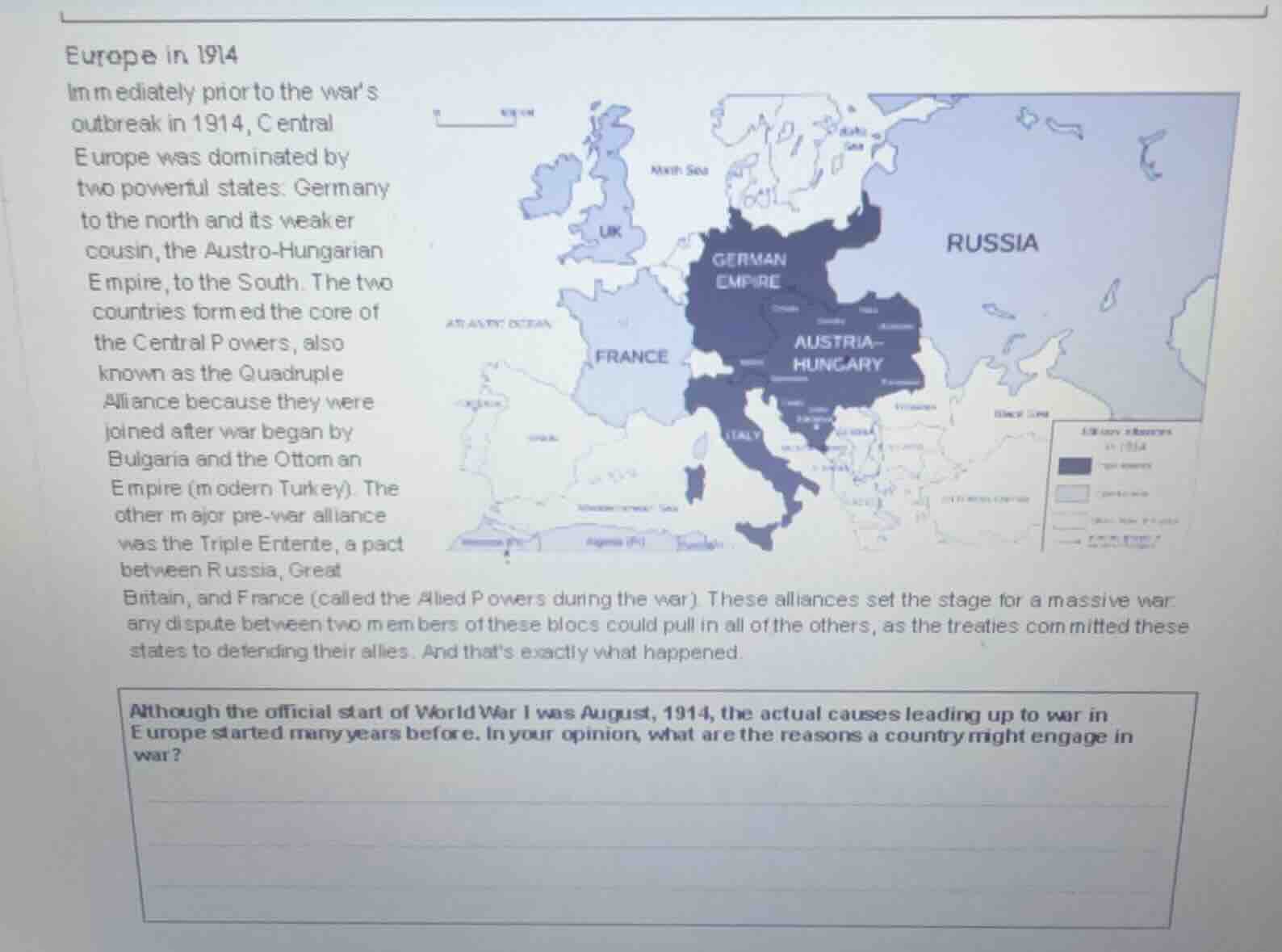
europe in 1914
immediately prior to the war’s
outbreak in 1914, central
europe was dominated by
two powerful states: germany
to the north and its weaker
cousin, the austro - hungarian
empire, to the south. the two
countries formed the core of
the central powers, also
known as the quadruple
alliance because they were
joined after war began by
bulgaria and the ottoman
empire (modern turkey). the
other major pre - war alliance
was the triple entente, a pact
between russia, great
britain, and france (called the allied powers during the war). these alliances set the stage for a massive war:
any dispute between two members of these blocs could pull in all of the others, as the treaties committed these
states to defending their allies. and that’s exactly what happened.
although the official start of world war i was august, 1914, the actual causes leading up to war in
europe started many years before. in your opinion, what are the reasons a country might engage in
war?
Countries may engage in war for various reasons. Geopolitical interests like expanding territory or influence (e.g., imperialist motives seen in WWI powers) drive some. Resource scarcity, such as access to raw materials (oil, minerals) or trade routes, can prompt conflict. Ideological differences (e.g., political systems, religious beliefs) may create tensions. Alliance obligations, as in WWI (Triple Entente/Central Powers), can pull nations into war to defend allies. Nationalism, including pride in one’s nation and desire for dominance, also plays a role. Additionally, revenge or settling historical grievances, and maintaining national security (perceived threats from other states) are factors.

Snap & solve any problem in the app
Get step-by-step solutions on Sovi AI
Photo-based solutions with guided steps
Explore more problems and detailed explanations
Countries may engage in war for reasons like geopolitical expansion (territory/influence), resource scarcity (raw materials/trade routes), ideological differences, alliance obligations, nationalism, historical grievances, or national security concerns.