QUESTION IMAGE
Question
- examine this table.
a. which of these items would be hard for you to ration? why?
b. what hardships do you think americans encountered as a result of rationing?
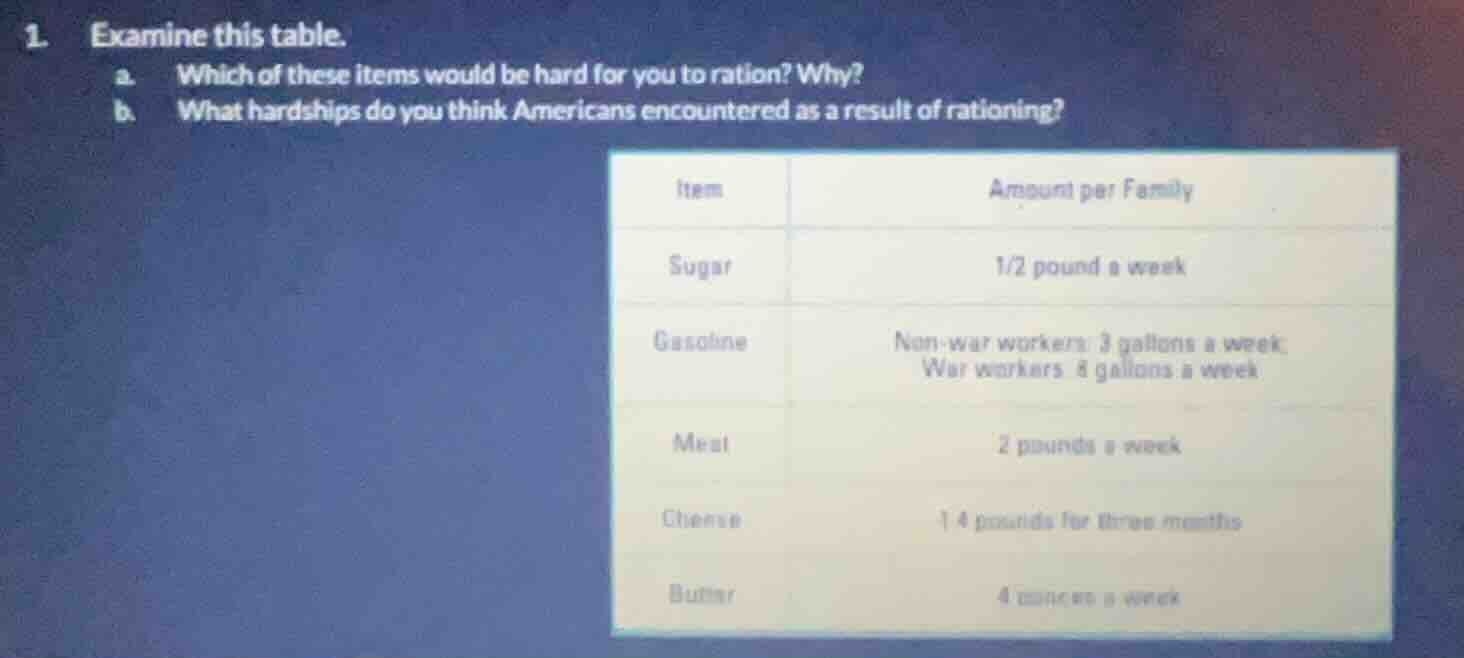
| item | amount per family |
|---|---|
| gasoline | non - war workers: 3 gallons a week; war workers: 4 gallons a week |
| meat | 2 pounds a week |
| cheese | 1/4 pounds for three months |
| butter | 4 ounces a week |
a. Gasoline would be hard to ration because it directly impacts mobility. For non-war workers, 3 gallons a week limits travel for work, errands, or emergencies, and the difference in allotments could create frustration. It is a necessity for commuting and accessing essential services, making strict limits feel restrictive and disruptive to daily life.
b. Americans faced several hardships: limited access to staple foods like sugar, meat, and butter meant less dietary variety and difficulty preparing familiar meals; restricted gasoline made commuting, traveling to see family, or accessing remote services challenging; unequal allotments (like for war vs non-war workers) could create resentment; and people had to spend extra time planning meals, waiting for supplies, or using alternative, less convenient transportation.

Snap & solve any problem in the app
Get step-by-step solutions on Sovi AI
Photo-based solutions with guided steps
Explore more problems and detailed explanations
a. Gasoline would be hard to ration. It limits daily mobility for work, errands, and emergencies, and the tiered allotment system can create inequity and frustration, as it directly disrupts essential daily travel needs.
b. Americans faced hardships including limited dietary variety and meal planning challenges from restricted food staples; reduced mobility and commuting struggles due to gasoline limits; potential resentment from unequal ration allotments; and increased time spent securing essential supplies.