QUESTION IMAGE
Question
explore
name:
date:
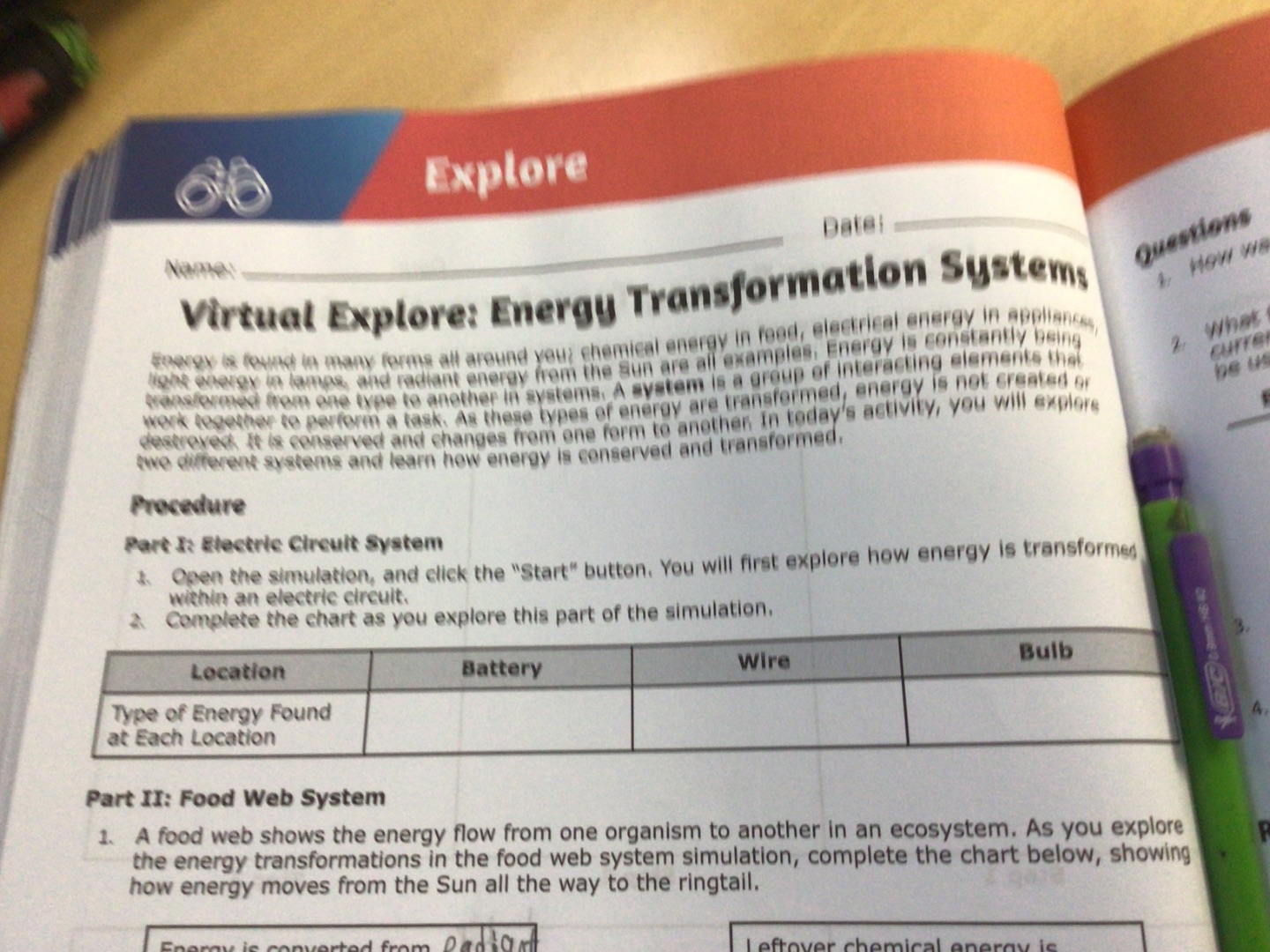
virtual explore: energy transformation systems
energy is found in many forms all around you: chemical energy in food, electrical energy in appliances, light energy in lamps, and radiant energy from the sun are all examples. energy is constantly being transformed from one type to another in systems. a system is a group of interacting elements that work together to perform a task. as these types of energy are transformed, energy is not created or destroyed. it is conserved and changes from one form to another. in today’s activity, you will explore two different systems and learn how energy is conserved and transformed.
procedure
part i: electric circuit system
- open the simulation, and click the “start” button. you will first explore how energy is transformed within an electric circuit.
- complete the chart as you explore this part of the simulation.
| location | battery | wire | bulb |
|---|
part ii: food web system
- a food web shows the energy flow from one organism to another in an ecosystem. as you explore the energy transformations in the food web system simulation, complete the chart below, showing how energy moves from the sun all the way to the ringtail.
energy is converted from
leftover chemical energy is
To solve the energy type identification for each component in the electric circuit system (Battery, Wire, Bulb), we analyze the energy transformations:
Battery
Batteries store energy in the form of chemical energy (from the chemicals inside them) which can be converted to electrical energy when the circuit is closed. So the type of energy in the battery is chemical energy (and it can transform to electrical, but the primary stored form here is chemical).
Wire
In a circuit, wires are used to conduct electrical energy (in the form of electric current, which is a flow of charged particles carrying electrical energy). So the type of energy in the wire is electrical energy (as it transmits the electric current).
Bulb
A light bulb (especially an incandescent one, or even LED in terms of energy transformation) takes electrical energy and transforms it into light energy (and often some thermal energy, but the main useful output related to energy type here, considering the context of energy transformation, is light; or we can also note the input is electrical and output is light/thermal, but for the "type of energy found" at the bulb, we consider the energy it processes—electrical energy is input, and it transforms to light (and thermal) energy. So the bulb has electrical energy (input) which transforms to light (and thermal) energy, but for the table's "type of energy found at each location", we can say:
- Battery: Chemical Energy (or Chemical Energy, which can be converted to Electrical)
- Wire: Electrical Energy
- Bulb: Electrical Energy (input) which transforms to Light Energy (and Thermal Energy, but the key here is the energy it uses/transforms—electrical to light/thermal).
If we fill the table:
| Location | Battery | Wire | Bulb |
|---|
(Note: Depending on the simulation’s focus, the bulb’s energy could also be described as Light Energy (and Thermal) as the output, but since the wire carries electrical to the bulb, the bulb “has” electrical energy that it transforms. The exact phrasing might depend on the educational material’s level, but the core energy types are chemical (battery), electrical (wire), and electrical (bulb, which transforms it to light/thermal).)

Snap & solve any problem in the app
Get step-by-step solutions on Sovi AI
Photo-based solutions with guided steps
Explore more problems and detailed explanations
To solve the energy type identification for each component in the electric circuit system (Battery, Wire, Bulb), we analyze the energy transformations:
Battery
Batteries store energy in the form of chemical energy (from the chemicals inside them) which can be converted to electrical energy when the circuit is closed. So the type of energy in the battery is chemical energy (and it can transform to electrical, but the primary stored form here is chemical).
Wire
In a circuit, wires are used to conduct electrical energy (in the form of electric current, which is a flow of charged particles carrying electrical energy). So the type of energy in the wire is electrical energy (as it transmits the electric current).
Bulb
A light bulb (especially an incandescent one, or even LED in terms of energy transformation) takes electrical energy and transforms it into light energy (and often some thermal energy, but the main useful output related to energy type here, considering the context of energy transformation, is light; or we can also note the input is electrical and output is light/thermal, but for the "type of energy found" at the bulb, we consider the energy it processes—electrical energy is input, and it transforms to light (and thermal) energy. So the bulb has electrical energy (input) which transforms to light (and thermal) energy, but for the table's "type of energy found at each location", we can say:
- Battery: Chemical Energy (or Chemical Energy, which can be converted to Electrical)
- Wire: Electrical Energy
- Bulb: Electrical Energy (input) which transforms to Light Energy (and Thermal Energy, but the key here is the energy it uses/transforms—electrical to light/thermal).
If we fill the table:
| Location | Battery | Wire | Bulb |
|---|
(Note: Depending on the simulation’s focus, the bulb’s energy could also be described as Light Energy (and Thermal) as the output, but since the wire carries electrical to the bulb, the bulb “has” electrical energy that it transforms. The exact phrasing might depend on the educational material’s level, but the core energy types are chemical (battery), electrical (wire), and electrical (bulb, which transforms it to light/thermal).)