QUESTION IMAGE
Question
figurative language in context #1
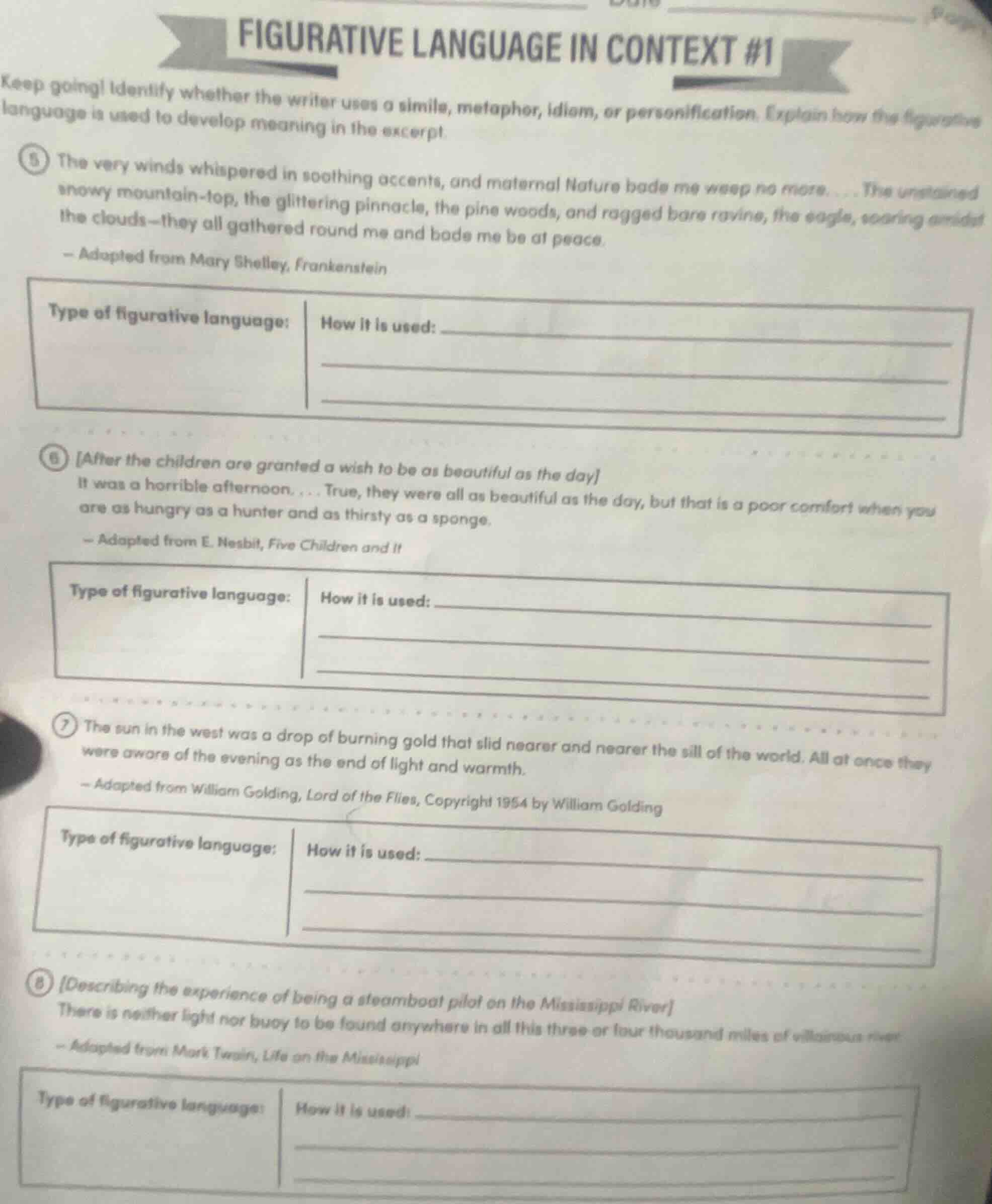
keep going! identify whether the writer uses a simile, metaphor, idiom, or personification. explain how the figurative language is used to develop meaning in the excerpt.
5 the very winds whispered in soothing accents, and maternal nature bade me weep no more. ... the unstained snowy mountain - top, the glittering pinnacle, the pine woods, and ragged bare ravine, the eagle, soaring amidst the clouds—they all gathered round me and bade me be at peace.
— adapted from mary shelley, frankenstein
type of figurative language: how it is used:
6 after the children are granted a wish to be as beautiful as the day
it was a horrible afternoon. ... true, they were all as beautiful as the day, but that is a poor comfort when you are as hungry as a hunter and as thirsty as a sponge.
— adapted from e. nesbit, five children and it
type of figurative language: how it is used:
7 the sun in the west was a drop of burning gold that slid nearer and nearer the sill of the world. all at once they were aware of the evening as the end of light and warmth.
— adapted from william golding, lord of the flies, copyright 1954 by william golding
type of figurative language: how it is used:
8 describing the experience of being a steamboat pilot on the mississippi river
there is neither light nor buoy to be found anywhere in all this three or four thousand miles of villainous river
— adapted from mark twain, life on the mississippi
type of figurative language: how it is used:
For Excerpt 5:
The text gives human traits (whispering, boding peace) to non-human elements like wind, nature, and landscape features, which is personification. It frames nature as a comforting, maternal figure to show it calms the narrator's distress.
For Excerpt 6:
The text uses "as" to compare the children's hunger to a hunter's and thirst to a sponge's, which are similes. These comparisons vividly emphasize the extreme intensity of the children's hunger and thirst, undermining the comfort of their new beauty.
For Excerpt 7:
The text directly calls the setting sun a "drop of burning gold" without using comparison words like "as" or "like", which is a metaphor. It creates a vivid, tangible image of the sun's appearance and conveys the characters' awareness that warmth and light are ending.
For Excerpt 8:
The text calls the river "villainous", giving it a human negative trait, which is personification. It frames the river as an adversarial, dangerous force to emphasize the extreme difficulty and danger of navigating it as a steamboat pilot.

Snap & solve any problem in the app
Get step-by-step solutions on Sovi AI
Photo-based solutions with guided steps
Explore more problems and detailed explanations
- Excerpt 5
- Type of figurative language: Personification
- How it is used: Frames nature as a comforting, maternal presence that soothes the narrator's sadness and urges them to find peace.
- Excerpt 6
- Type of figurative language: Simile
- How it is used: Vividly emphasizes the extreme hunger and thirst the children feel, making their discomfort tangible despite their new beauty.
- Excerpt 7
- Type of figurative language: Metaphor
- How it is used: Creates a striking visual of the setting sun and highlights the characters' sense that light and warmth are coming to an end.
- Excerpt 8
- Type of figurative language: Personification
- How it is used: Portrays the river as an adversarial, dangerous force to stress the immense challenge of piloting a steamboat on it.