QUESTION IMAGE
Question
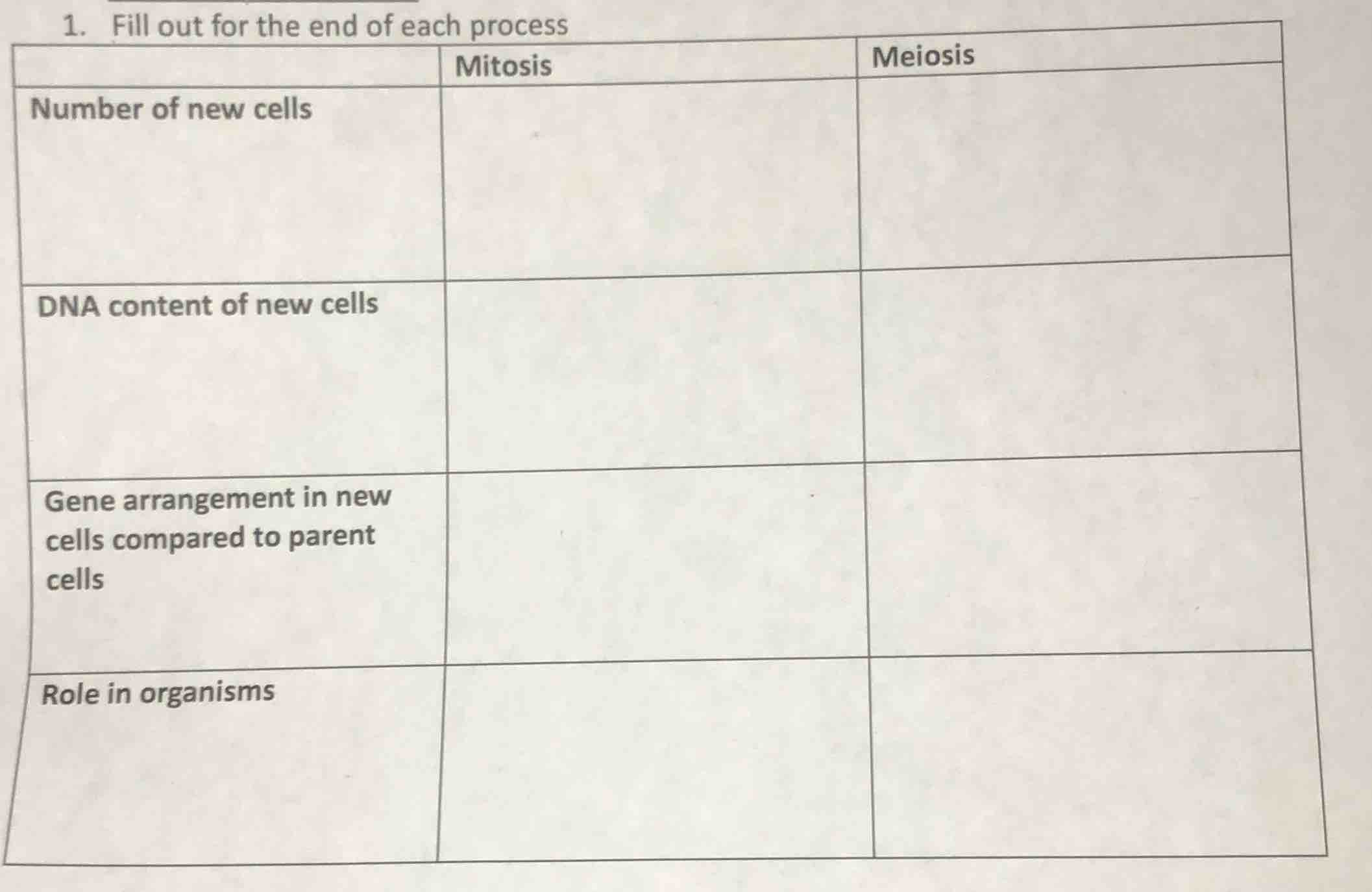
- fill out for the end of each process
| mitosis | meiosis | |
|---|---|---|
| dna content of new cells | ||
| gene arrangement in new cells compared to parent cells | ||
| role in organisms |
Brief Explanations
Each row compares key traits of mitosis (asexual cell division) and meiosis (sexual cell division) based on core cellular biology principles:
- Number of new cells: Mitosis produces 2 identical daughter cells; meiosis produces 4 genetically unique gametes.
- DNA content: Mitosis preserves the parent cell's full diploid (2n) DNA content; meiosis reduces DNA to haploid (n), half the parent's amount.
- Gene arrangement: Mitosis creates cells with identical gene sequences to the parent; meiosis includes crossing over and independent assortment, leading to new gene combinations different from the parent.
- Role in organisms: Mitosis supports growth, repair, and asexual reproduction; meiosis generates gametes (sperm/eggs) for sexual reproduction to maintain species chromosome number in offspring.

Snap & solve any problem in the app
Get step-by-step solutions on Sovi AI
Photo-based solutions with guided steps
Explore more problems and detailed explanations
| Category | Mitosis | Meiosis |
|---|---|---|
| DNA content of new cells | Diploid (2n, same as parent) | Haploid (n, half of parent) |
| Gene arrangement in new cells compared to parent cells | Identical to parent cell | Genetically distinct from parent cell |
| Role in organisms | Growth, repair, asexual reproduction | Production of gametes for sexual reproduction |