QUESTION IMAGE
Question
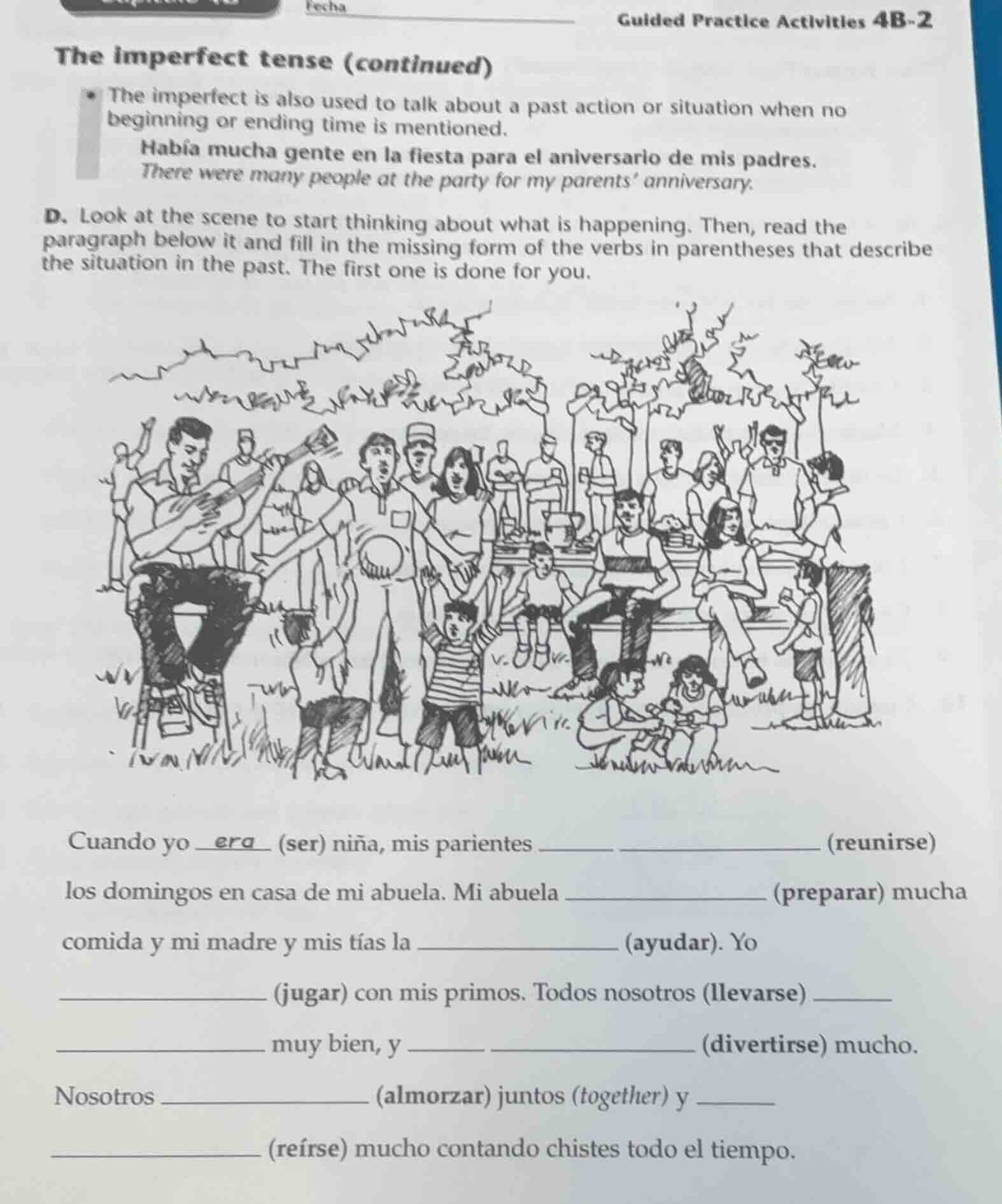
guided practice activities 4b-2the imperfect tense (continued)• the imperfect is also used to talk about a past action or situation when no beginning or ending time is mentioned.había mucha gente en la fiesta para el aniversario de mis padres.there were many people at the party for my parents anniversary.d. look at the scene to start thinking about what is happening. then, read the paragraph below it and fill in the missing form of the verbs in parentheses that describe the situation in the past. the first one is done for you.cuando yo era (ser) niña, mis parientes __________________ (reunirse)los domingos en casa de mi abuela. mi abuela ________________ (preparar) muchacomida y mi madre y mis tías la ________________ (ayudar). yo________________ (jugar) con mis primos. todos nosotros (llevarse) ______________________ muy bien, y ________________ (divertirse) mucho.nosotros ________________ (almorzar) juntos (together) y ________________________ (reírse) mucho contando chistes todo el tiempo.
All verbs need to be conjugated into the imperfect tense (used for repeated past actions/situations with no defined start/end, as specified in the lesson). Conjugations follow standard Spanish imperfect rules: for -ar verbs, use endings -aba, -abas, -aba, -ábamos, -abais, -aban; for -er/-ir verbs, use -ía, -ías, -ía, -íamos, -íais, -ían; reflexive verbs keep their reflexive pronouns before the conjugated verb.

Snap & solve any problem in the app
Get step-by-step solutions on Sovi AI
Photo-based solutions with guided steps
Explore more problems and detailed explanations
Cuando yo era (ser) niña, mis parientes se reunían (reunirse)
los domingos en casa de mi abuela. Mi abuela preparaba (preparar) mucha
comida y mi madre y mis tías la ayudaban (ayudar). Yo
jugaba (jugar) con mis primos. Todos nosotros nos llevábamos (llevarse)
muy bien, y nos divertíamos (divertirse) mucho.
Nosotros almorzábamos (almorzar) juntos (together) y nos reíamos (reírse) mucho contando chistes todo el tiempo.