QUESTION IMAGE
Question
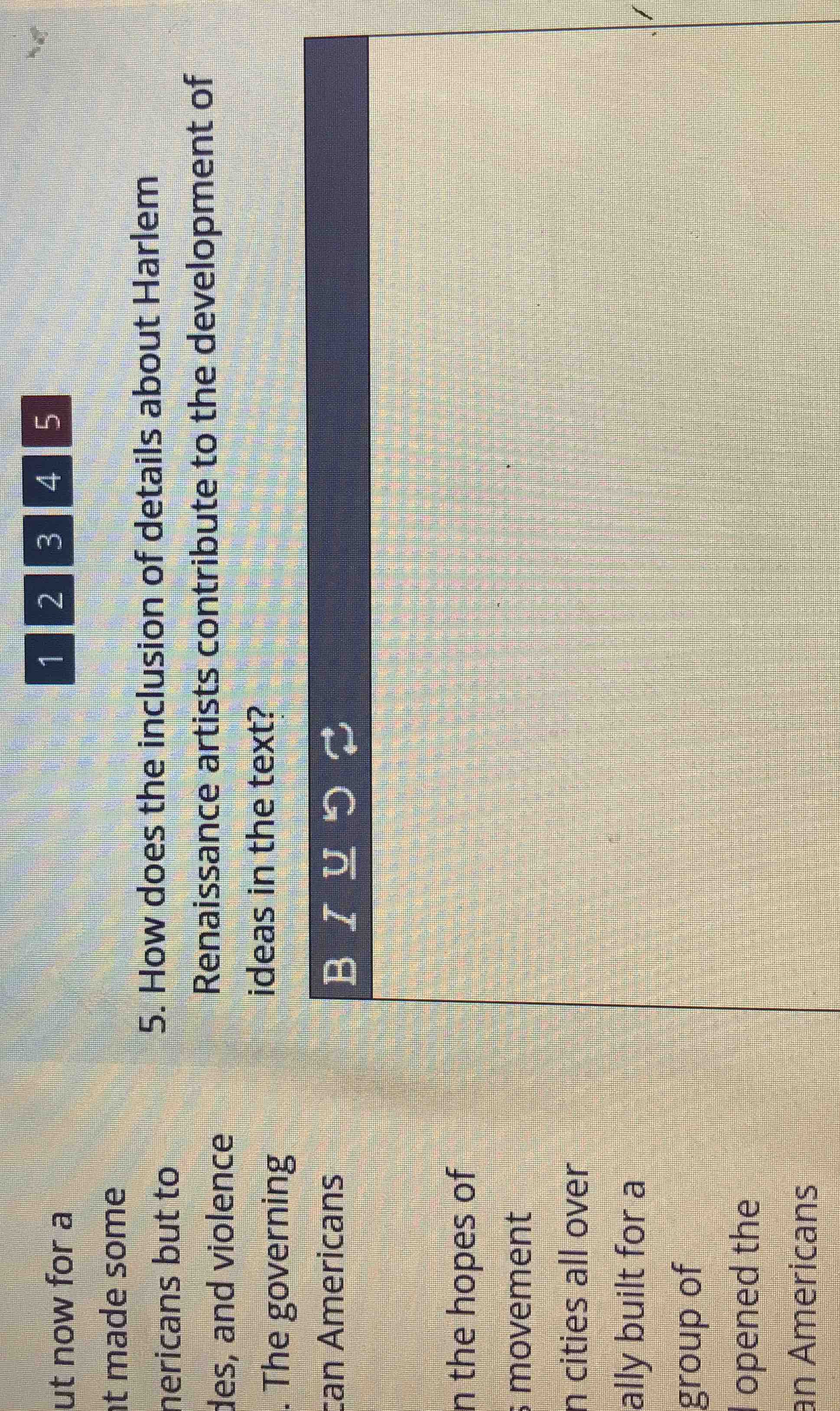
- how does the inclusion of details about harlem renaissance artists contribute to the development of ideas in the text?
To answer this question, we would need to analyze the relevant text (which is partially visible here) about the Harlem Renaissance. The Harlem Renaissance was a cultural, social, and artistic movement centered in Harlem, New York, during the 1920s and 1930s, celebrating Black culture, art, music, literature, and intellectual thought. Artists of the Harlem Renaissance (like writers, musicians, visual artists) contributed to the development of ideas by:
- Cultural Expression & Identity: They created works that explored Black identity, heritage, and experiences, challenging stereotypes and promoting a sense of pride and self - determination. For example, writers like Langston Hughes used poetry and prose to give voice to the Black experience, while musicians like Duke Ellington revolutionized jazz, infusing it with African - American cultural elements.
- Intellectual & Artistic Innovation: Their art (literature, music, visual art) introduced new forms and styles that reflected the unique perspectives of Black Americans. This innovation expanded the boundaries of American art and culture, influencing broader artistic movements and challenging the dominant cultural norms of the time.
- Social & Political Ideas: Many works also carried implicit or explicit messages about racial equality, civil rights, and the need for social change. They laid the groundwork for future civil rights movements by fostering a sense of community and shared purpose among Black Americans and raising awareness among white Americans about Black culture and struggles.
If we assume the text in question discusses how these artistic contributions (e.g., through literature, music, art) spread ideas of Black pride, cultural richness, and the need for racial equality, the inclusion of details about Harlem Renaissance artists would show how their creative output (stories, poems, paintings, music) became vehicles for these ideas. For instance, a writer’s description of Black life in Harlem in a novel or a musician’s composition that blended African rhythms with American jazz would communicate ideas about cultural heritage, resilience, and the desire for equal treatment.
Since the full text is not visible, a more precise answer would require analyzing the specific details provided in the text about the artists (e.g., which artists, what works, what themes they explored) and how those details connect to the development of ideas (like cultural identity, racial equality, artistic innovation) during the Harlem Renaissance.
If we were to give a general answer based on our knowledge of the Harlem Renaissance: The inclusion of details about Harlem Renaissance artists contributes to the development of ideas by showcasing how their art (literature, music, visual art) expressed Black cultural identity, challenged racial stereotypes, promoted intellectual and artistic innovation, and advanced ideas of racial equality and civil rights, thereby shaping the cultural and social discourse of the era and influencing future movements.

Snap & solve any problem in the app
Get step-by-step solutions on Sovi AI
Photo-based solutions with guided steps
Explore more problems and detailed explanations
To answer this question, we would need to analyze the relevant text (which is partially visible here) about the Harlem Renaissance. The Harlem Renaissance was a cultural, social, and artistic movement centered in Harlem, New York, during the 1920s and 1930s, celebrating Black culture, art, music, literature, and intellectual thought. Artists of the Harlem Renaissance (like writers, musicians, visual artists) contributed to the development of ideas by:
- Cultural Expression & Identity: They created works that explored Black identity, heritage, and experiences, challenging stereotypes and promoting a sense of pride and self - determination. For example, writers like Langston Hughes used poetry and prose to give voice to the Black experience, while musicians like Duke Ellington revolutionized jazz, infusing it with African - American cultural elements.
- Intellectual & Artistic Innovation: Their art (literature, music, visual art) introduced new forms and styles that reflected the unique perspectives of Black Americans. This innovation expanded the boundaries of American art and culture, influencing broader artistic movements and challenging the dominant cultural norms of the time.
- Social & Political Ideas: Many works also carried implicit or explicit messages about racial equality, civil rights, and the need for social change. They laid the groundwork for future civil rights movements by fostering a sense of community and shared purpose among Black Americans and raising awareness among white Americans about Black culture and struggles.
If we assume the text in question discusses how these artistic contributions (e.g., through literature, music, art) spread ideas of Black pride, cultural richness, and the need for racial equality, the inclusion of details about Harlem Renaissance artists would show how their creative output (stories, poems, paintings, music) became vehicles for these ideas. For instance, a writer’s description of Black life in Harlem in a novel or a musician’s composition that blended African rhythms with American jazz would communicate ideas about cultural heritage, resilience, and the desire for equal treatment.
Since the full text is not visible, a more precise answer would require analyzing the specific details provided in the text about the artists (e.g., which artists, what works, what themes they explored) and how those details connect to the development of ideas (like cultural identity, racial equality, artistic innovation) during the Harlem Renaissance.
If we were to give a general answer based on our knowledge of the Harlem Renaissance: The inclusion of details about Harlem Renaissance artists contributes to the development of ideas by showcasing how their art (literature, music, visual art) expressed Black cultural identity, challenged racial stereotypes, promoted intellectual and artistic innovation, and advanced ideas of racial equality and civil rights, thereby shaping the cultural and social discourse of the era and influencing future movements.