QUESTION IMAGE
Question
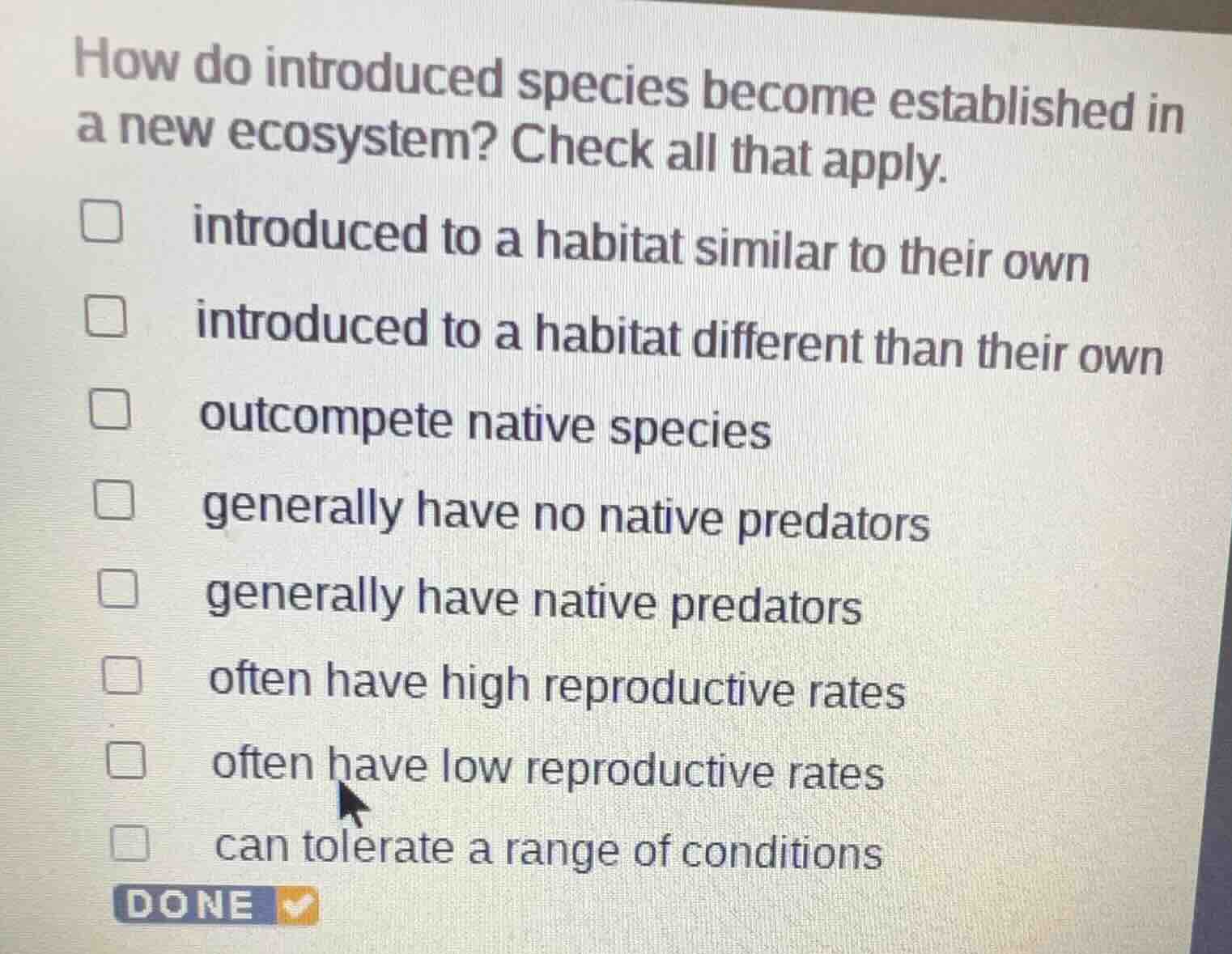
how do introduced species become established in a new ecosystem? check all that apply. introduced to a habitat similar to their own introduced to a habitat different than their own outcompete native species generally have no native predators generally have native predators often have high reproductive rates often have low reproductive rates can tolerate a range of conditions done
- Introduced to a habitat similar to their own: If the new habitat has similar environmental conditions (climate, resources, etc.) to the species' original habitat, the species is more likely to adapt and establish itself as its basic needs are met.
- Outcompete native species: Introduced species may have traits (e.g., faster growth, better resource utilization) that allow them to outcompete native species for food, space, or other resources, helping them establish.
- Generally have no native predators: In the new ecosystem, if there are no natural predators that the introduced species evolved with, they can reproduce and spread more easily without the pressure of predation limiting their population.
- Often have high reproductive rates: A high reproductive rate means the species can quickly increase its population size, which is beneficial for establishing a stable population in the new ecosystem.
- Can tolerate a range of conditions: If the species is not highly specialized and can tolerate different environmental conditions (temperature, moisture, etc.) in the new ecosystem, it has a better chance to survive and spread across various microhabitats within the ecosystem.
The options "introduced to a habitat different than their own" is less likely because a very different habitat would have unfamiliar challenges. "Generally have native predators" would limit their establishment as predators would control their population. "Often have low reproductive rates" would make it hard to build a population large enough to establish.

Snap & solve any problem in the app
Get step-by-step solutions on Sovi AI
Photo-based solutions with guided steps
Explore more problems and detailed explanations
- introduced to a habitat similar to their own
- outcompete native species
- generally have no native predators
- often have high reproductive rates
- can tolerate a range of conditions