QUESTION IMAGE
Question
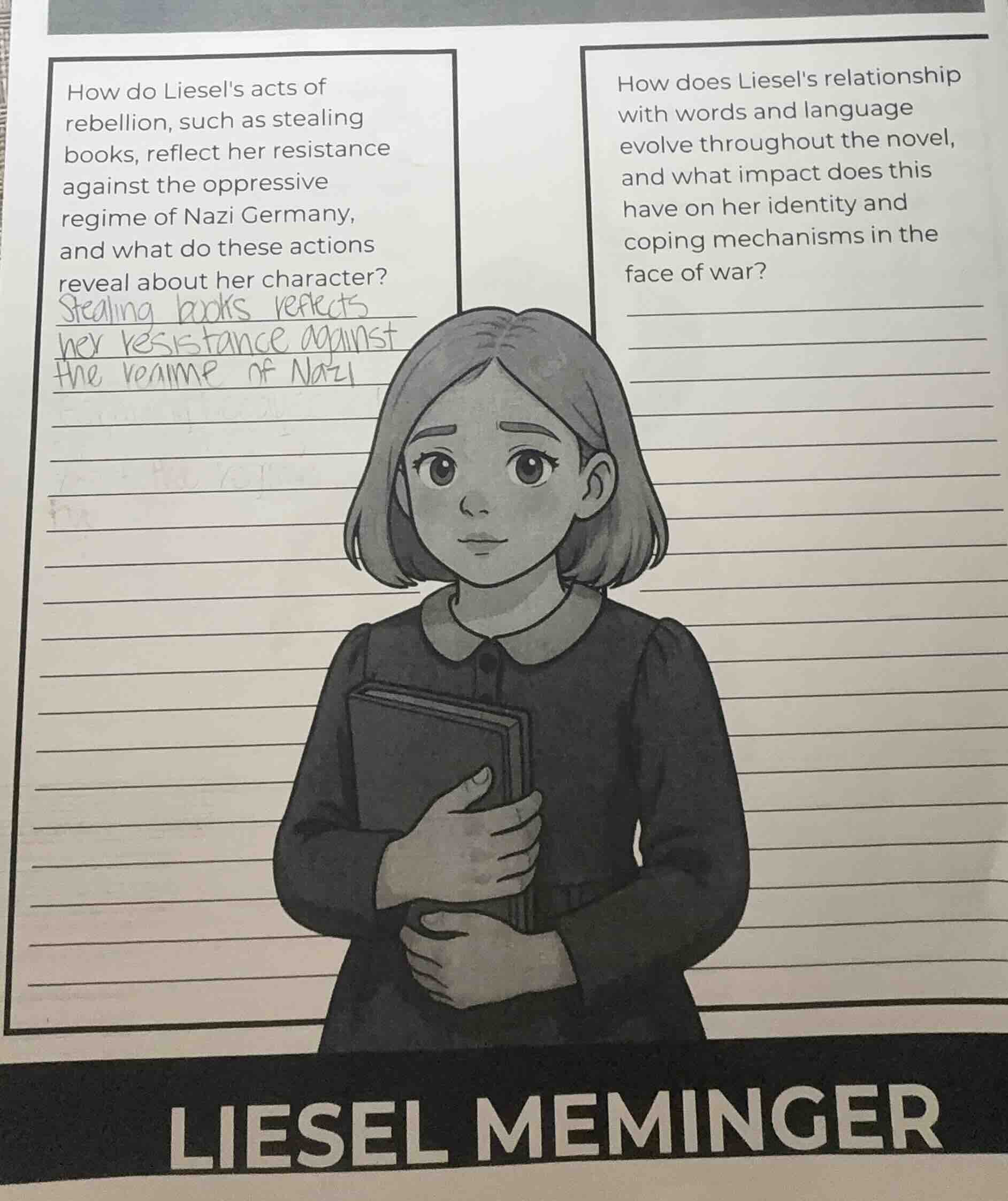
how do liesels acts of rebellion, such as stealing books, reflect her resistance against the oppressive regime of nazi germany, and what do these actions reveal about her character?
how does liesels relationship with words and language evolve throughout the novel, and what impact does this have on her identity and coping mechanisms in the face of war?
liesel meminger
For the first question (Liesel's acts of rebellion):
Liesel’s book - stealing is an act of intellectual and moral rebellion against the Nazi regime, which sought to control information and suppress free thought. By taking books, she preserves knowledge, resists indoctrination, and shows courage, curiosity, and a strong will to hold onto humanity in a dehumanizing environment. Her actions reveal a character defined by resilience, a thirst for learning, and a refusal to be broken by oppression.
Initially, Liesel struggles with literacy, but as she learns to read and write, her relationship with language evolves from a tool of survival (learning to read) to a source of power (writing her own story) and comfort (sharing words with others). This evolution shapes her identity, giving her a sense of self and purpose, and provides a coping mechanism—words become a way to process trauma, connect with others, and resist the dehumanizing effects of war.

Snap & solve any problem in the app
Get step-by-step solutions on Sovi AI
Photo-based solutions with guided steps
Explore more problems and detailed explanations
Liesel's act of stealing books reflects her resistance against the Nazi regime as it is a rejection of their censorship and suppression of knowledge. These actions reveal she is courageous, curious, resilient, and committed to preserving humanity and learning in the face of oppression.